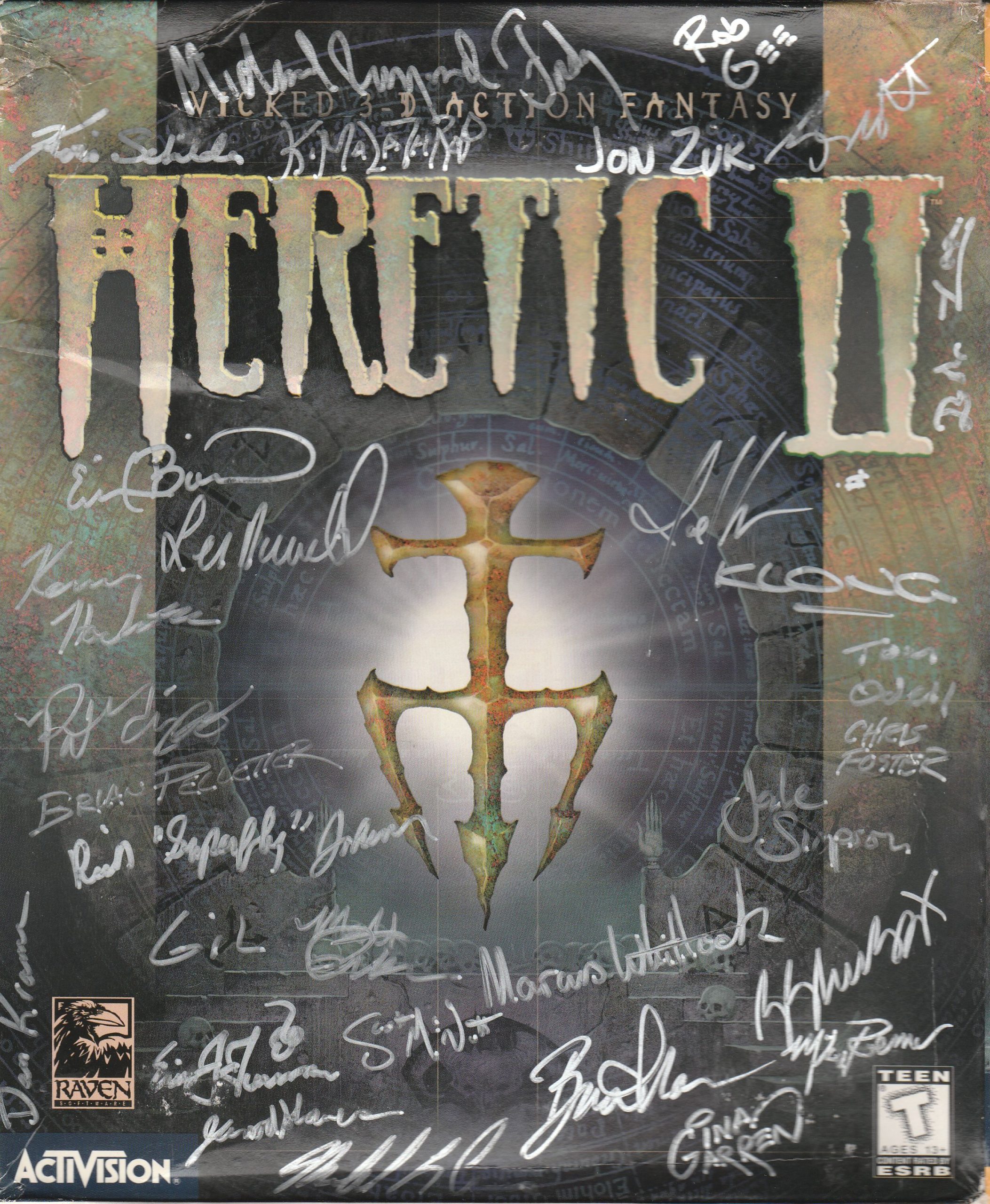
The year was 1997. Raven had just completed Hexen II, Take No Prisoners, and Mageslayer, each for an entirely different publisher. Every thing came together under one roof in the wake of the Activision purchase, and teams were a little in flux.
At the time Raven wasn’t necessarily a dedicated FPS shop. Black Crypt was a tile-based RPG, Necrodome was a vehicle-based action game, Mageslayer and TNP were top-down. Rolling from the completion of Hexen II (and in parallel with its expansion Portal of Praevus), we got the opportunity to create something a little experimental using the Heretic/Hexen IP.
Tomb Raider was still pretty new at the time… and over-the-shoulder action was a genre that was still fairly untapped. We still maintained our relationship with id Software so we got the chance to use the powerful engine fueling the recently completed Quake IIto create a third person shooter. This game would branch from Heretic rather than Hexen, as we imagined Hexen was going to continue on as a first-person series (alas, that did not happen).
We went to work right away and started building a third person camera and some Tomb Raider-style wall climbing and mantling, as well as some nice spell-slinging. I seem to remember using Hexen II’s imp as a starter enemy. All-in-all a great proof of concept within a month or two.
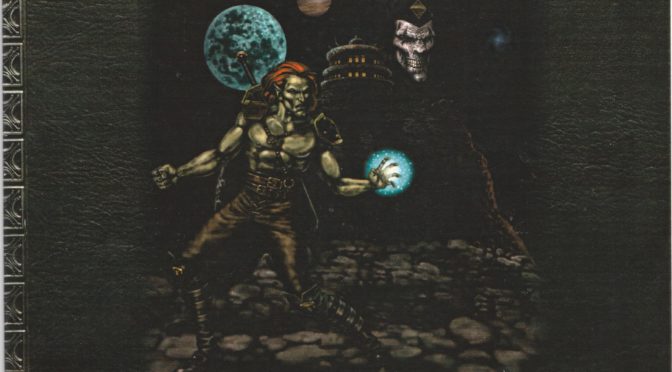
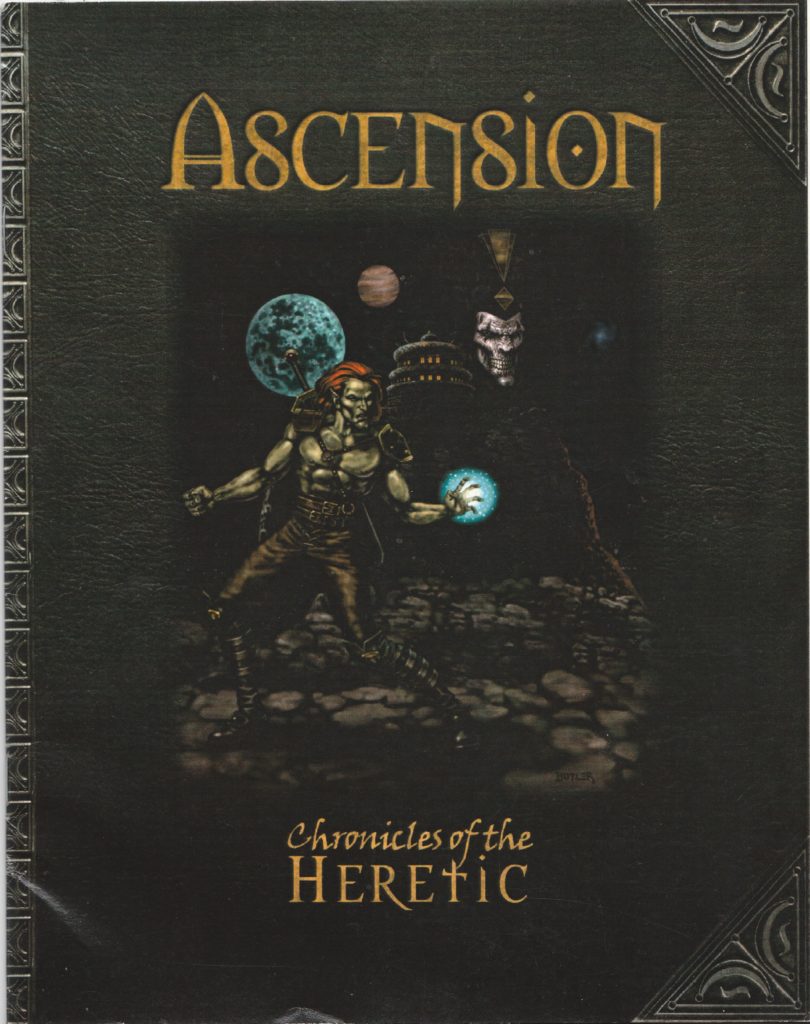
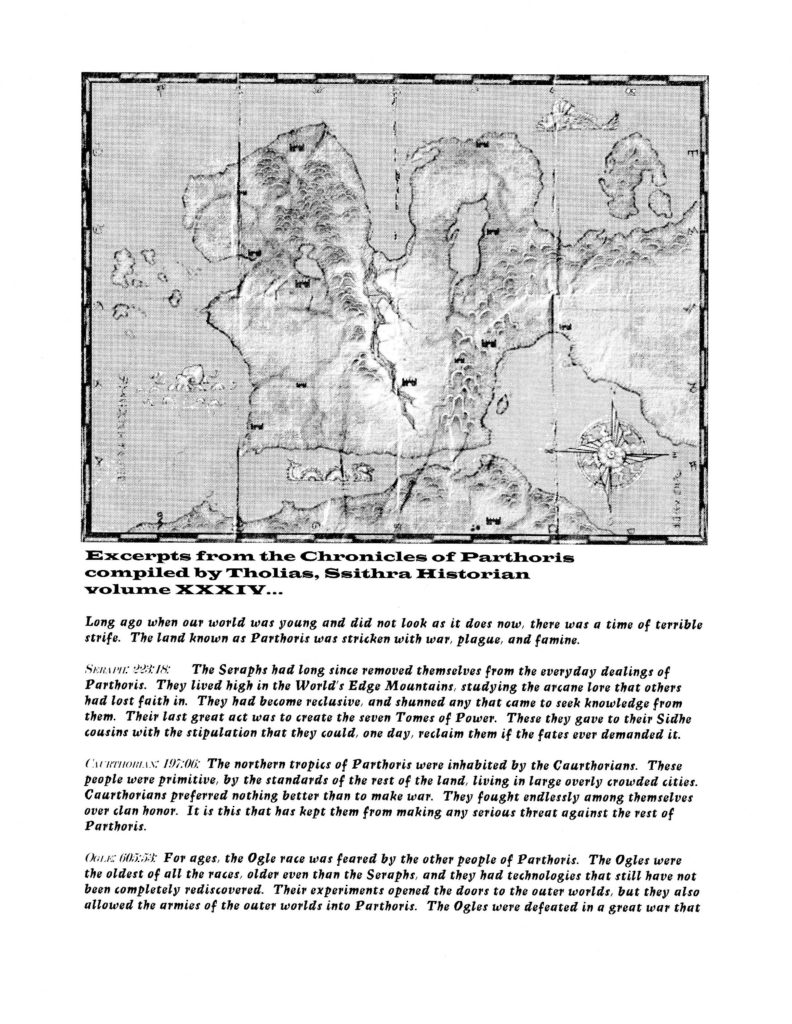
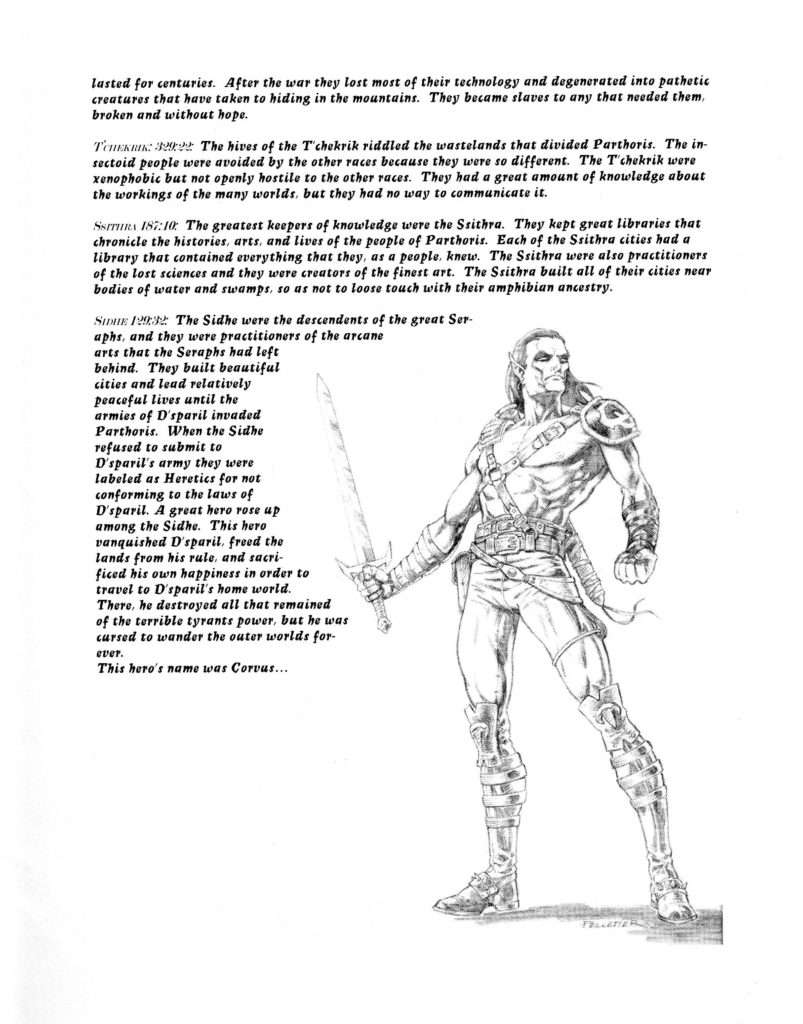
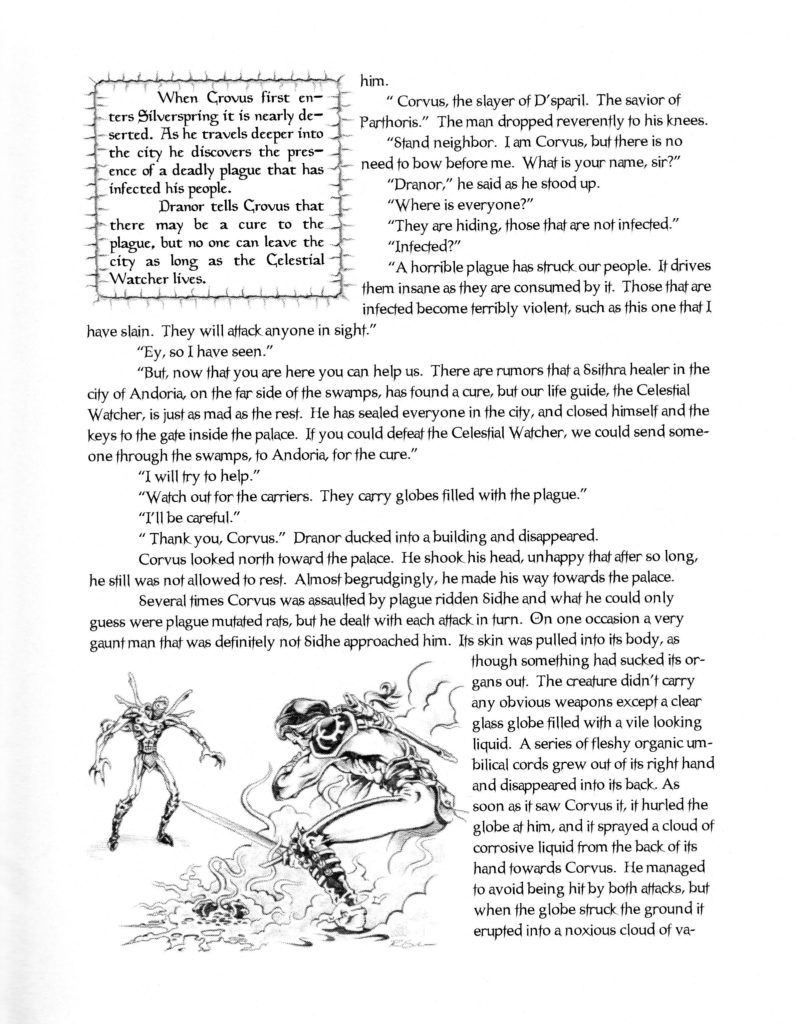
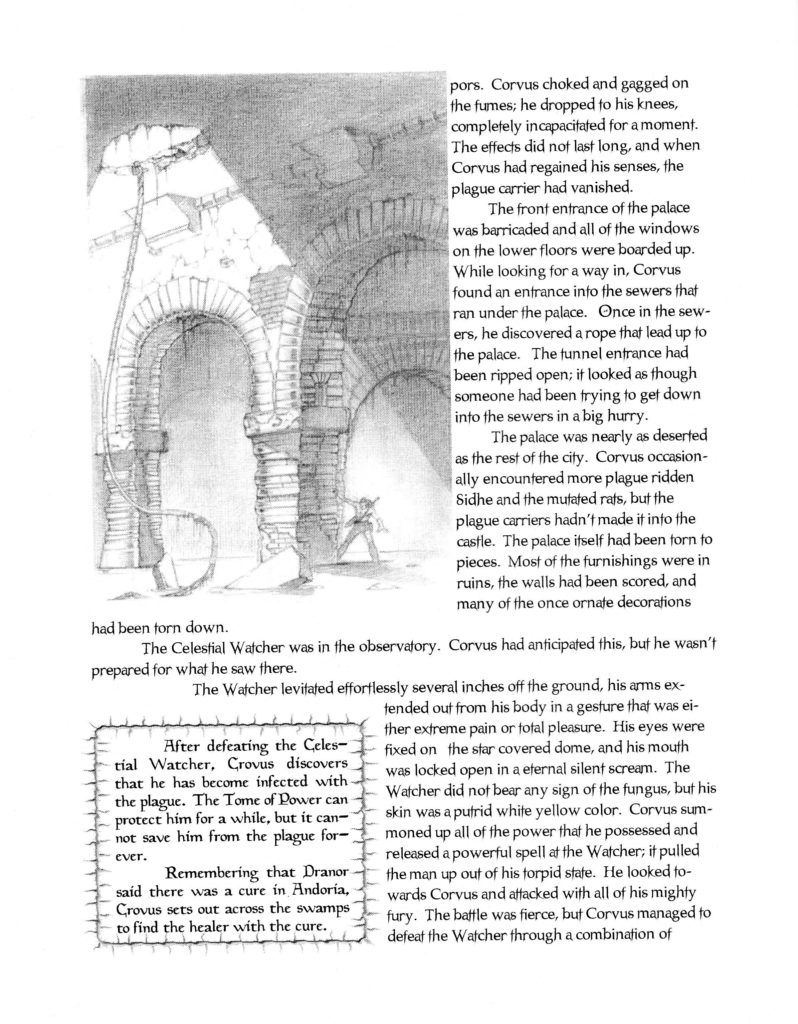
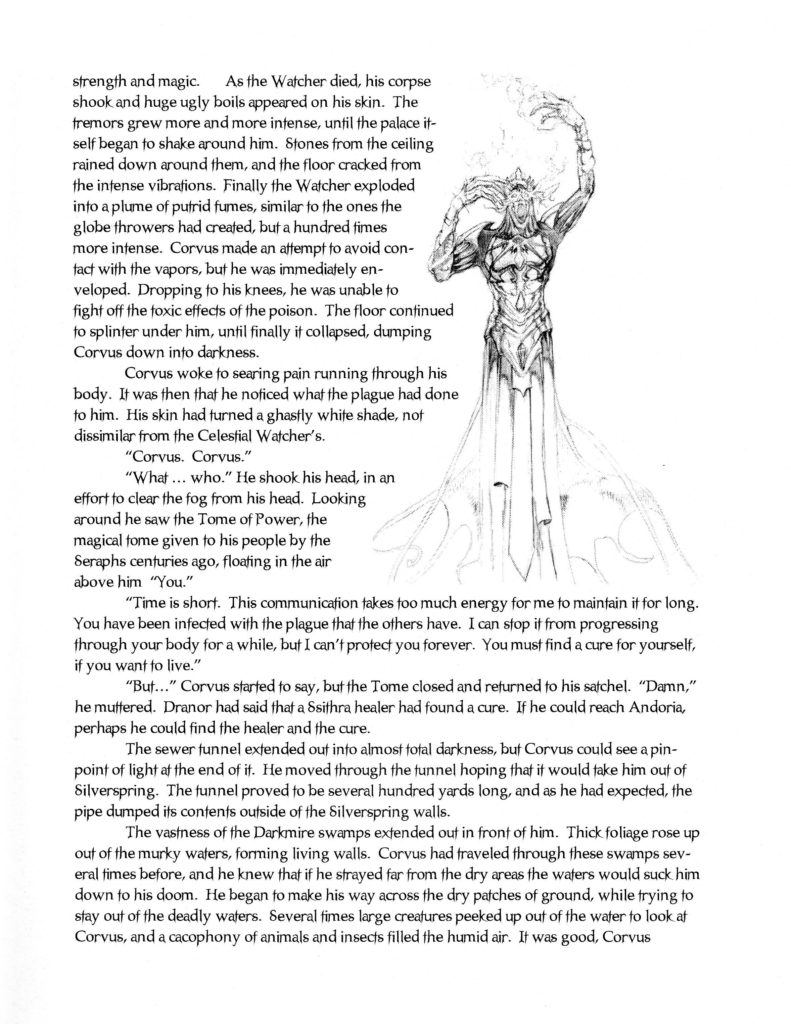
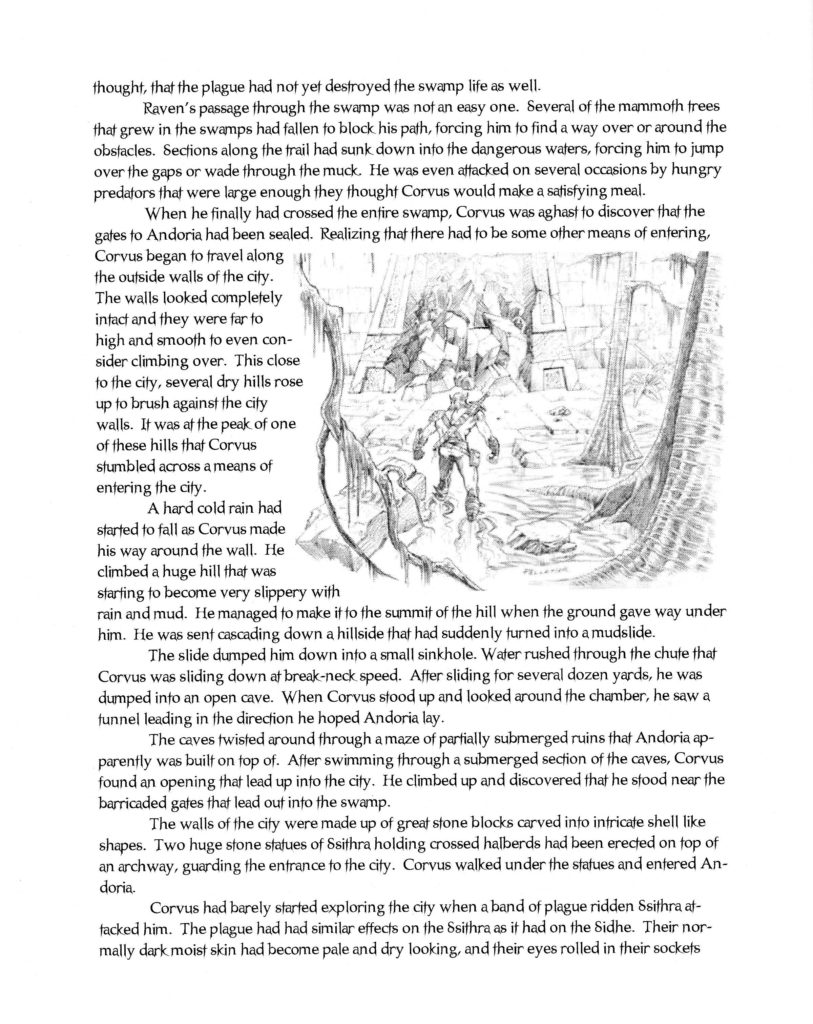
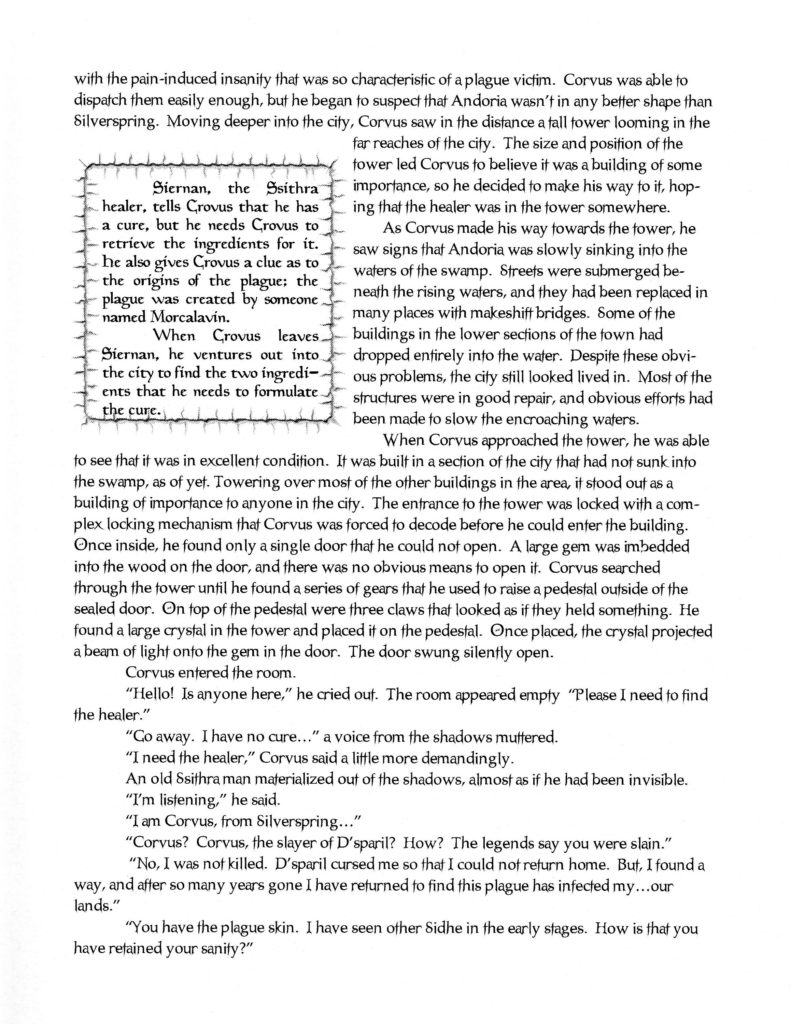
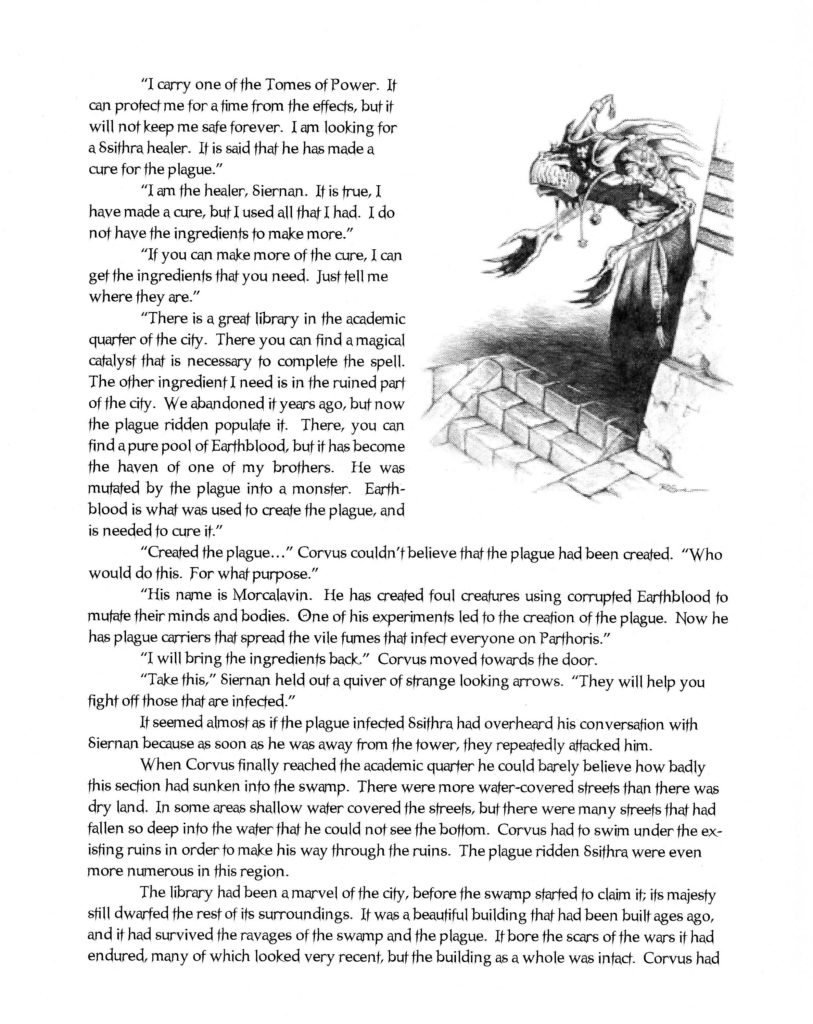
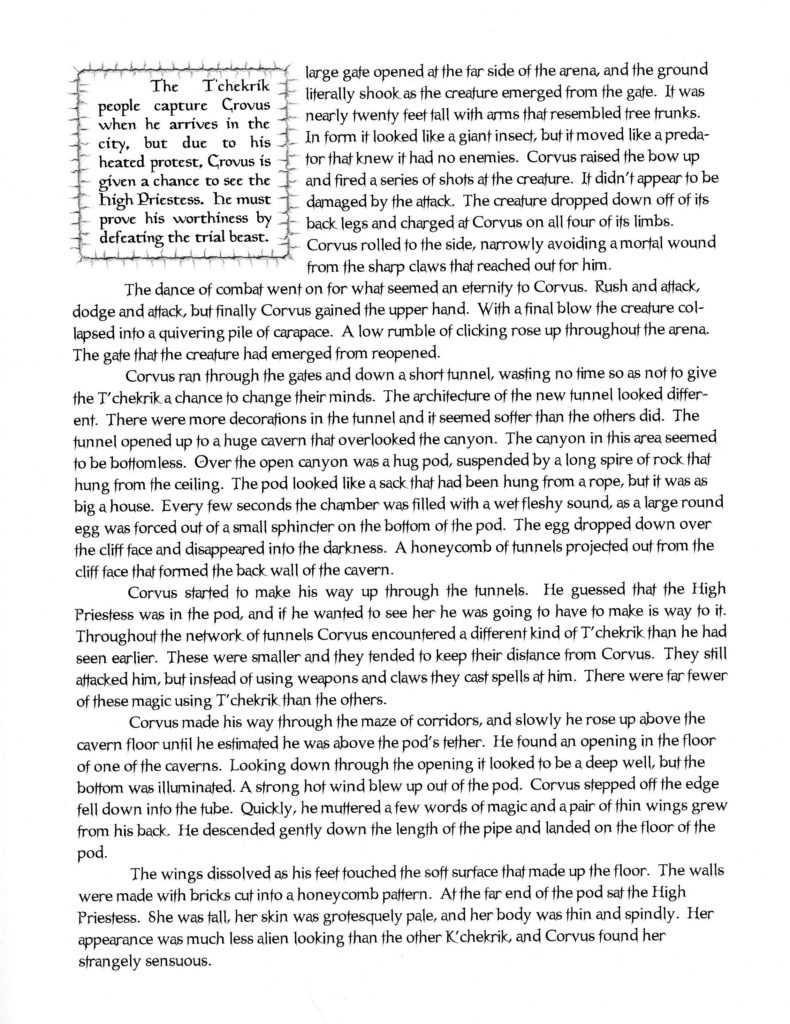
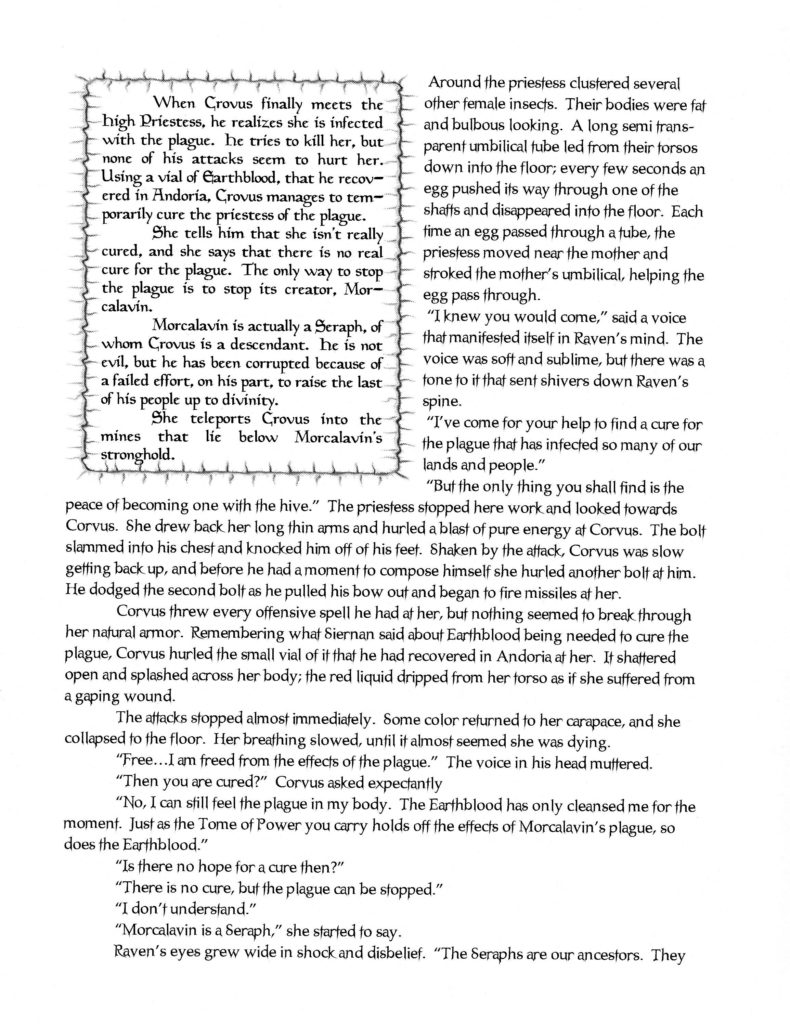
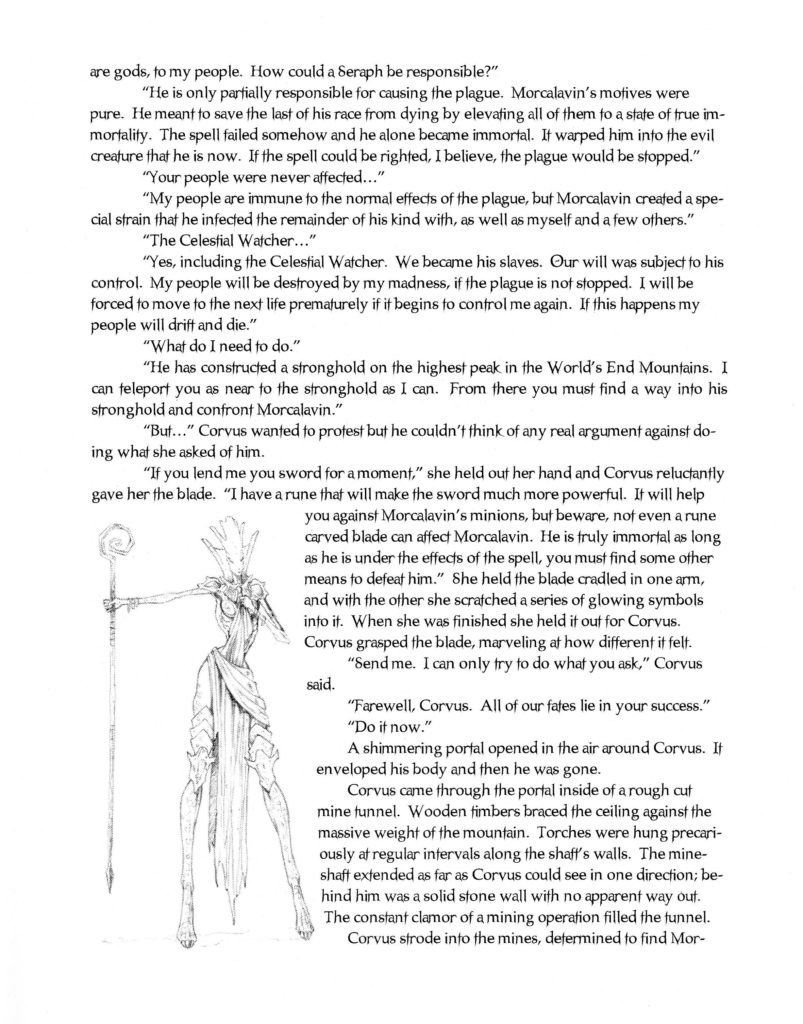
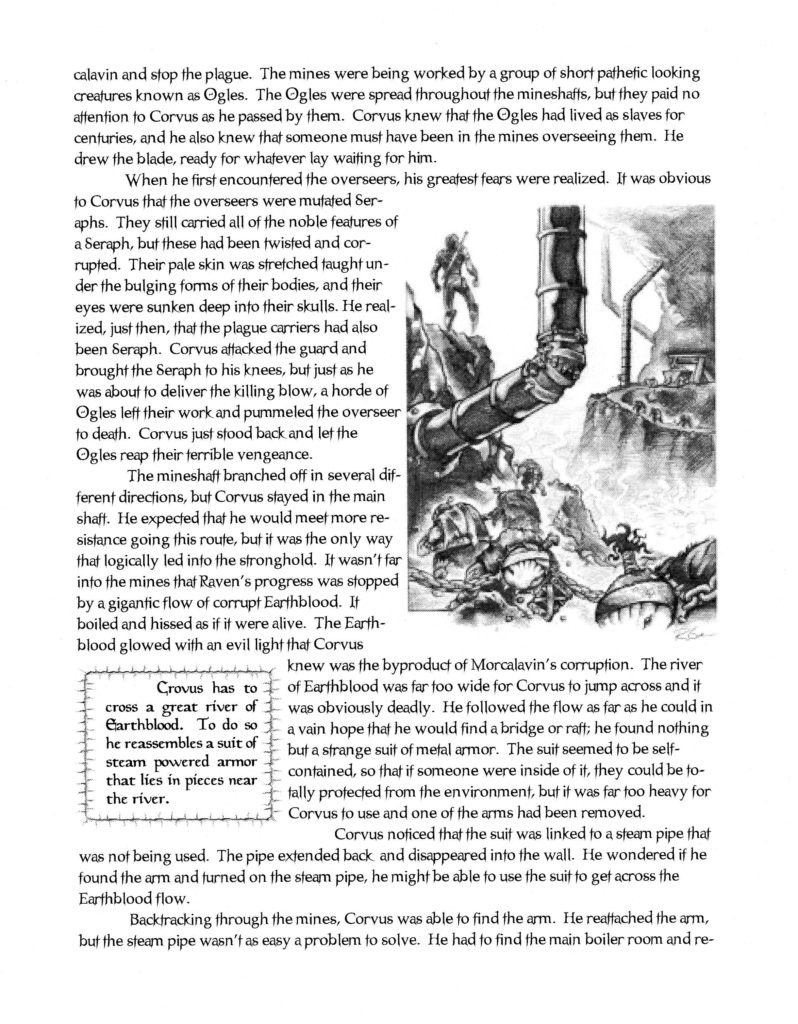
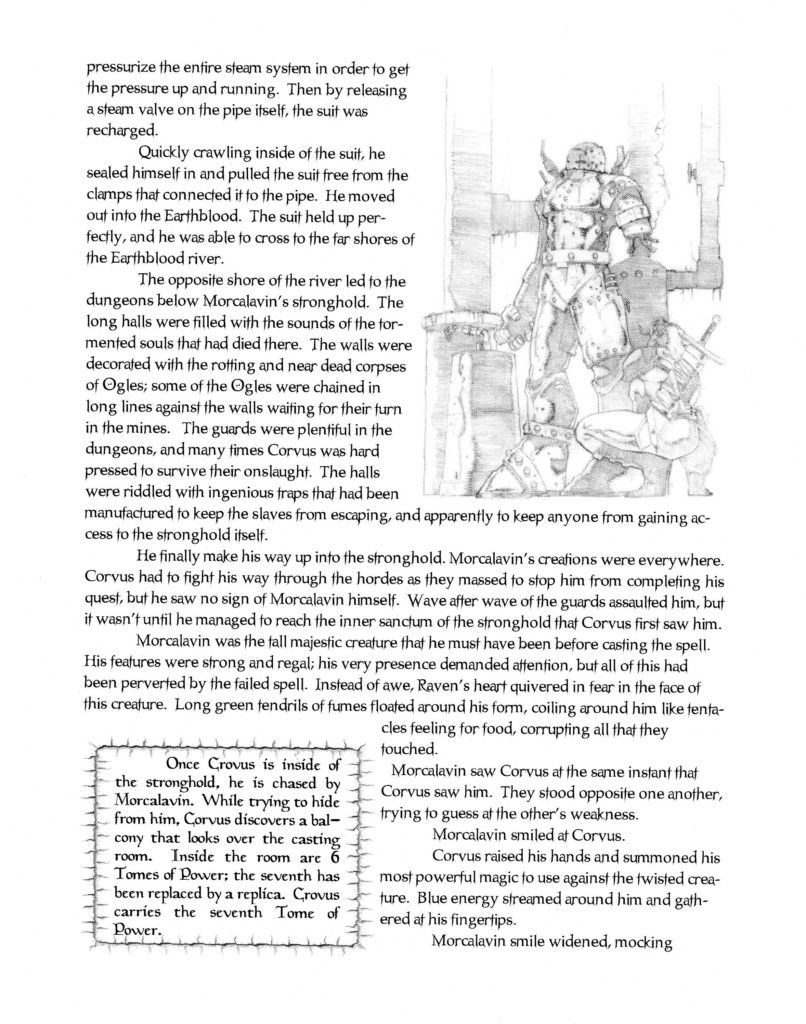
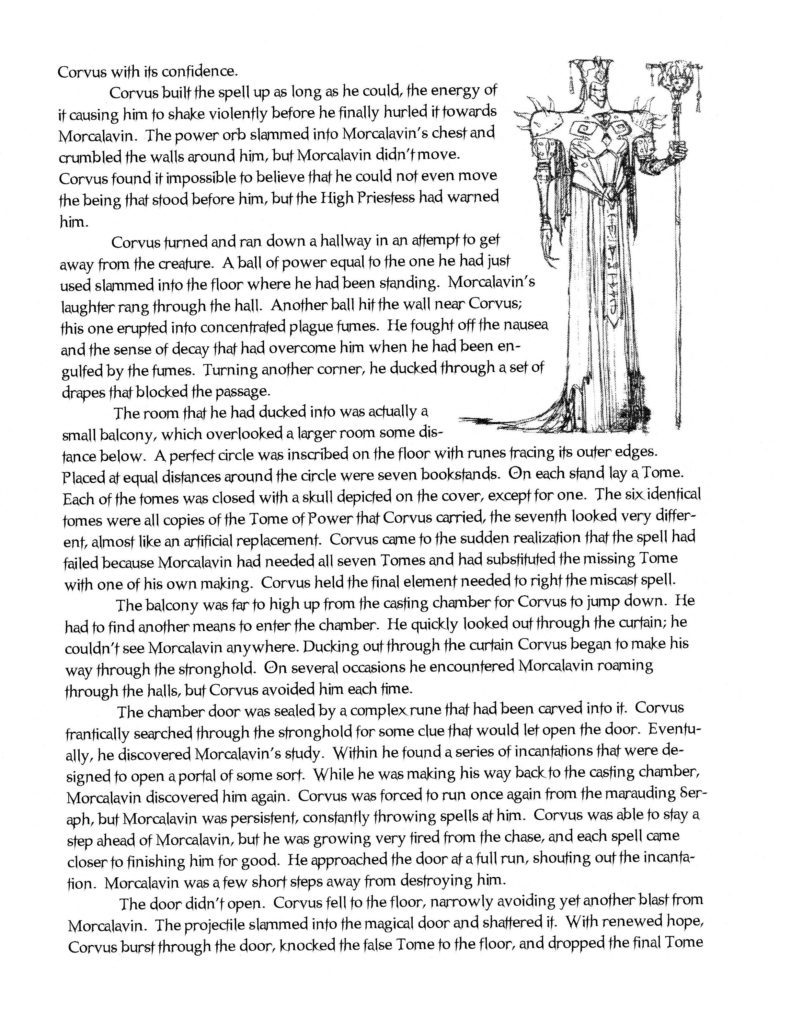
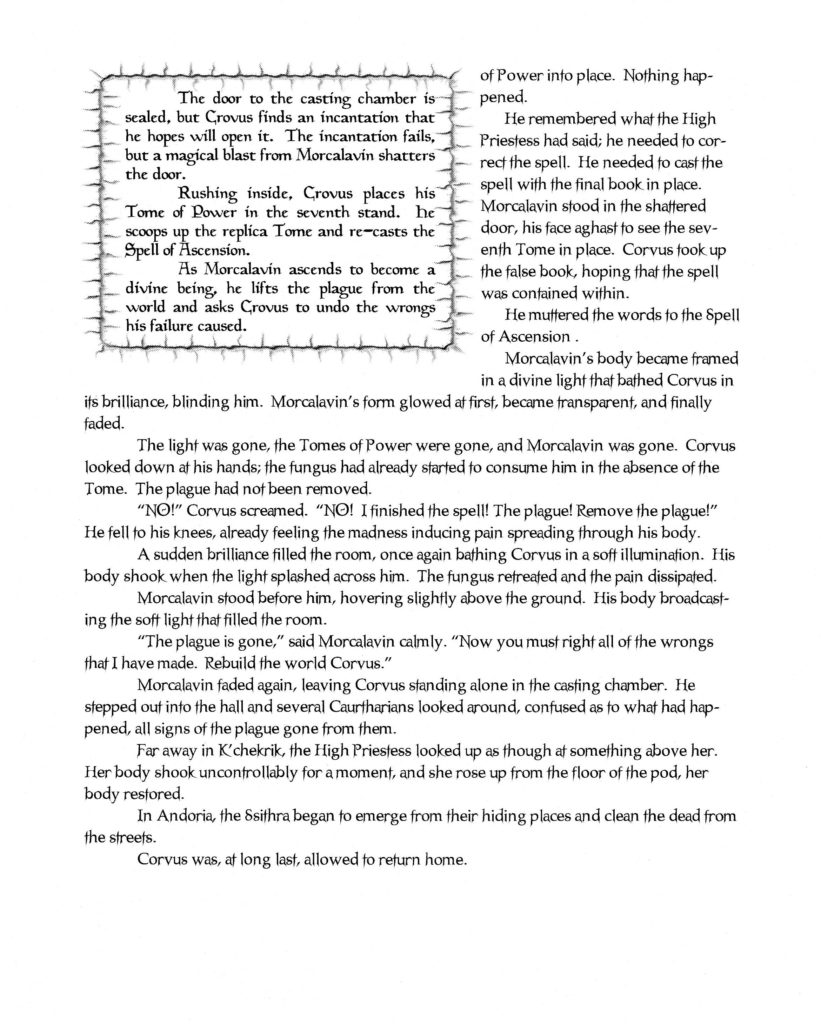
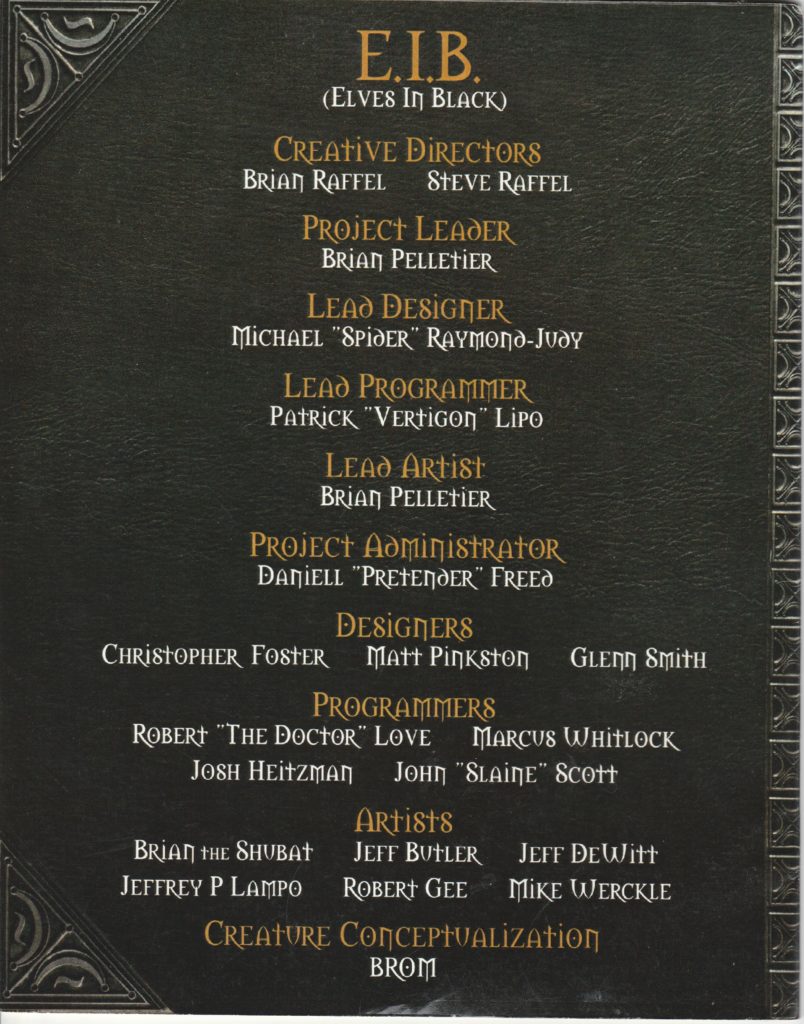
Often when a game comes out of the concept phase and is headed foe production, someone creates a Powerpoint presentation or pitch doc to show to folks who wear the big hats and sign the checks. In this particular case we were eager enough about the world that we created a little mini-storybook, got a bunch of printed copies, and sent it off to Activision.
I think Dan Freed wrote the text, and it includes art by Brian Pelletier and Rob Gee. It may read a bit cheesy, and you can see that Corvus was even misspelled in all the sidebars, but I think it demonstrates how incredibly amped we all were about this thing we were making.
You can scan through the whole thing here!
Fast forward less than a year and we shipped a real third-person shooter, merging Quake’s first-person sensibilities into a camera and character with a feel that no game had previously. It had melee combat and acrobatics. It had mutiplayer in third-person, which basically had never been done like this. It had a full single-player campaign that could be played cooperatively. It had in-game cutscenes where no mechanism existed in the Quake engine. All in around 10 months.
Yes, Half-Life shipped just a week before and ate Heretic II’s lunch but we stand behind the work we did. It was an amazing experience that we all remember fondly to this day.
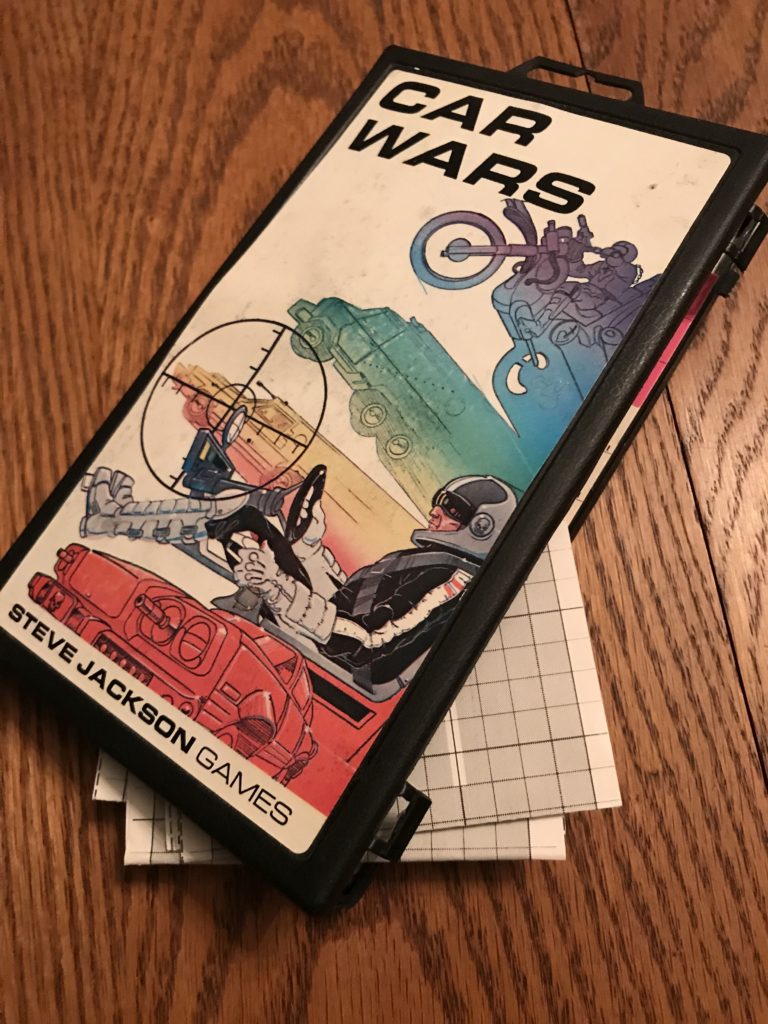
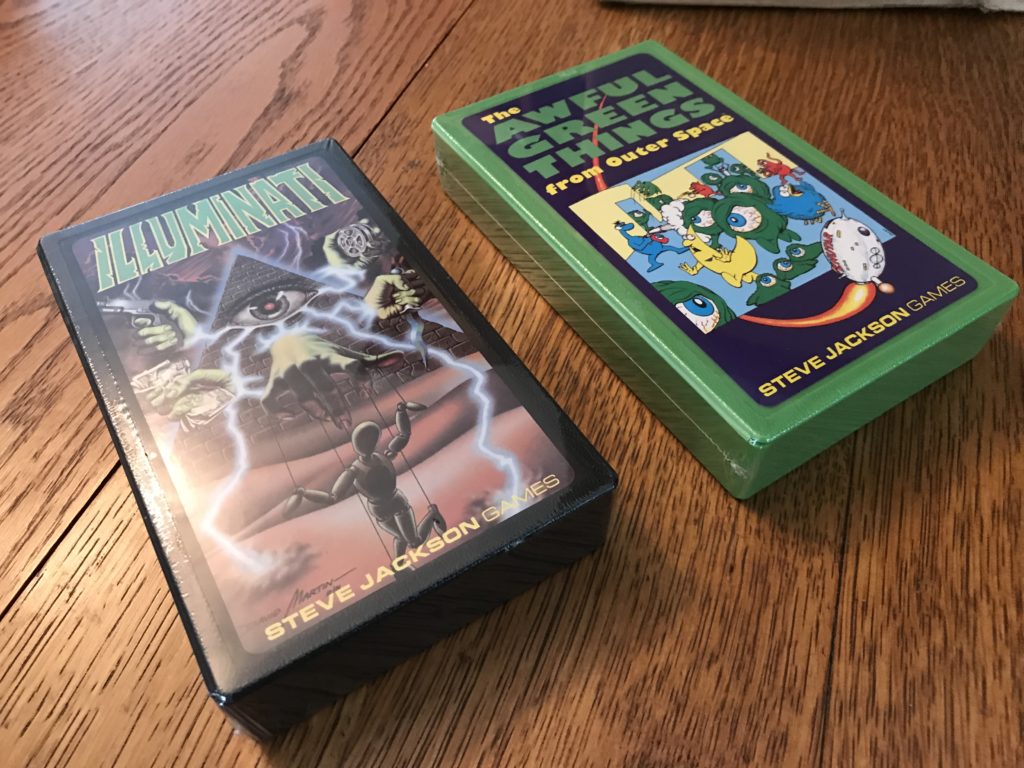
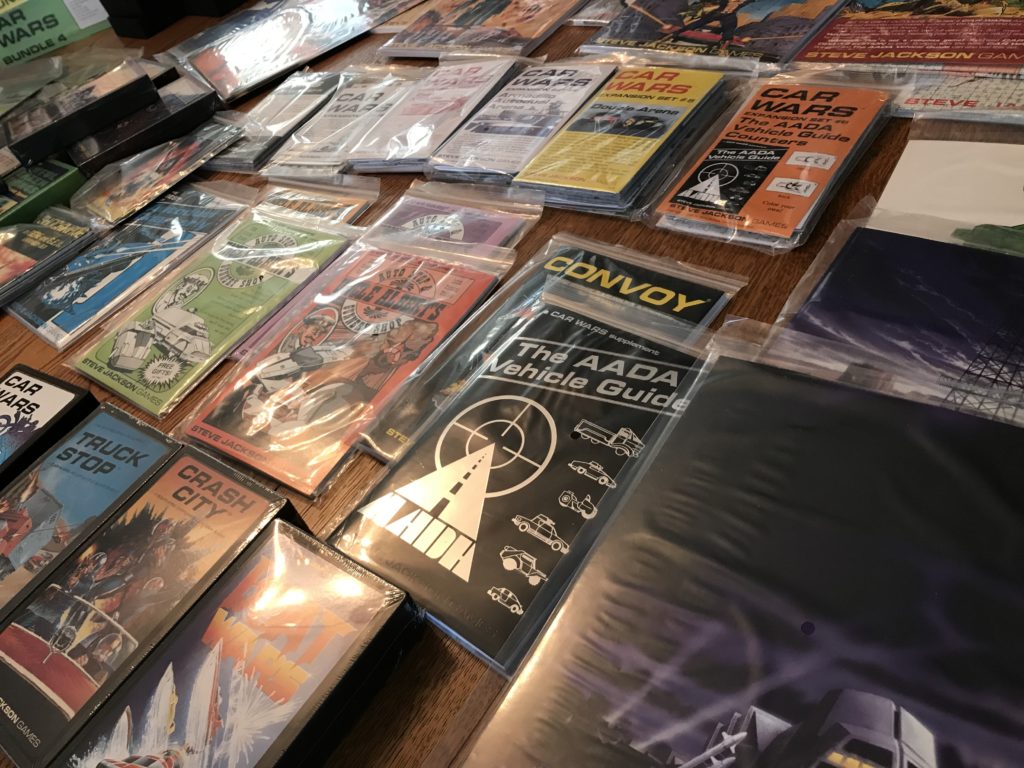
About a year ago, I pitched in on a Kickstarter that was near and dear to my heart… the reprint of a vast library of early-80’s games from Steve Jackson Games. Many of these games came in a specially designed “pocket box” that was more durable than a ziplock bag and were the perfect size to fit on paperback book racks in stores.
These little guys held the first copies I owned of Car Wars and its supplements as well as other titles like Ogre. The manuals were small, and inside were super-folded maps as well as thin sheets of game counters that you cut out yourself. Perhaps these weren’t the honkin’ miniature-heavy boxes you see nowadays, but it was amazing how 5 bucks could buy you in to a whole world back then.
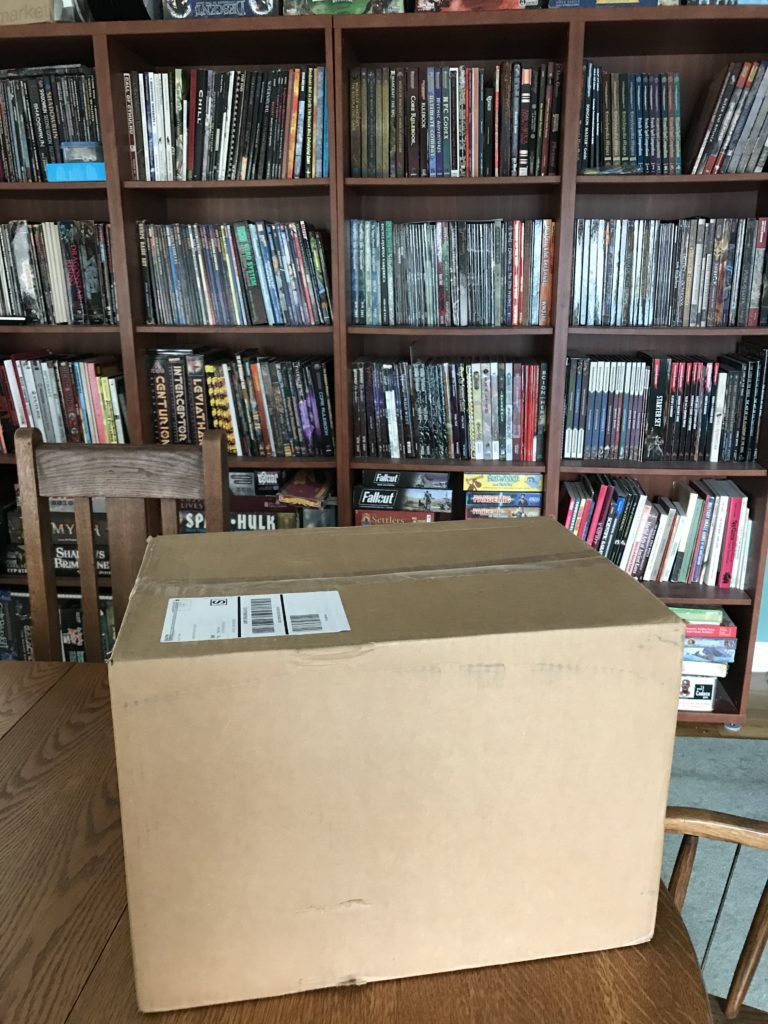
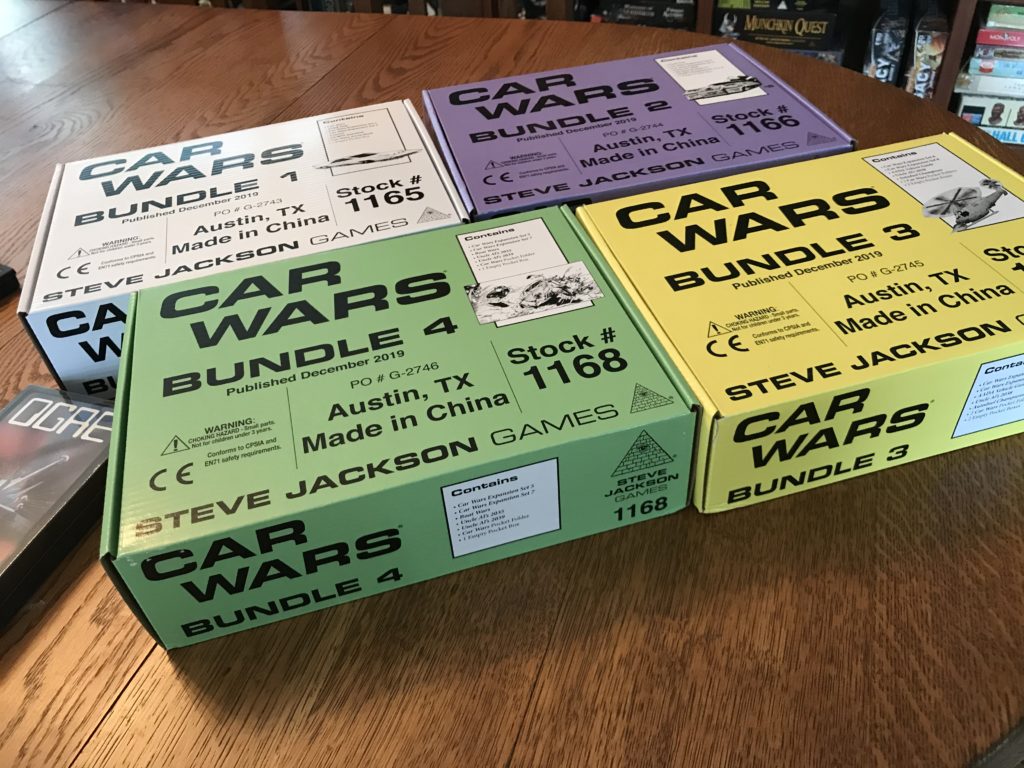
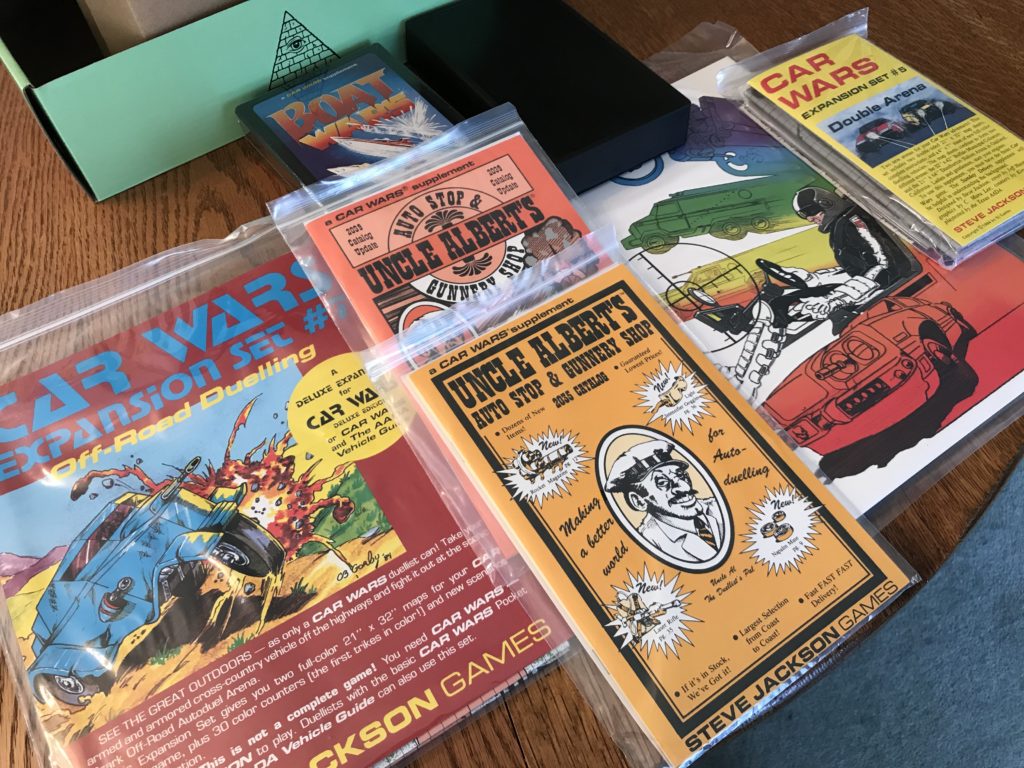
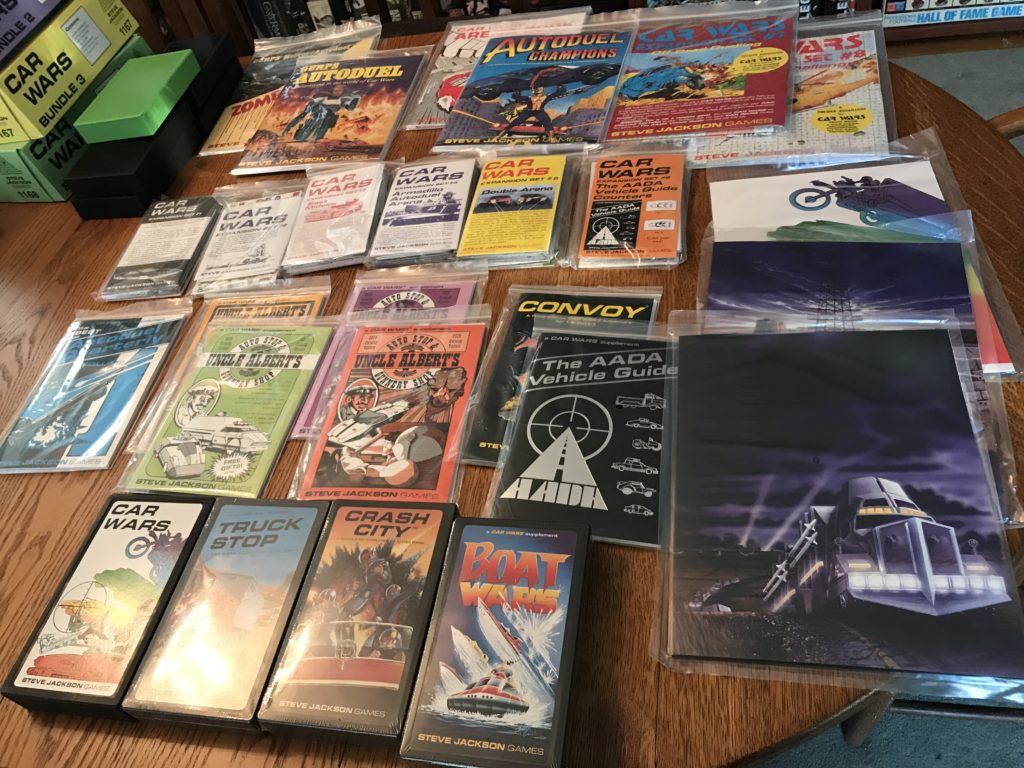
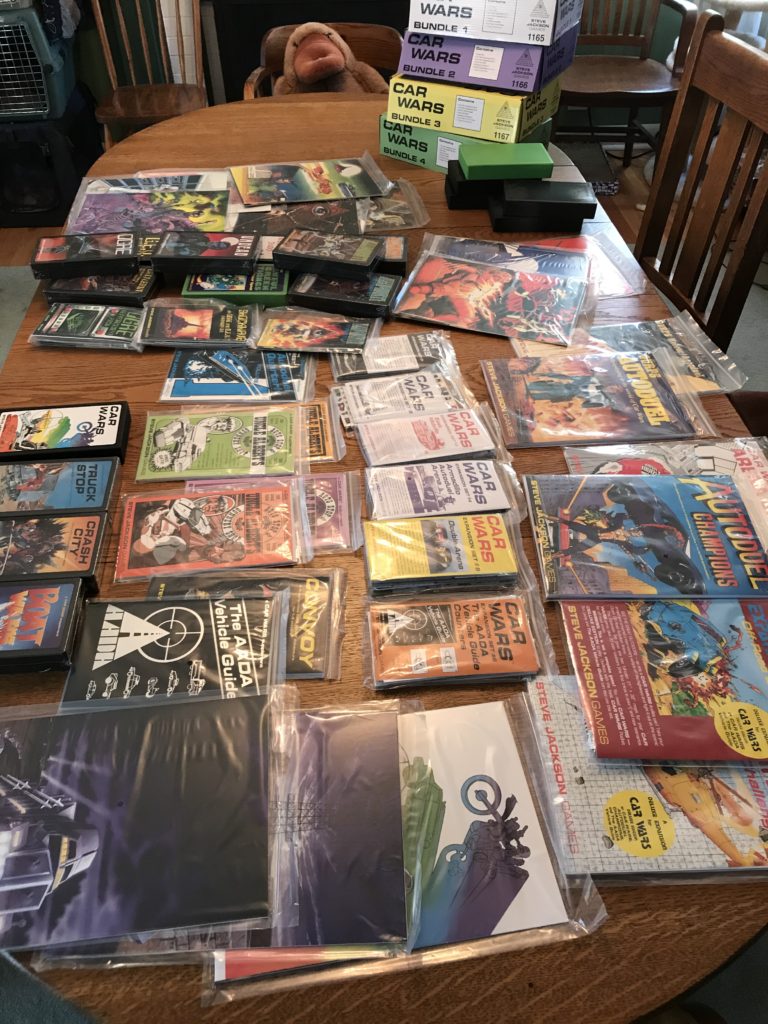
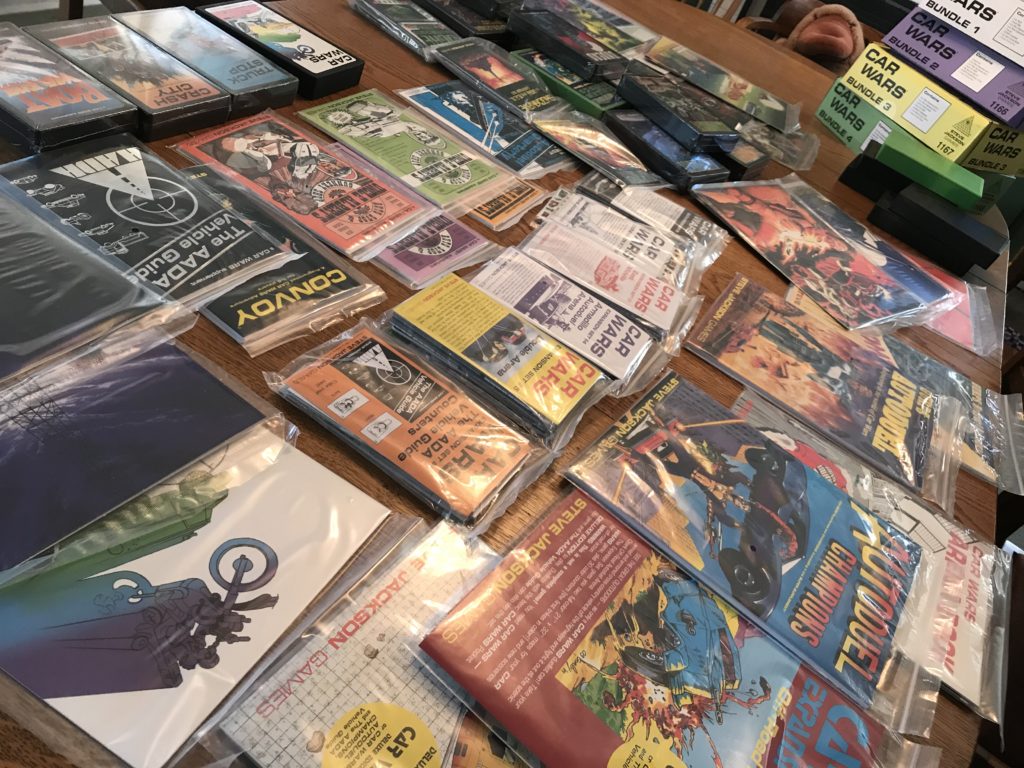
So today a big ‘ol box showed up. It was bigger than I thought it would be, although I did recall pledging the mammoth $200 “Car Wars and seven more games” package as a tip of the hat for everything SJG gave me in 1983. While I bought nearly everything from the Car Wars line back in the day, a number of cross-country moves separated me from my collection, and only a precious few pieces remained… This was a chance to get them back into my grubby little hands.
Cue the anticipatory music of Link opening a treasure chest…
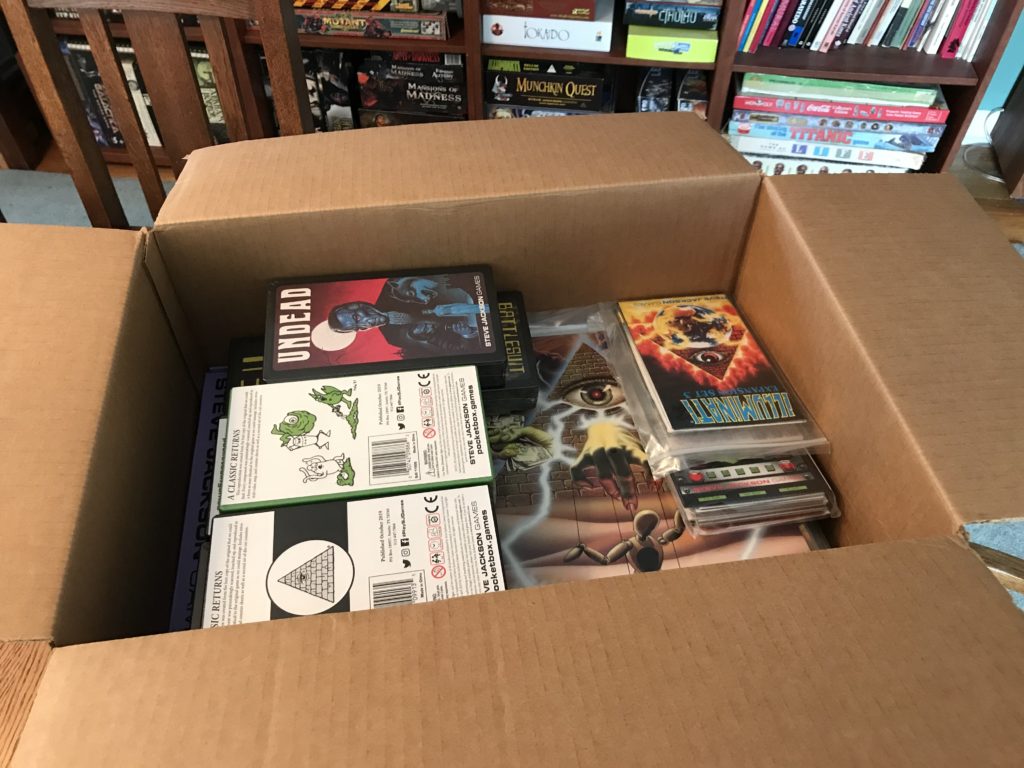
The first thing that struck me when taking the first of the contents out was how chunky big these new pocket boxes are. They were streamlined to remove the now-unneeded clasps and hooks, but they’re also a lot thicker.
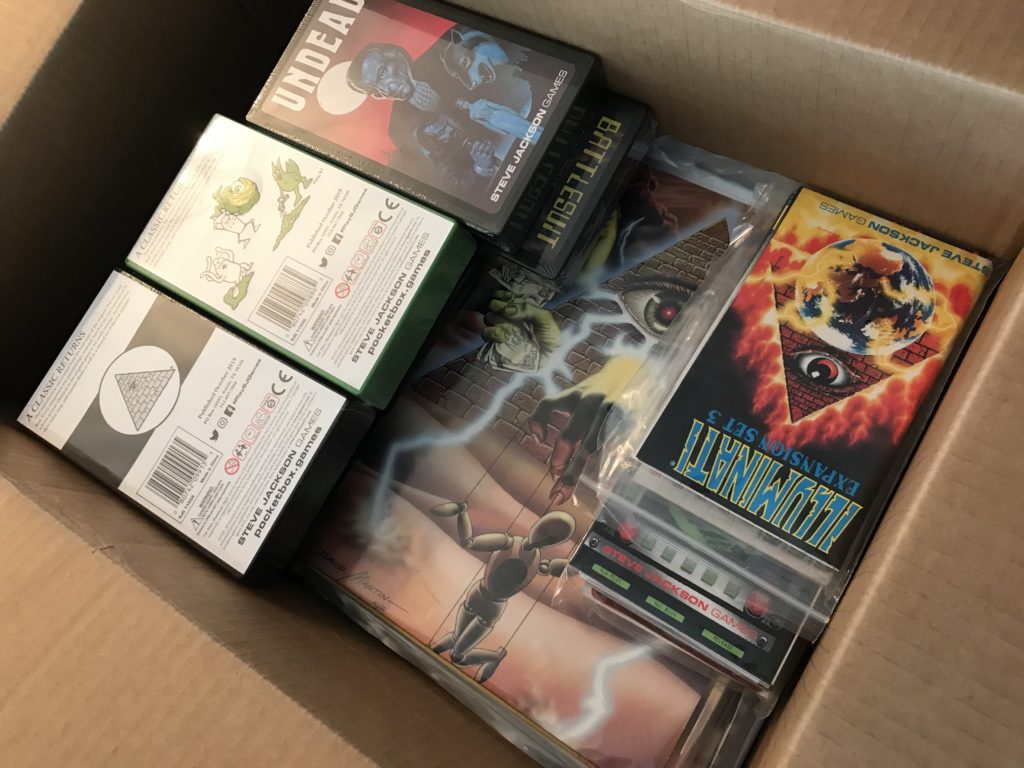
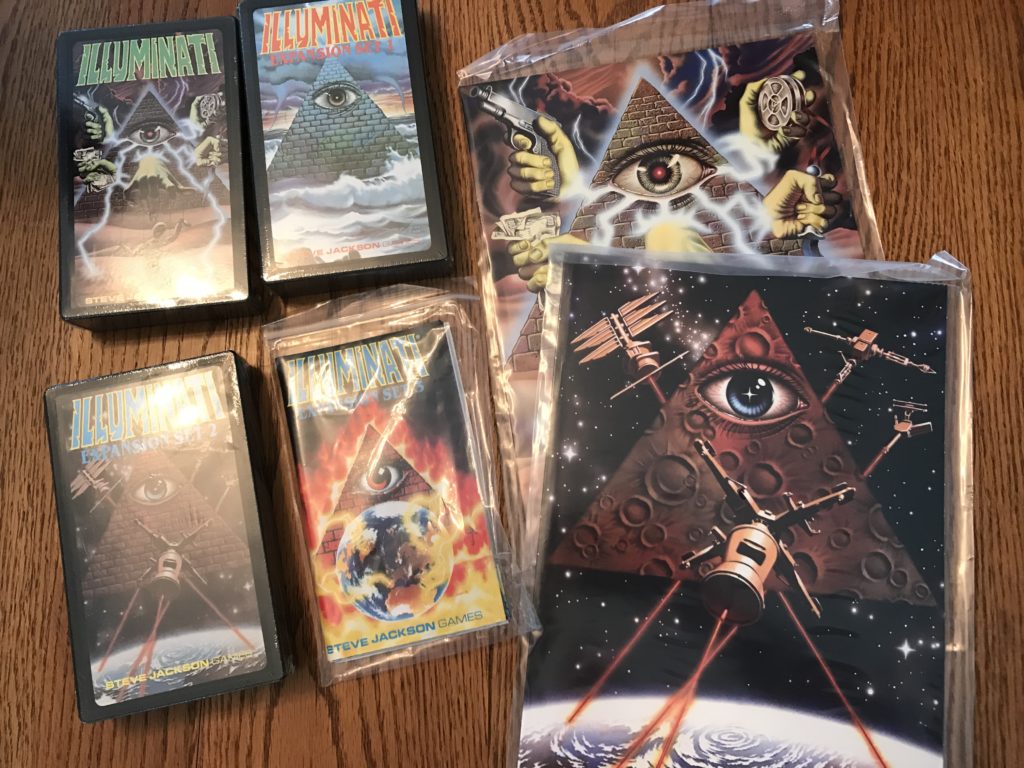
The first set is the classic boxes of Illuminati, along with some Illum-themed folders as a bonus. We’ve got Illuminati Deluxe, but it’s great to have the real deal.
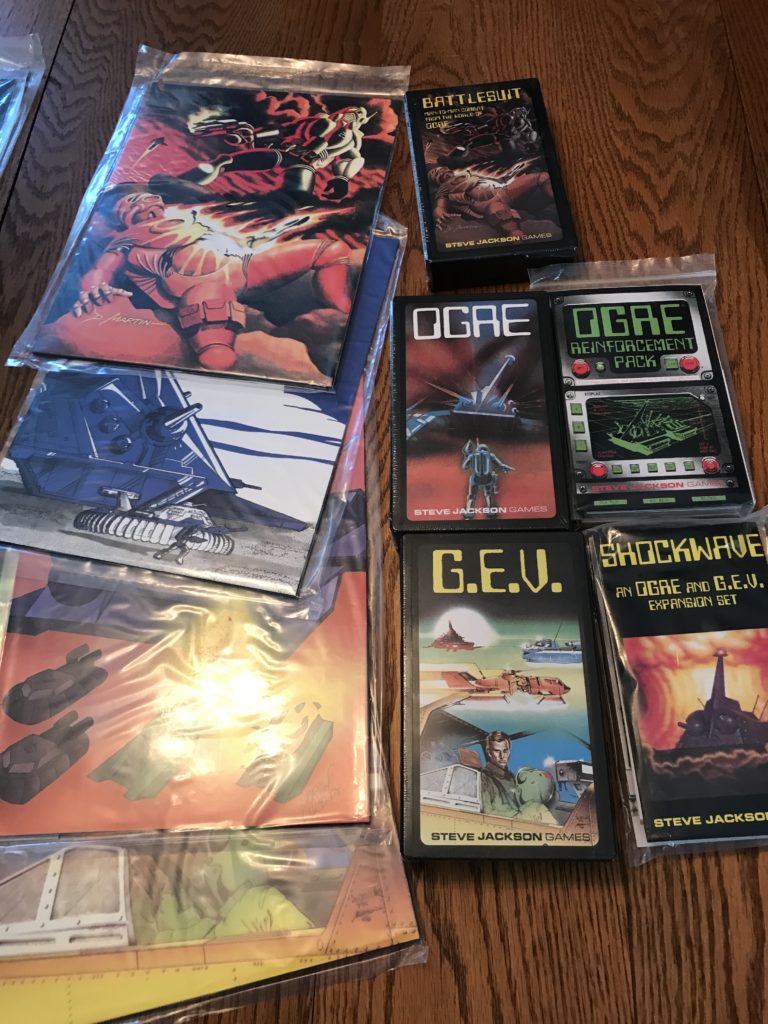
Ogre and its sequels/spinoffs/addons! Yes! What classics, and I’d always wanted a copy of Battlesuit in particular. I love these folders as well.
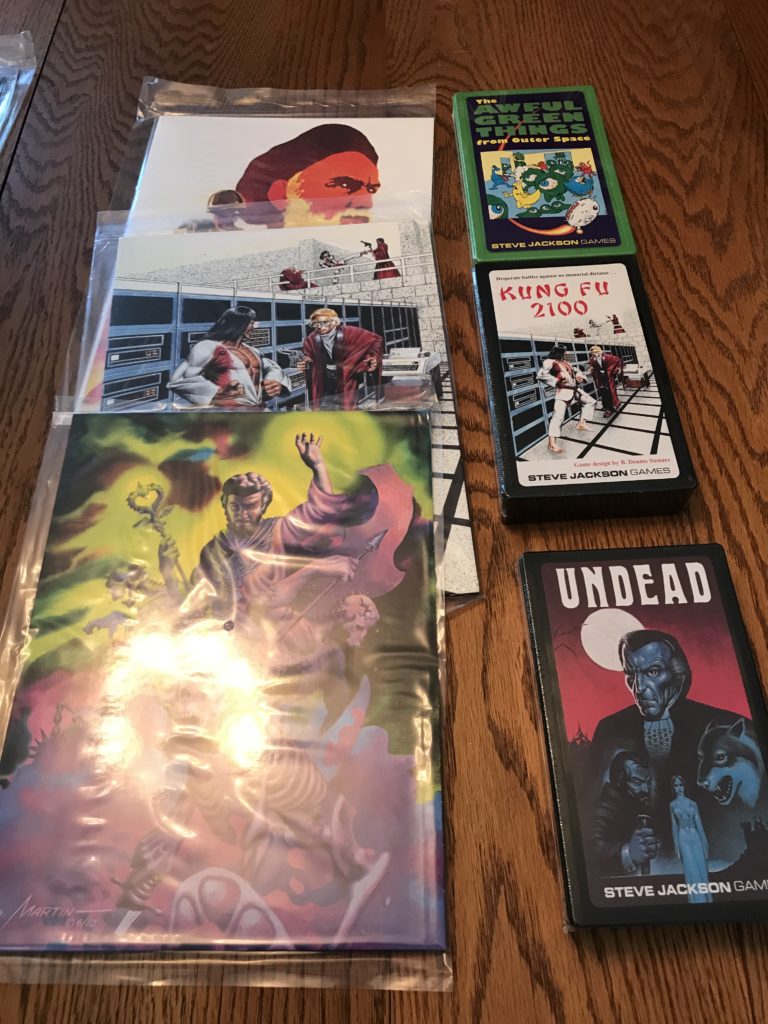
I’ve certainly never owned a copy of Undead or Kung Fu 2100, and it’s been soooooo long since I’ve played Awful Green Things (I think literally since it debuted in Dragon Magazine?). These are some awesome treasures.
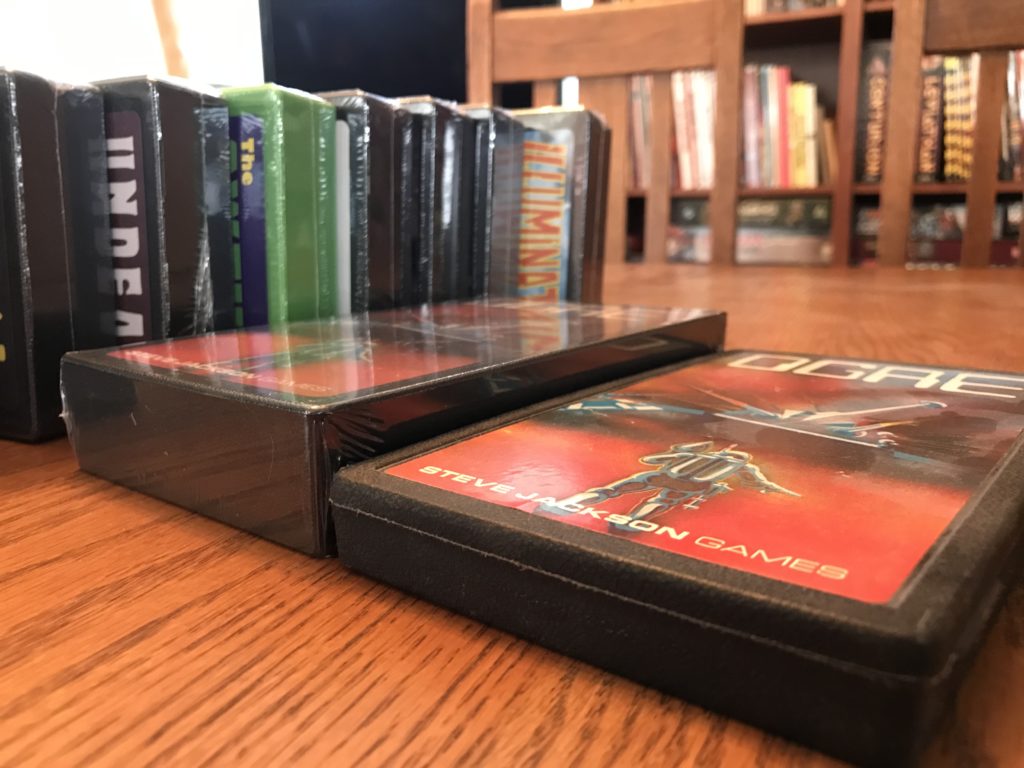
Finally get to compare a new Pocket Box with the old. I put an original copy of Ogre against the new one… It appears about double thickness.
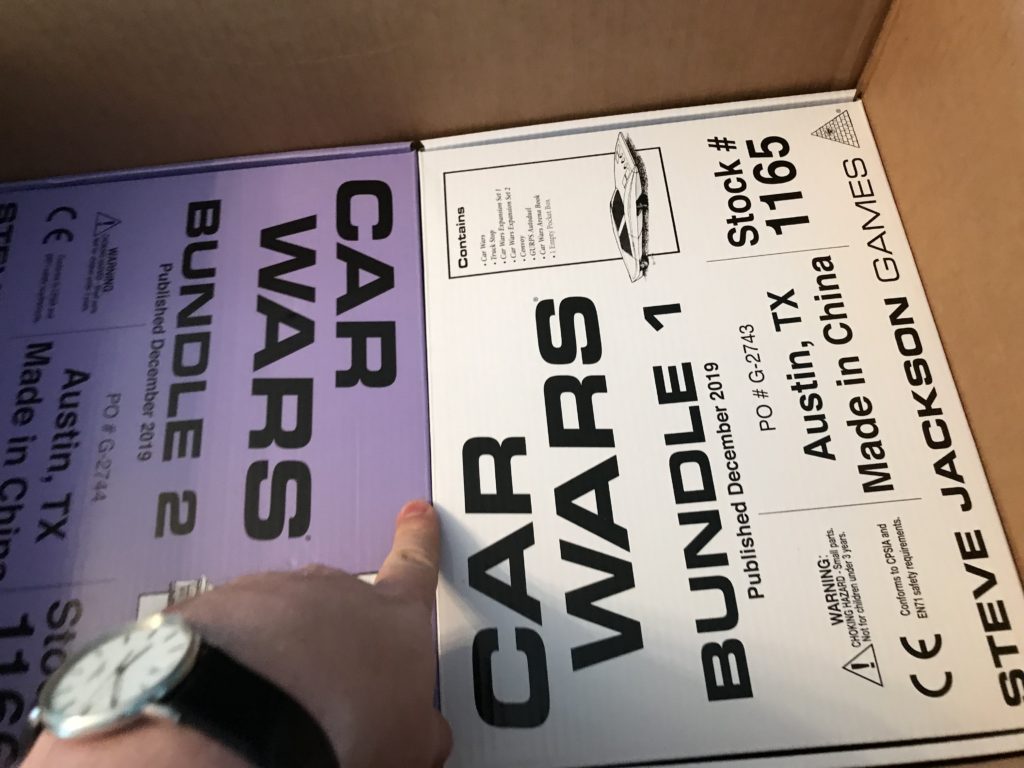
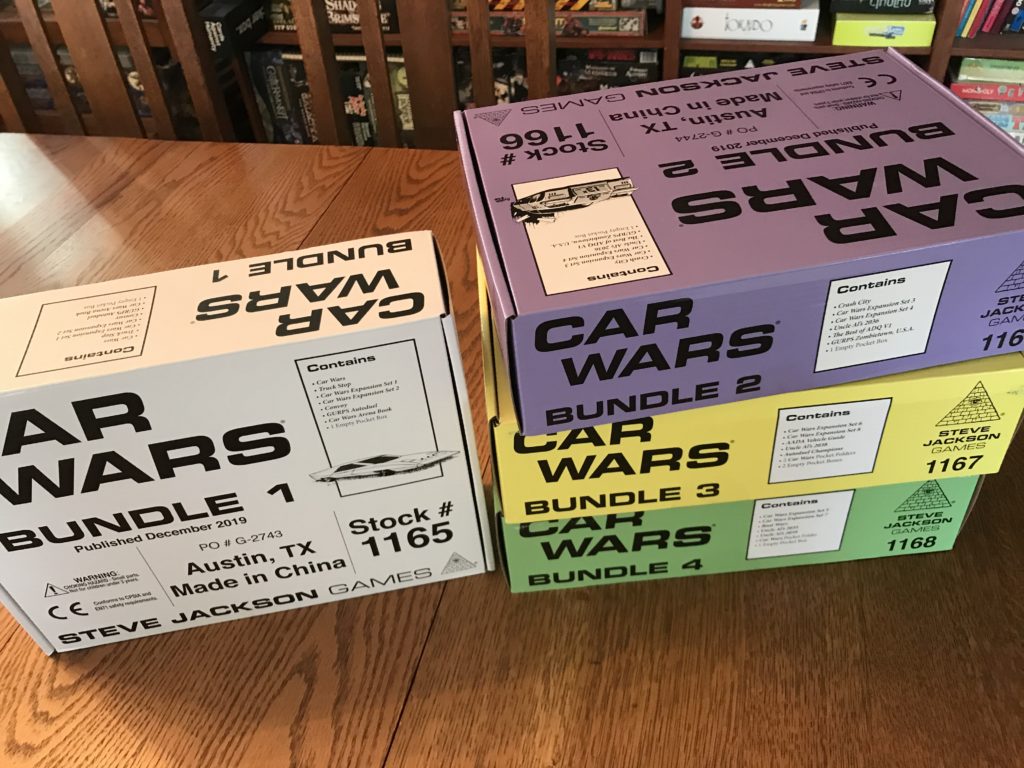
Now I should say that all those other SJ games were great, but I was eager to hit the star attraction and crack open the vaults of Car Wars loot. Look at the size of these crates!
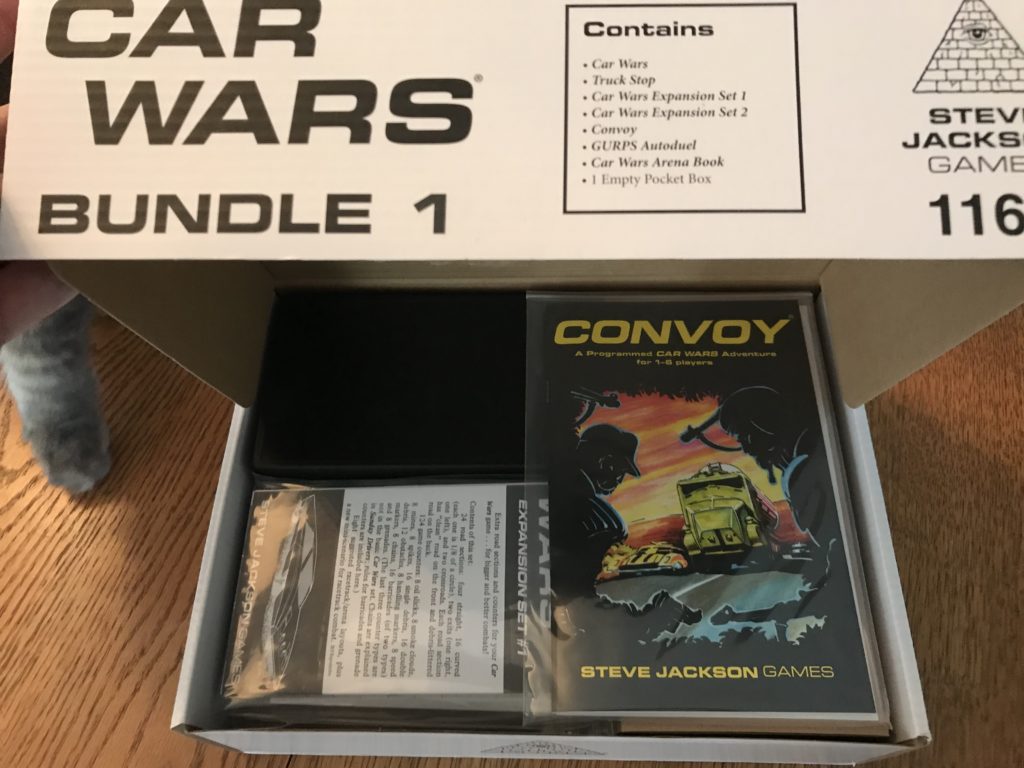
Opening box #1… With Convoy peeking out at me like a long-absent friend.
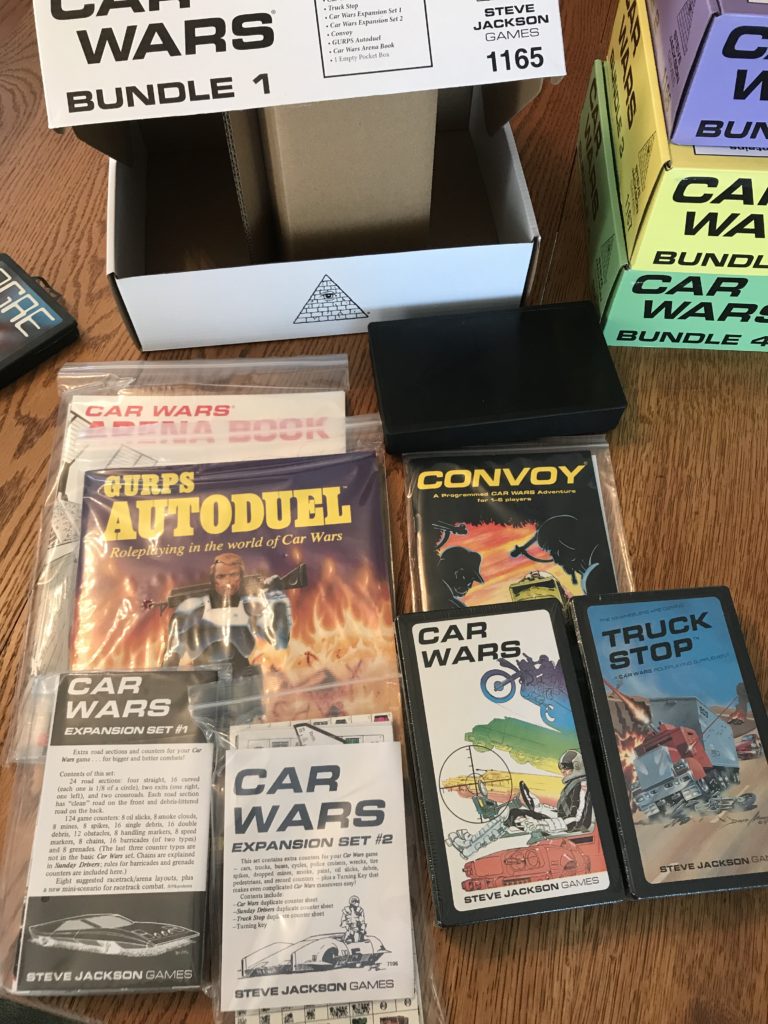
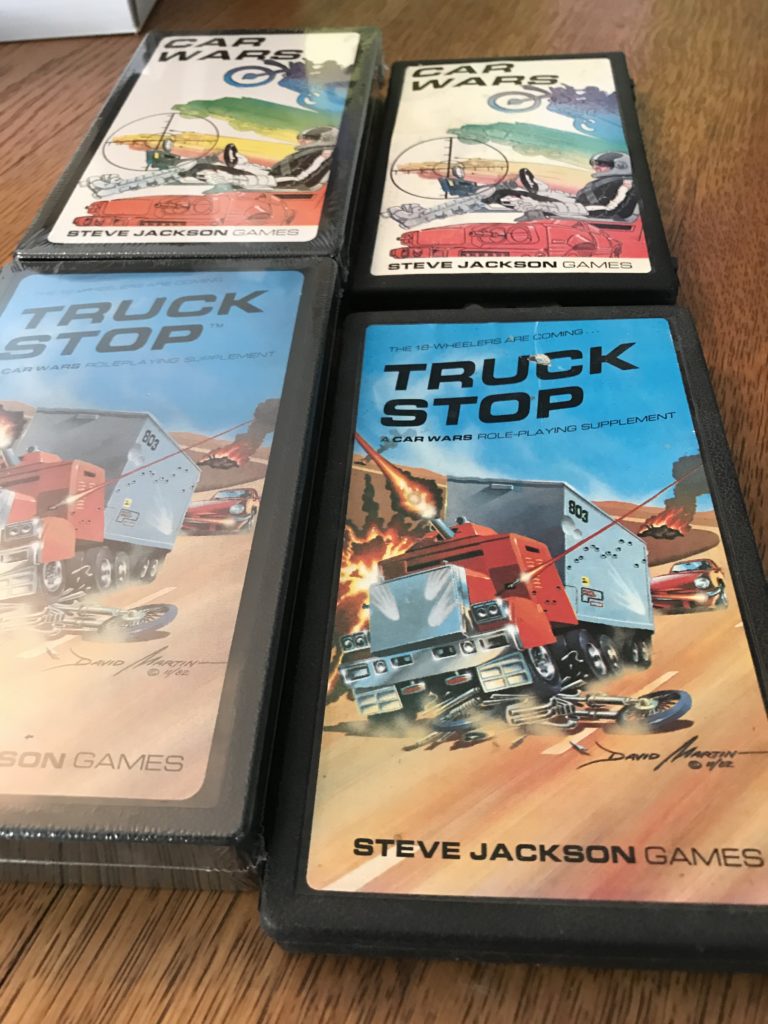
And so it begins… Car Wars, Truck Stop, a couple expansion sets, the arena book, Convoy, GURPS Autoduel and a spare pocket box to put the expansions in. It starts strong!
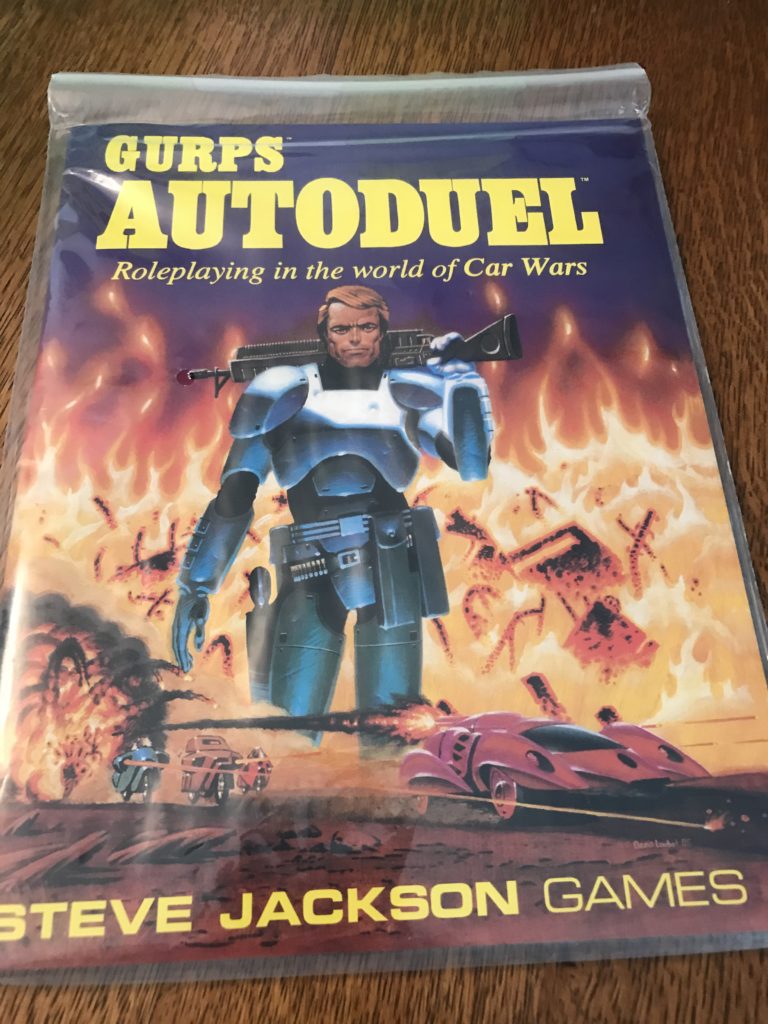
I’m so glad to have a printed copy of this version of GURPS Autoduel. I have no problem with Darryl Elliott’s cover for the 2nd edition, but Denis Loubet’s original cover is my absolute favorite Car Wars illustration ever.
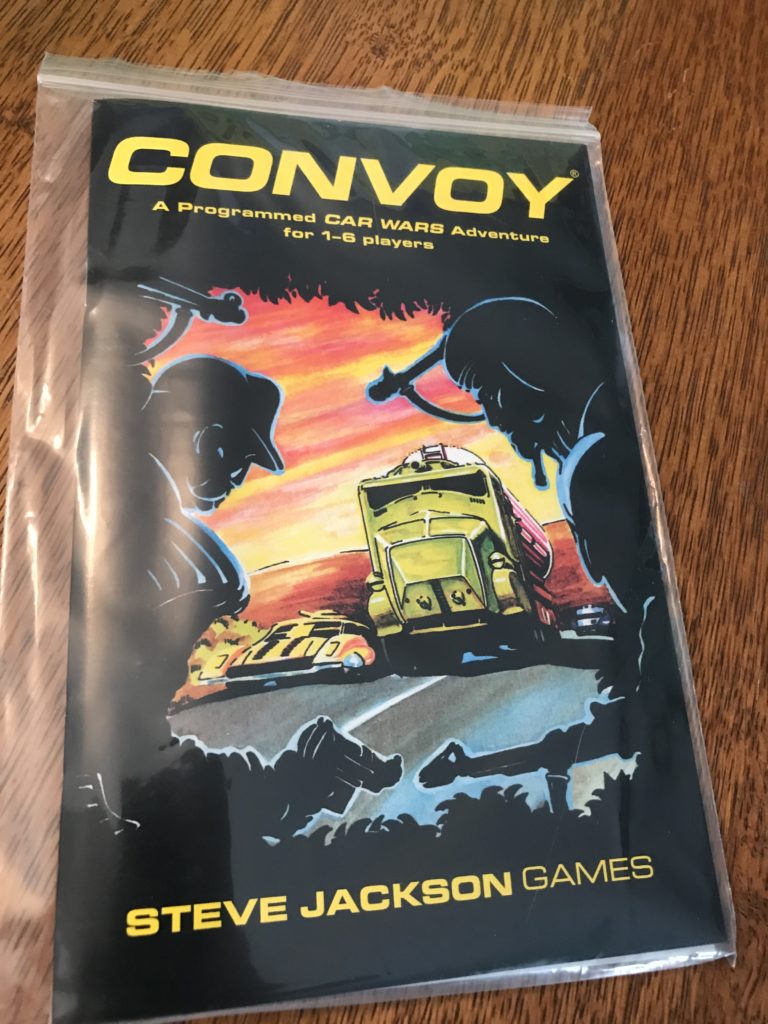
Convoy was one of the best supplements, as sort of choose-your-own adventure with Car Wars battles along the way. Whenever I wanted to immerse myself in that world or think about Auto Fire, I’d page through a bit of this guy. The book was one of the hardest losses from the move (or whenever it disappeared), and the PDF was I think my very first purchase from Warehouse 23.
I cracked open the bonus pocket box for the first time and it feels nice and solid. Feels similar to a slightly-undersized clamshell VHS case (for those that know what those feel like).
Once again, comparing old (right) versus new (left).
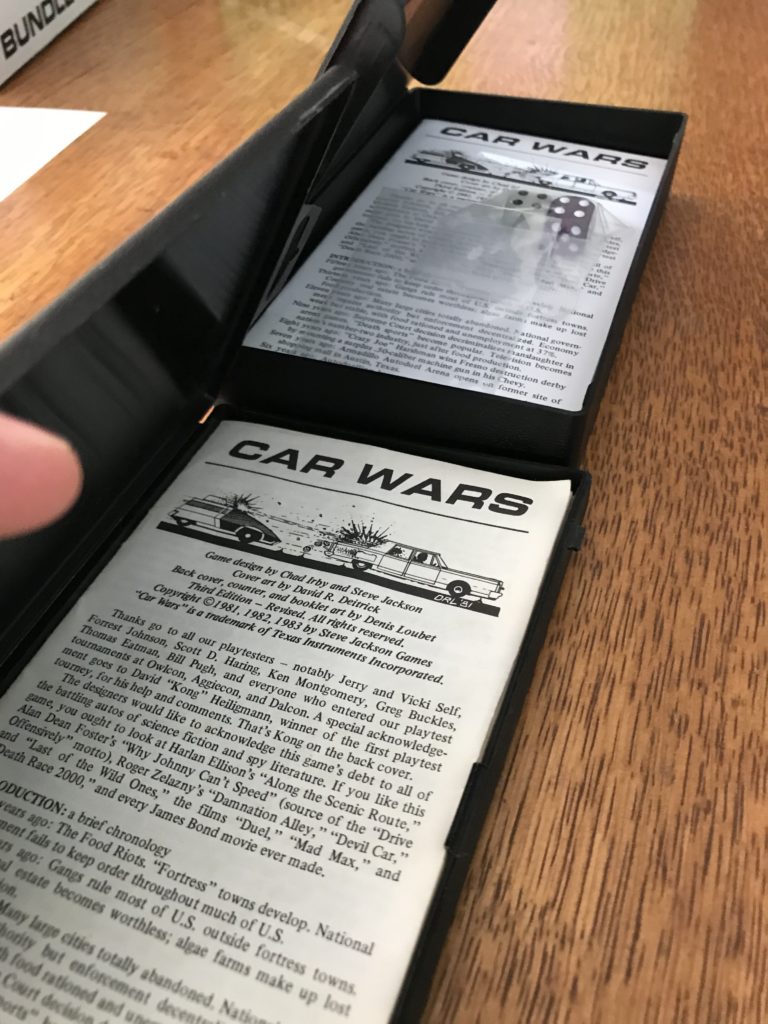
Comparing the old with the new here (new on top), the inside was lovingly recreated with all the usual inserts, with some bonus surprises including a set of two d6’s (which conveniently fit in the larger boxes!).
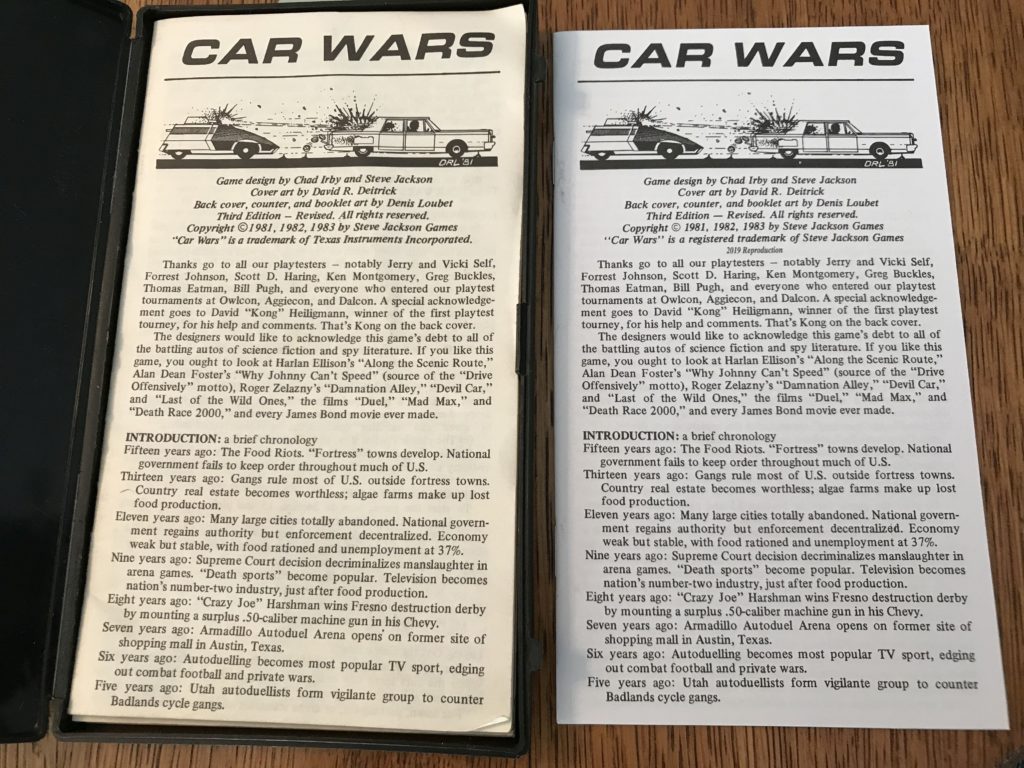
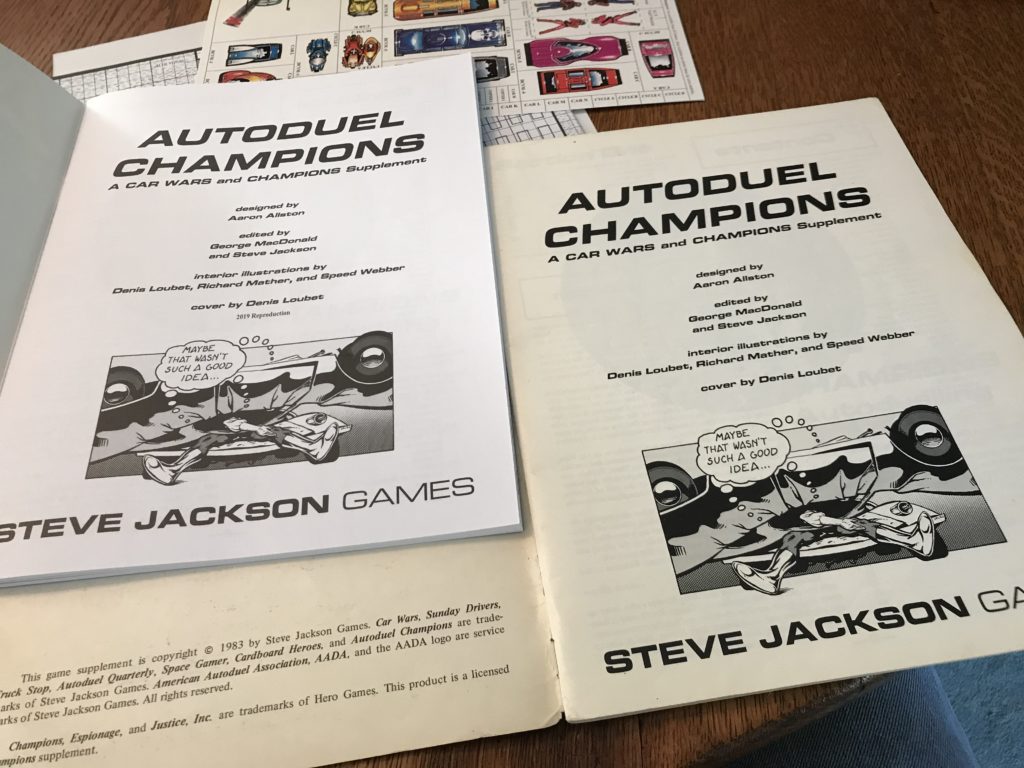
The new edition (right) is pretty much a direct scan of the original books (aside from a small note in the header), so this is as close to 1983 as you can get. This does mean you should expect whatever typos and game-balance quirks existed at the time.
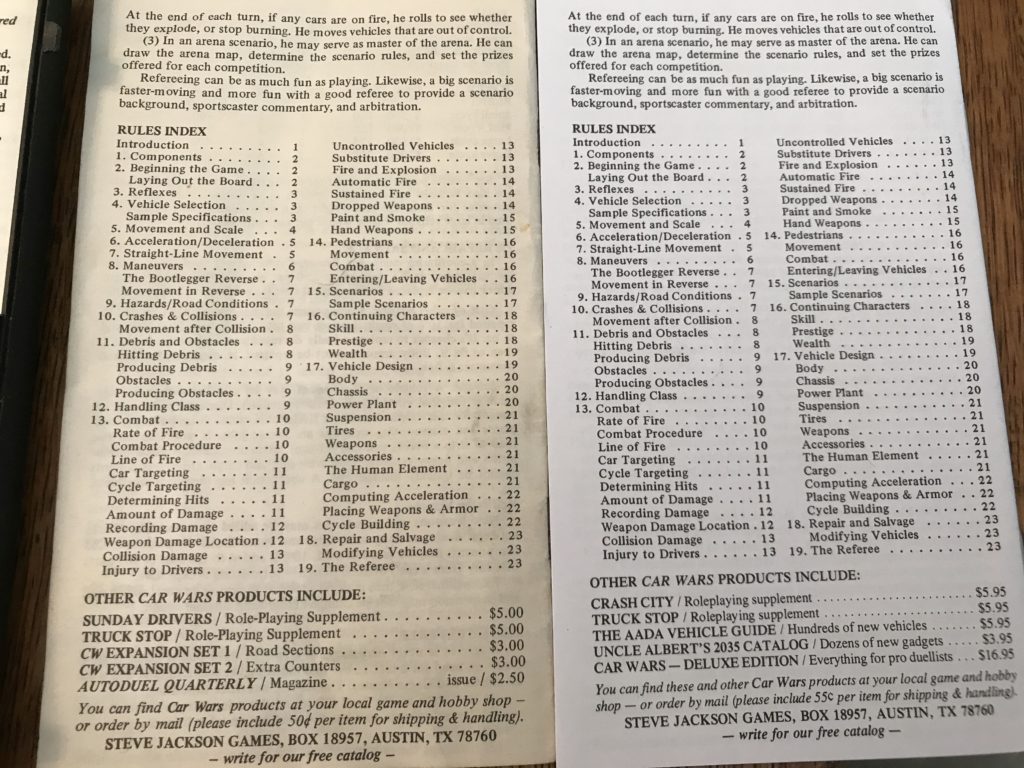
My old copy (left) has a promo for Sunday Drivers for $5, while this reprint advertises Crash City (Sunday Drivers’ revised name) for a slightly higher price. The reprint also promotes Car Wars Deluxe, which was released closer to the mid-80’s. Not sure of the exact year of each.
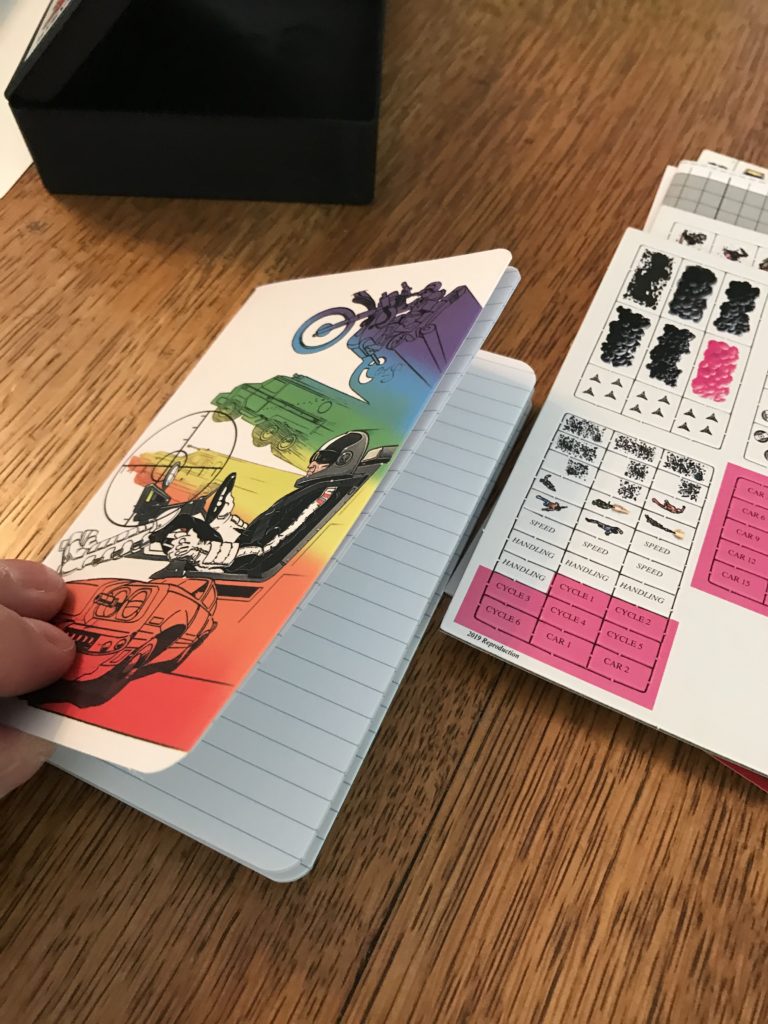
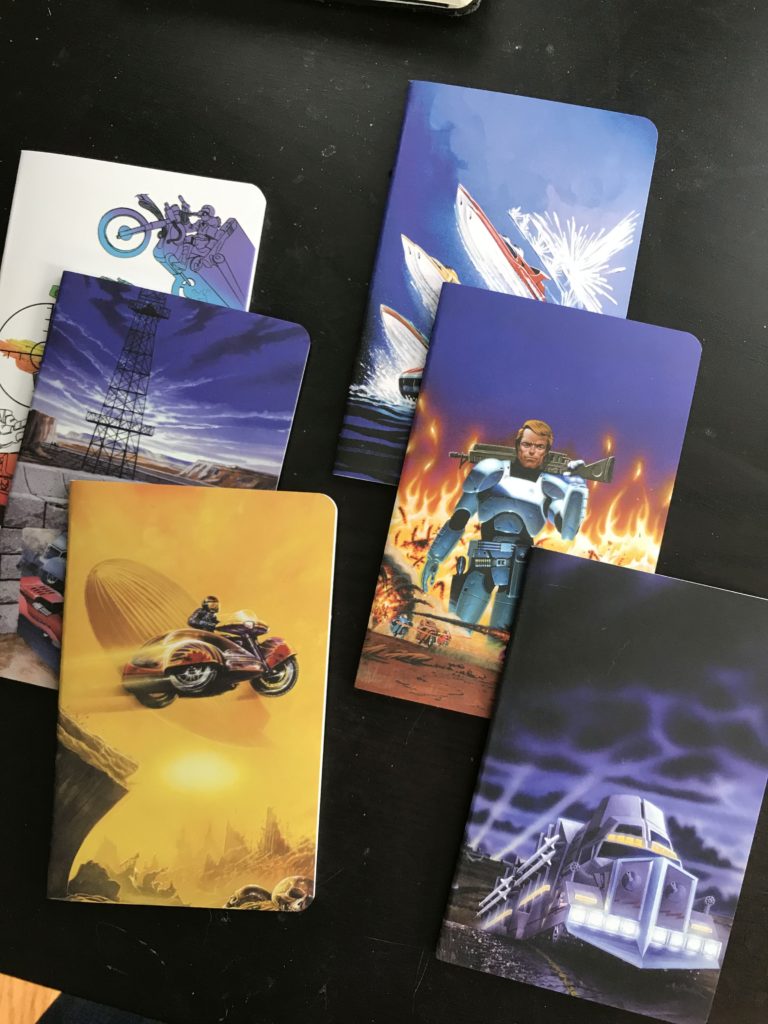
These tiny little bonus notebooks they tucked into each pocket box are delightful.
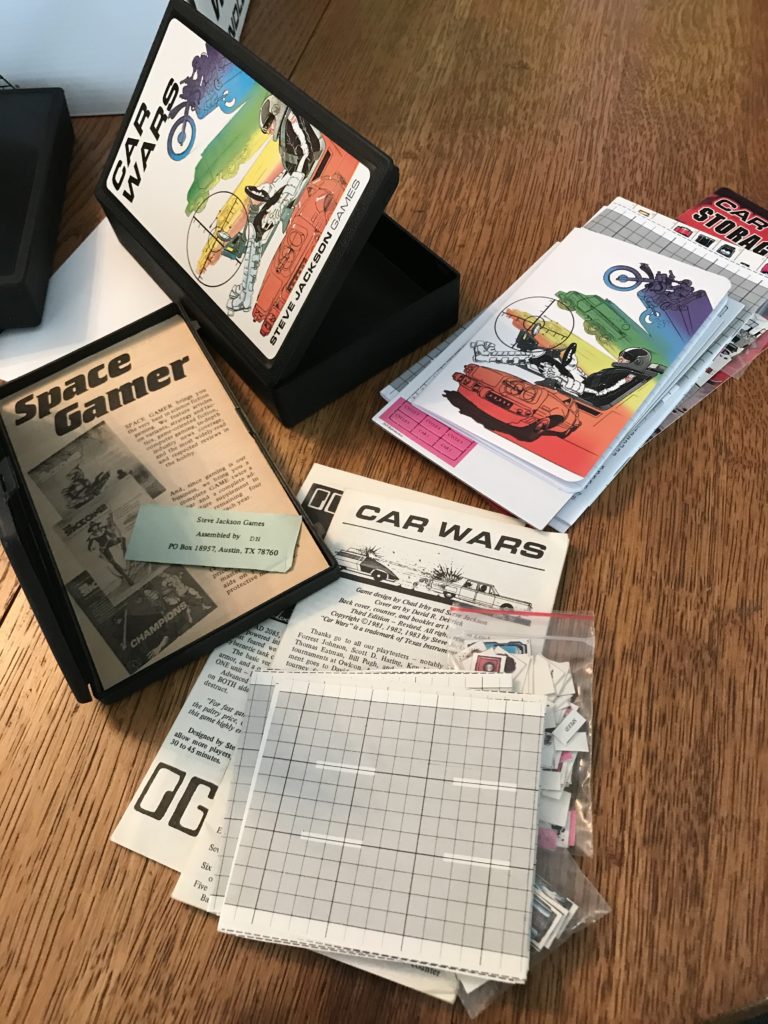
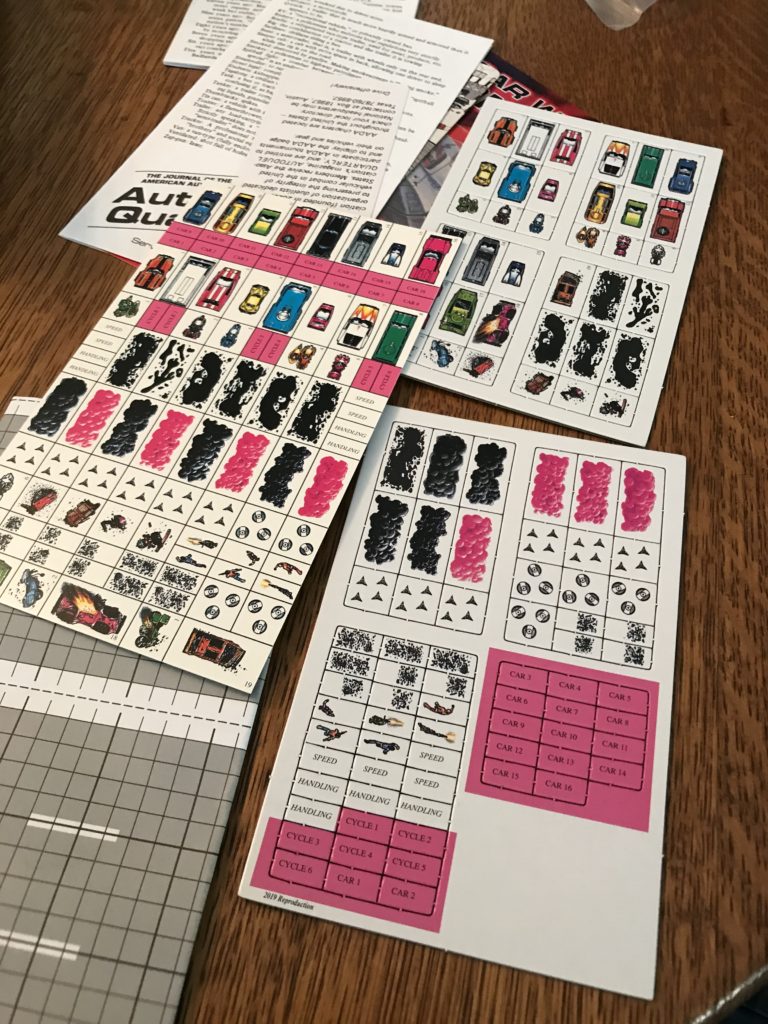
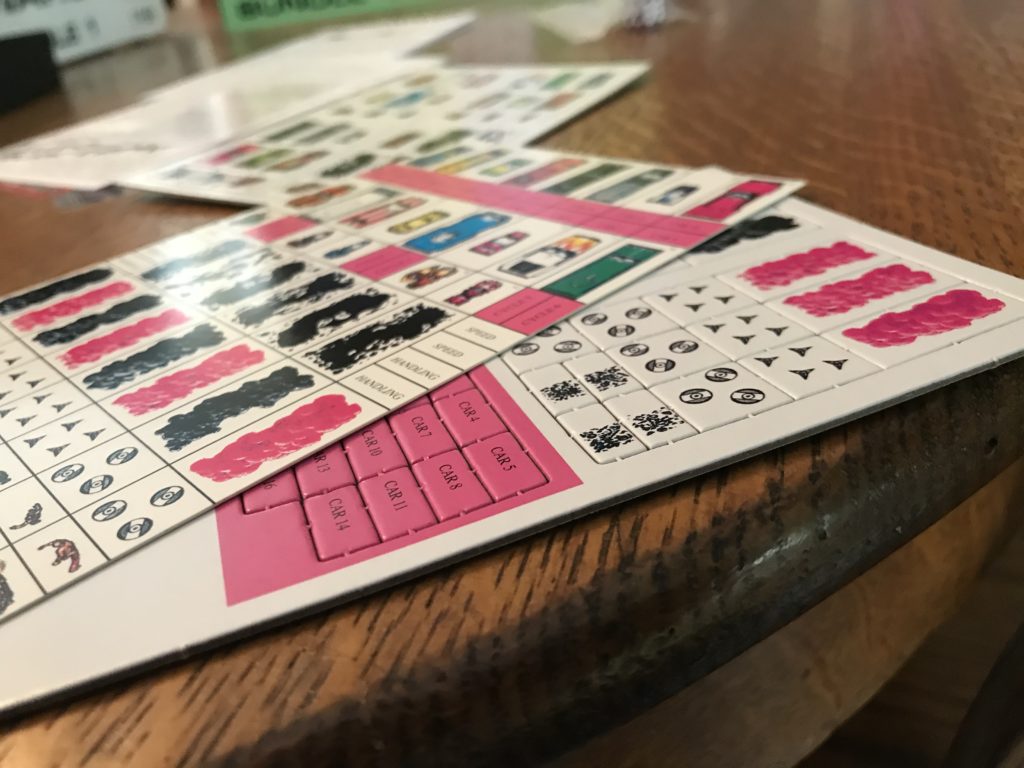
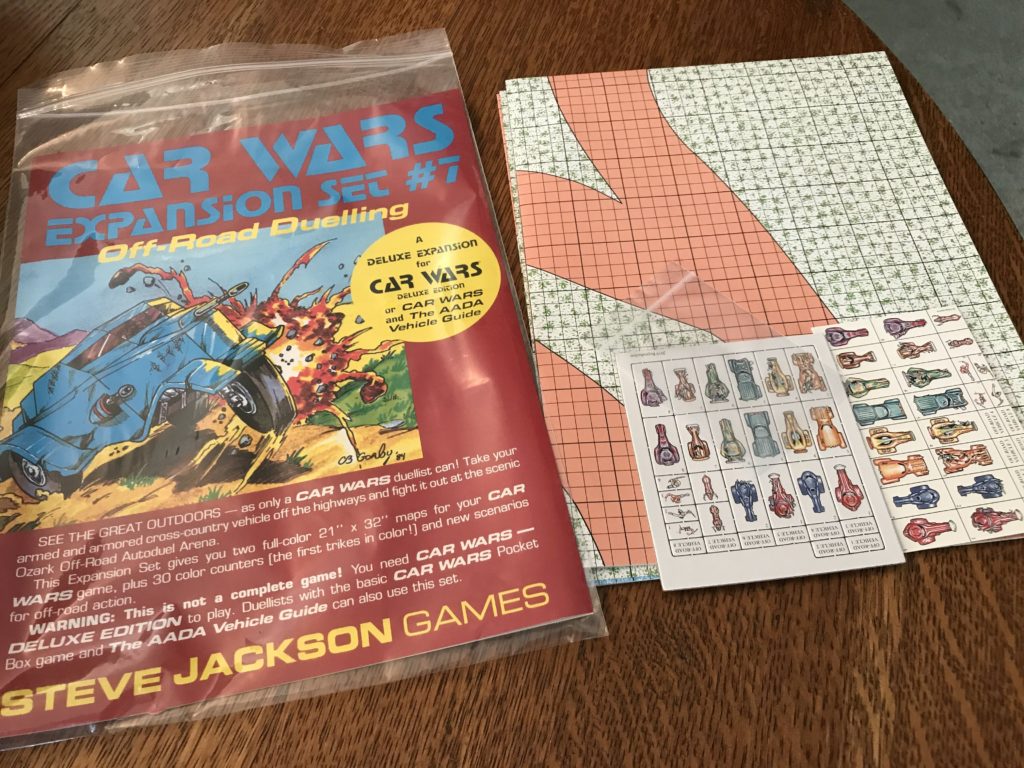
Keeping with absolute authenticity, there are uncut counter sheets included as the originals had, but there are also die-cut versions of every counter so you don’t have to crack out the scissors.
The die-cut counters have a bit of extra thickness to them, which is great: The original 1/2″ x 1/4″ counters in particular were so thin and light that they were very hard to handle, and don’t you dare sneeze…
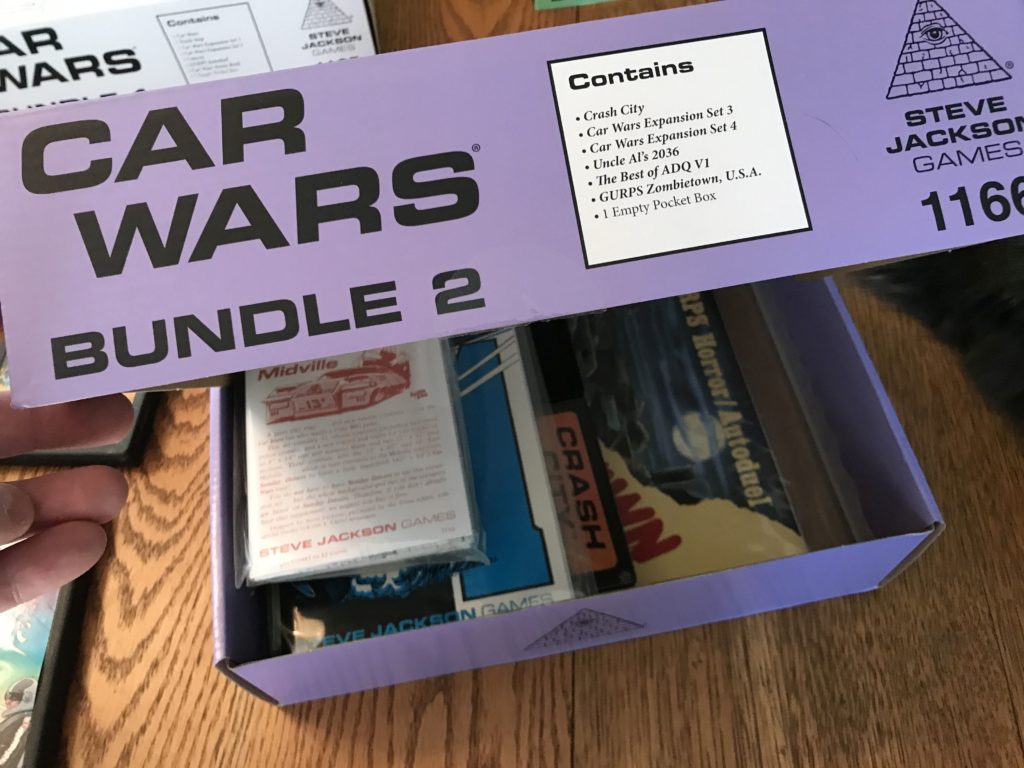
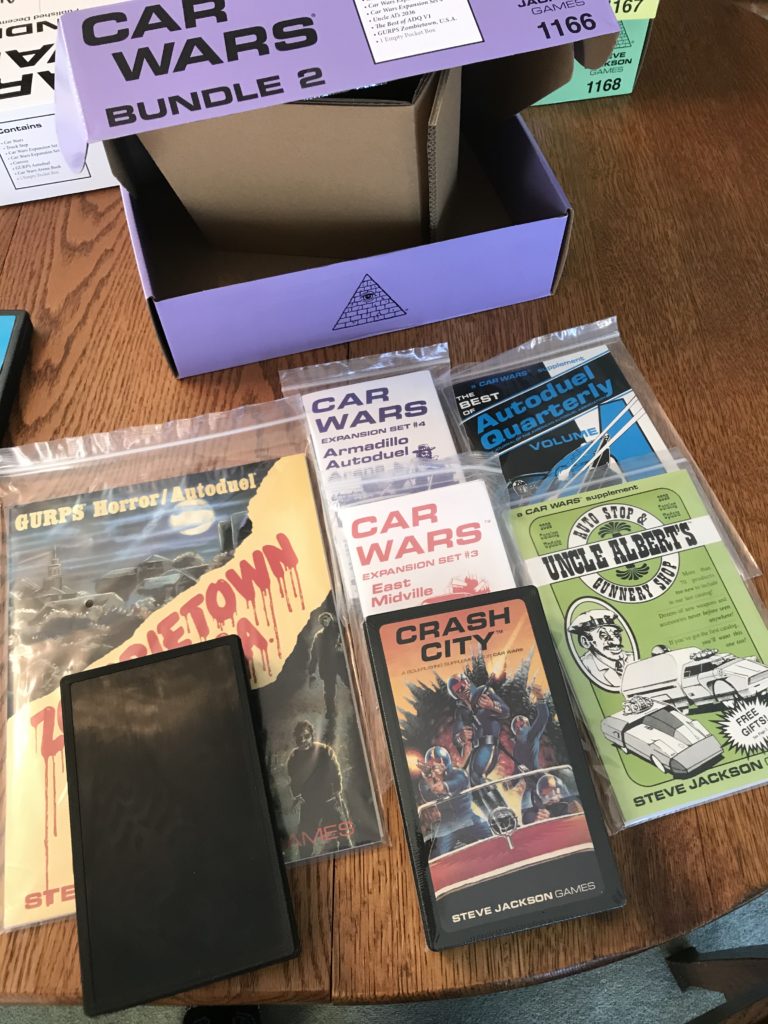
Moving on to treasure trove #2!
Two more expansion sets, Crash City, an Autoduel Quarterly collection and one of the Uncle Albert’s Catalogs, along with Zombietown and another bonus pocket box. Zombietown USA for GURPS Autoduel is one I’ve never owned and am eager to dig into.
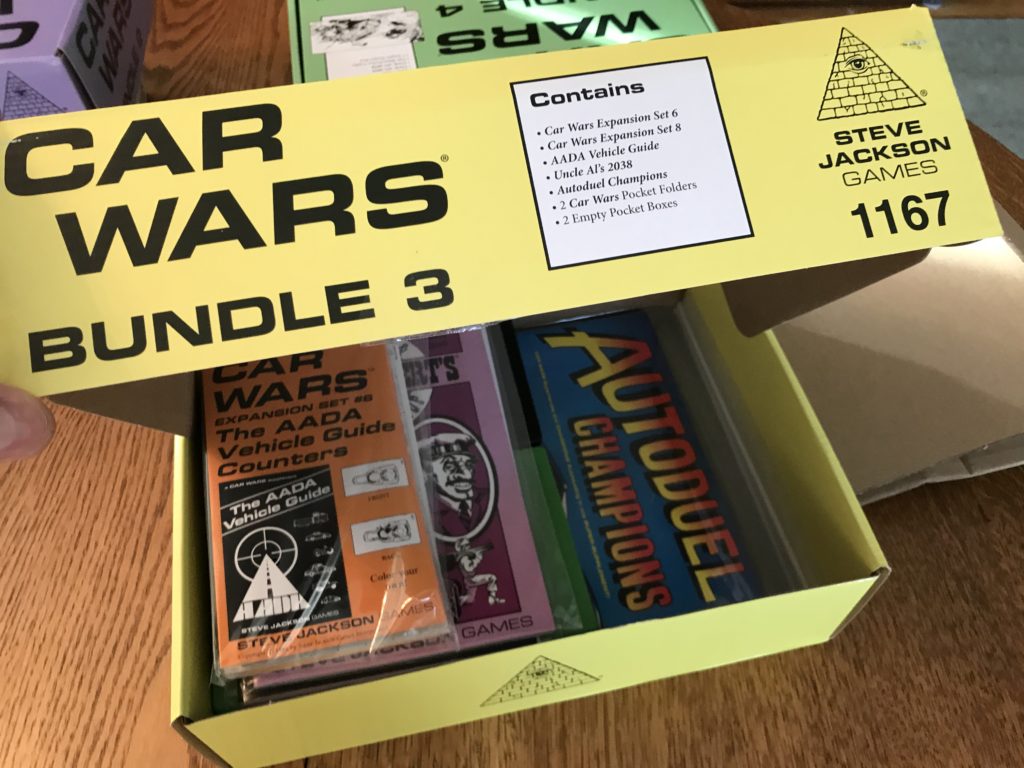
Opening Box #3!
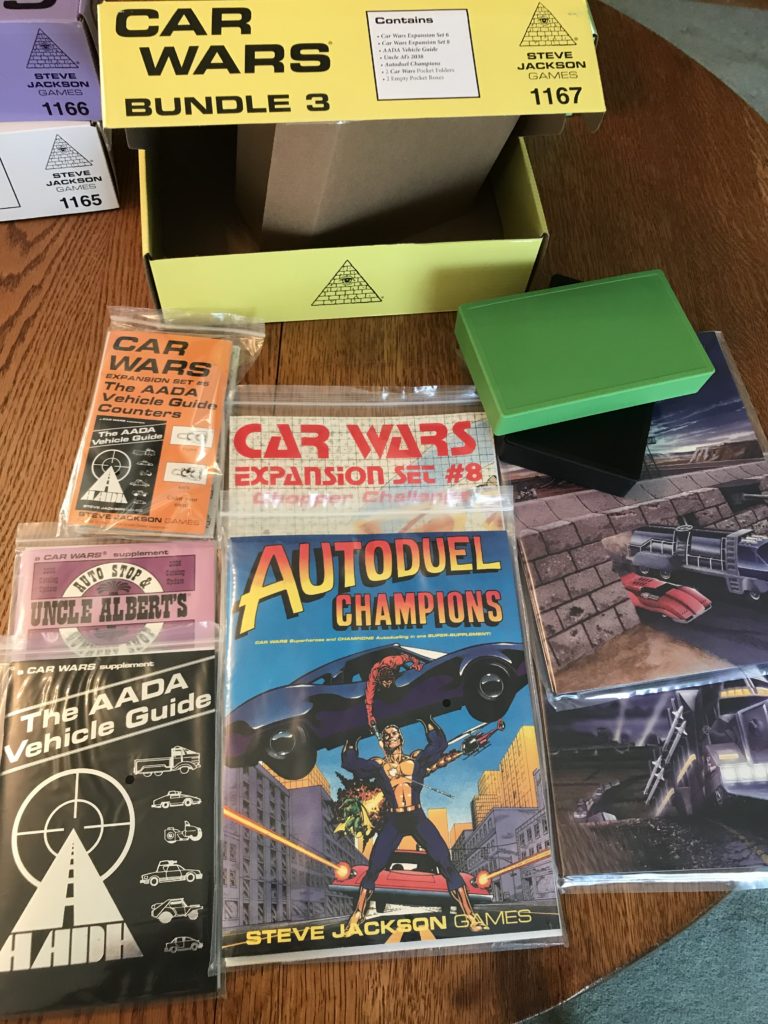
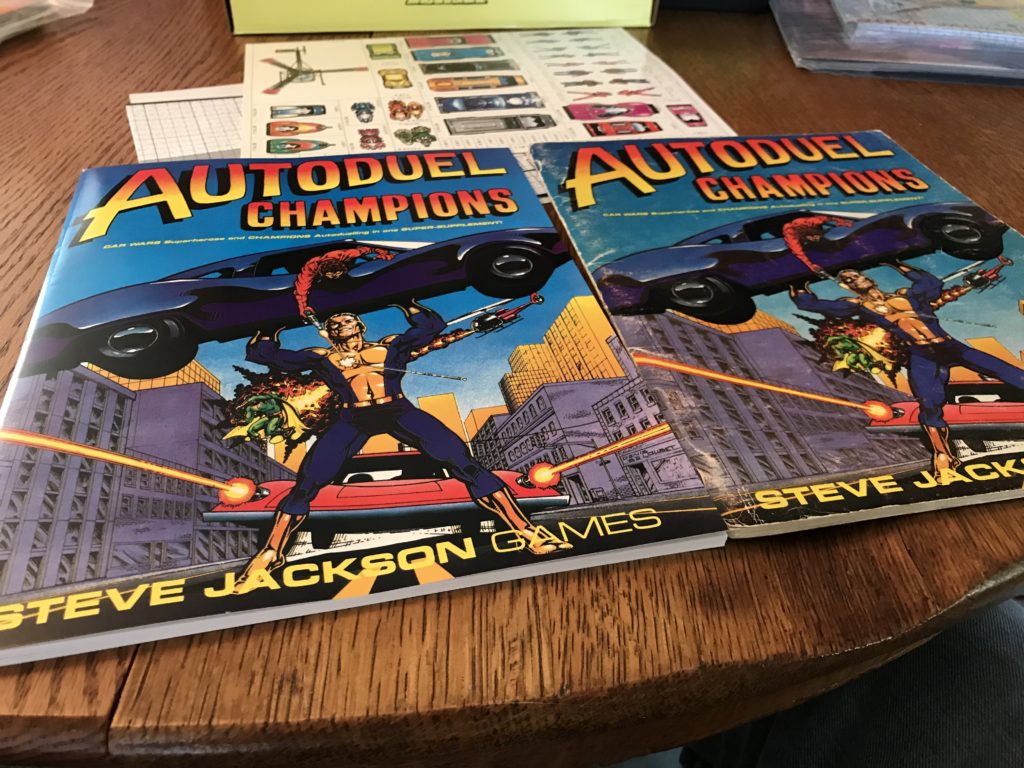
There’s some beefy stuff in here: Autoduel Champions(!), Chopper Challenge, the vehicle counter expansion set, another Uncle Al’s, and the AADA Vehicle Guide. A couple bonus pocket boxes and two folders are also tucked in here…
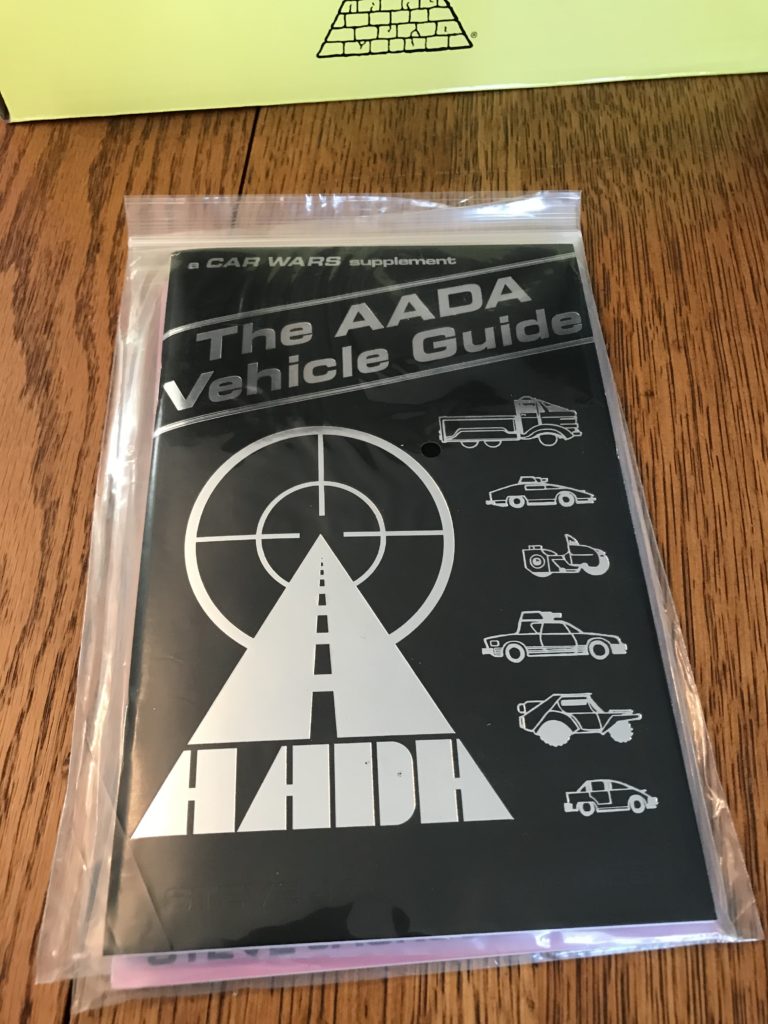
This book is iconic to me, and I’m super-glad they reprinted it with the foil cover… It’s so pristine it feels locked in time. (The AADA stands for the American Autoduel Association, natch).
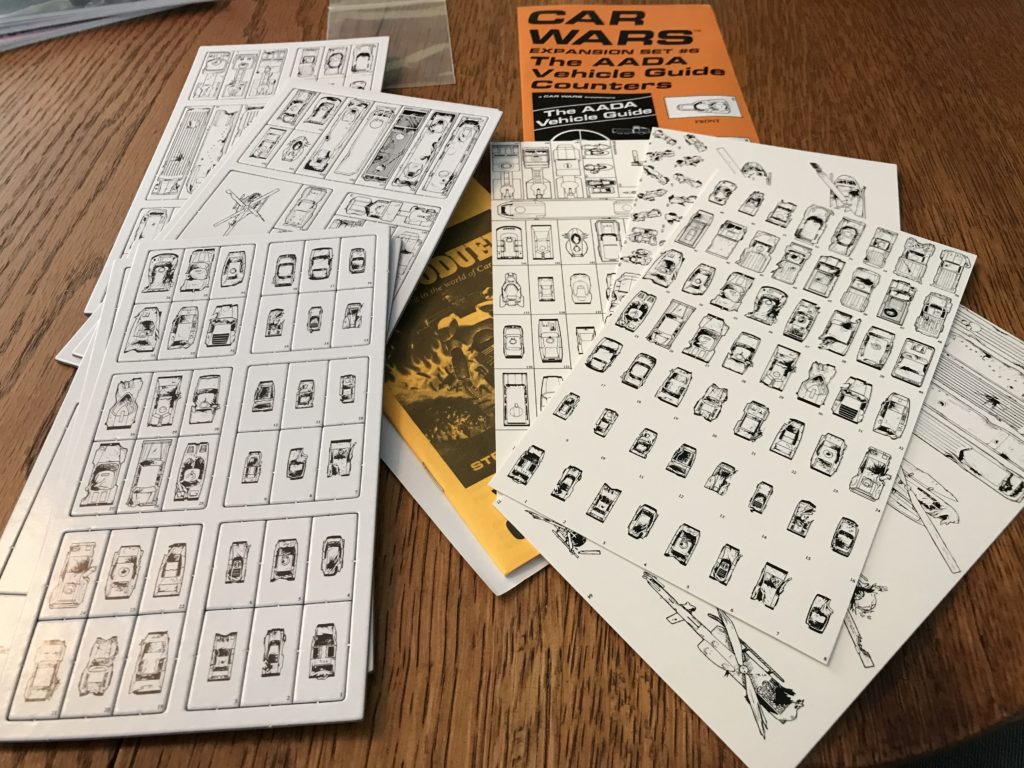
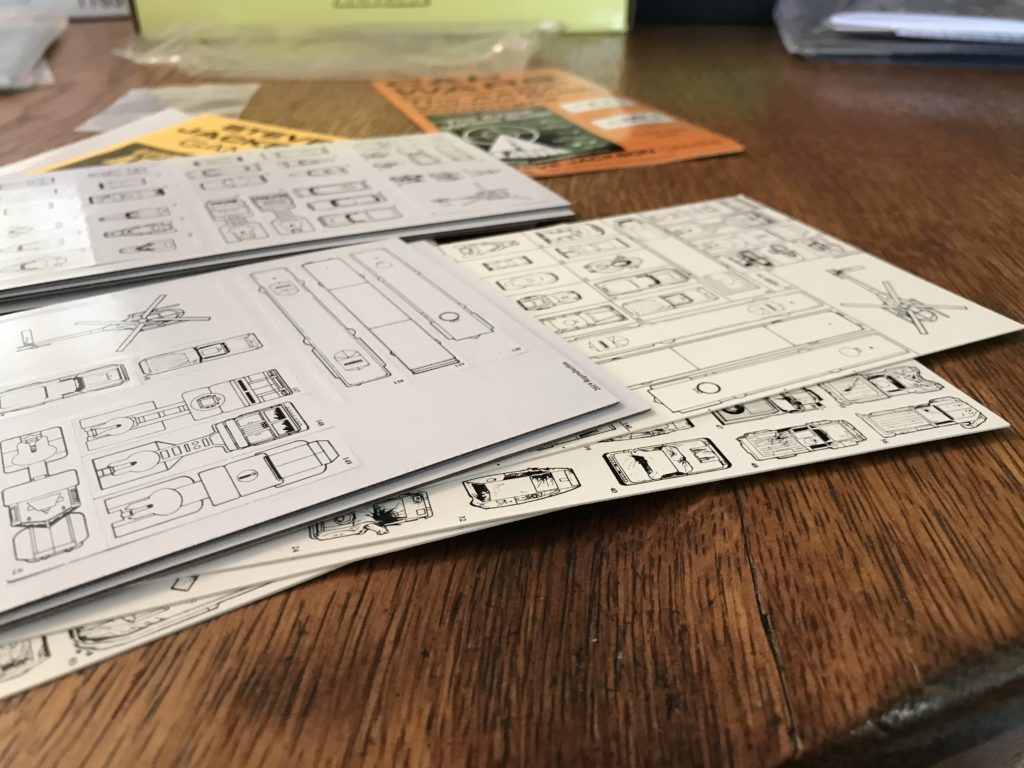
The vehicle counter expansion set is chock full of game pieces for all the vehicles in the AADA guide above. They’re double-sided so you can flip them when destroyed. You can see from comparing the cut-out to the die-cut sheets that it wasn’t just a quick job to transfer them, they had to completely revise the layout to switch over.
Comparing new with the old again… Autoduel Champions was a crazy supplement that added Champions-style superheroes to the game, although more importantly it was the only way to get helicopter rules at the time. Notably, it also served as a Champions supplement, providing autoduelling rules for that game. I had completely forgotten that it included giant vehicle and helicopter counters for play to match the larger Champions scale.
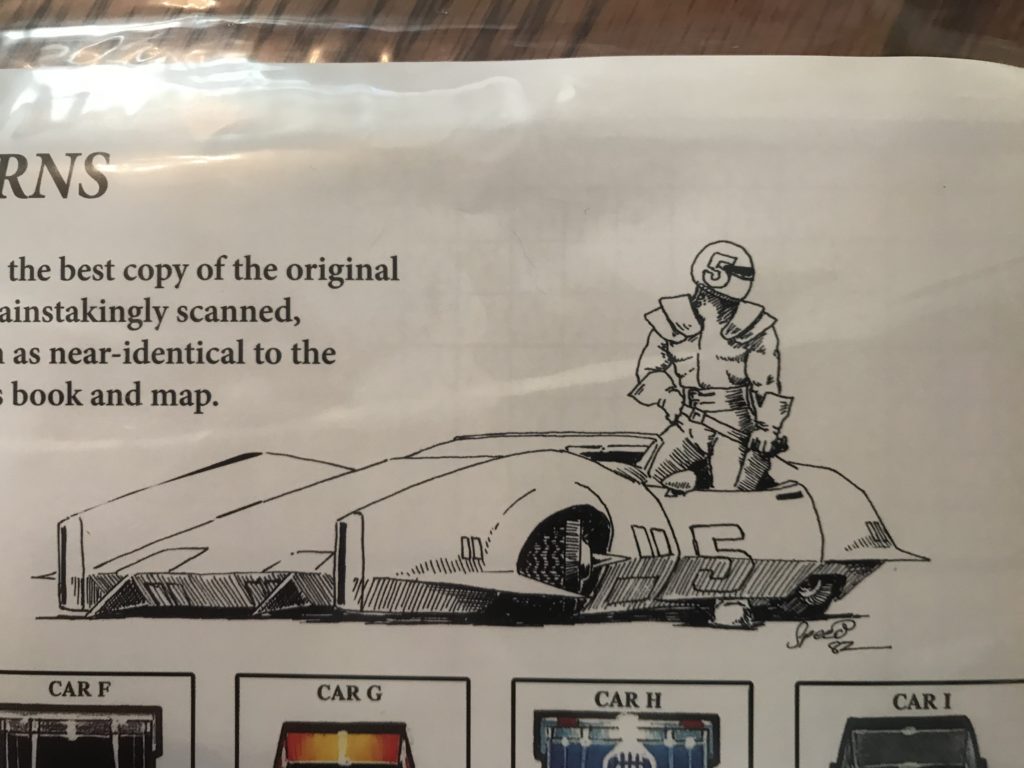
While I loved all the color cover art, this piece by George “Speed” Webber was my favorite piece of interior art (Sorry Denis!). When I was a kid I must have recreated this drawing half a dozen times in varying media including pixel-plotting on my Apple II plus.
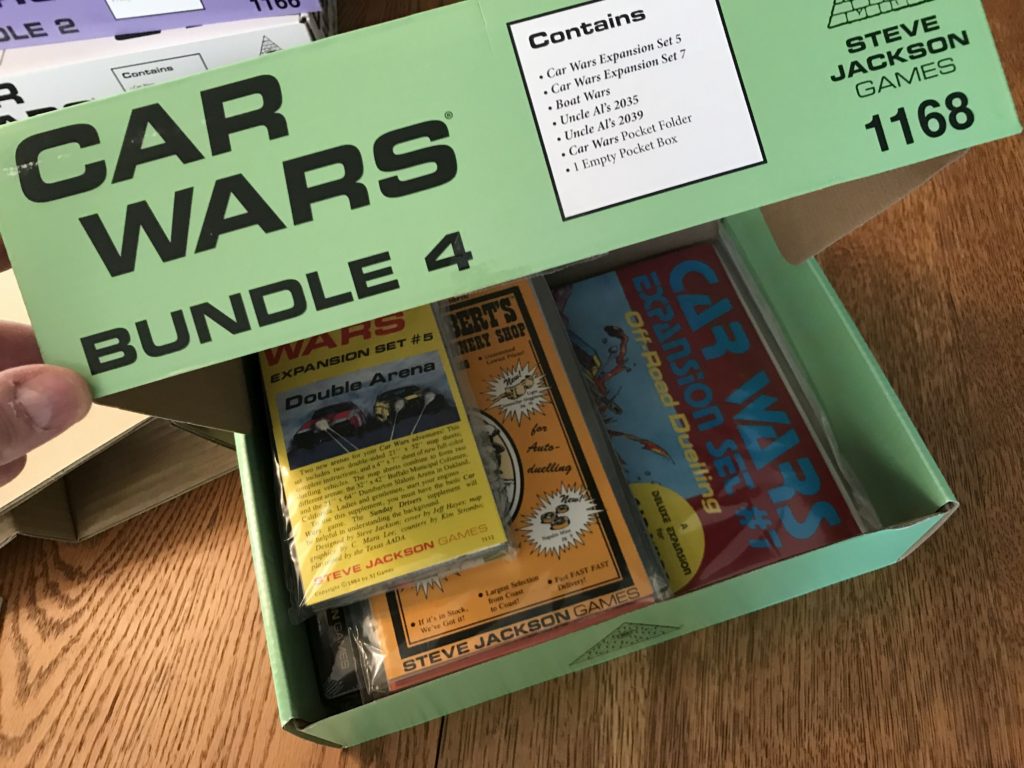
Finally to bundle #4!
Good ol’ Off Uncle Al’s maks a couple more appearances (so great to have all four together again!), another arena map expansion as well as the offroad duelling supplement. One of those cool bonus folders along with one last pocket box fill the gaps, and finally a copy of Boat Wars! That’s one of the few supplements I never owned, should be fun to check out.
The off-road expansion was lovingly crafted, with those cool trike counters and one of the very few color maps they printed. I also loved getting full-sized expansions because the maps didn’t have to be folded a dozen times over!
Looking back on all the Car Wars loot, I feel it’s money well-spent.
And with all those other games I think it might have been an alright deal for $200 even back in the 80’s… The platypus seems to agree.
One last peek at the rad little notebooks from the Car Wars packages…
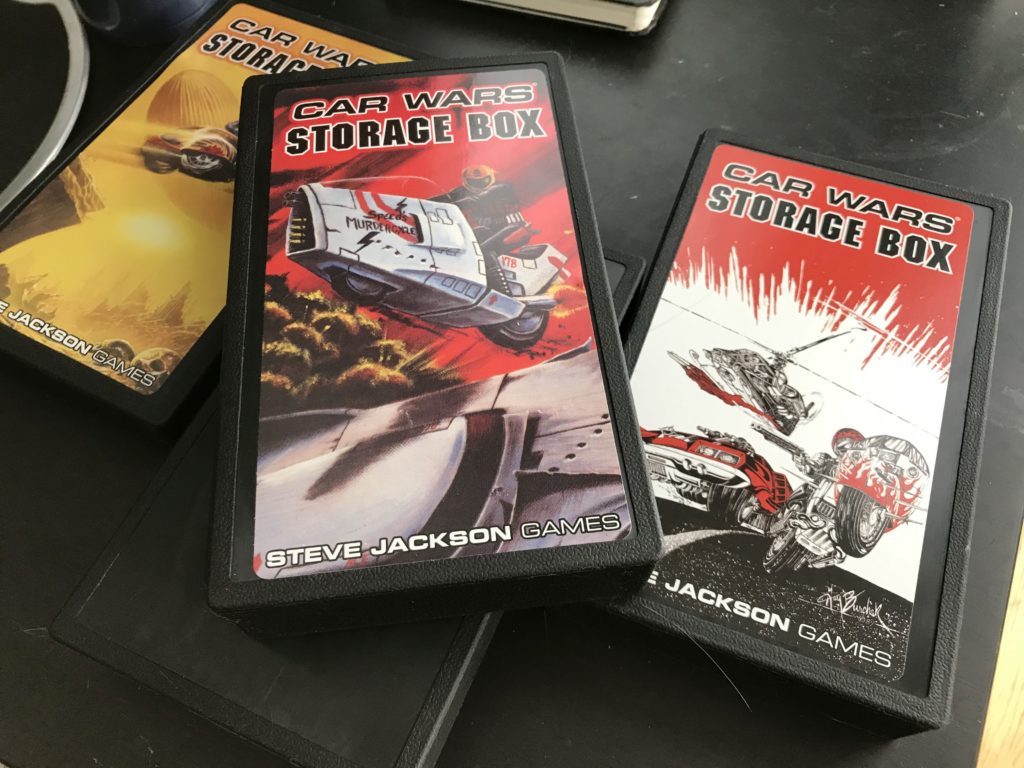
…and a look at the bonus pocket boxes once I got stickers on them to hold my expansions. The stickers were extremely hard to peel from their backing, but I got them on okay. The stickers are a bit narrower than the boxes themselves, however, so I can’t say they’re particularly centered.
Anyway, feels good man. My collection is finally back to beefy.
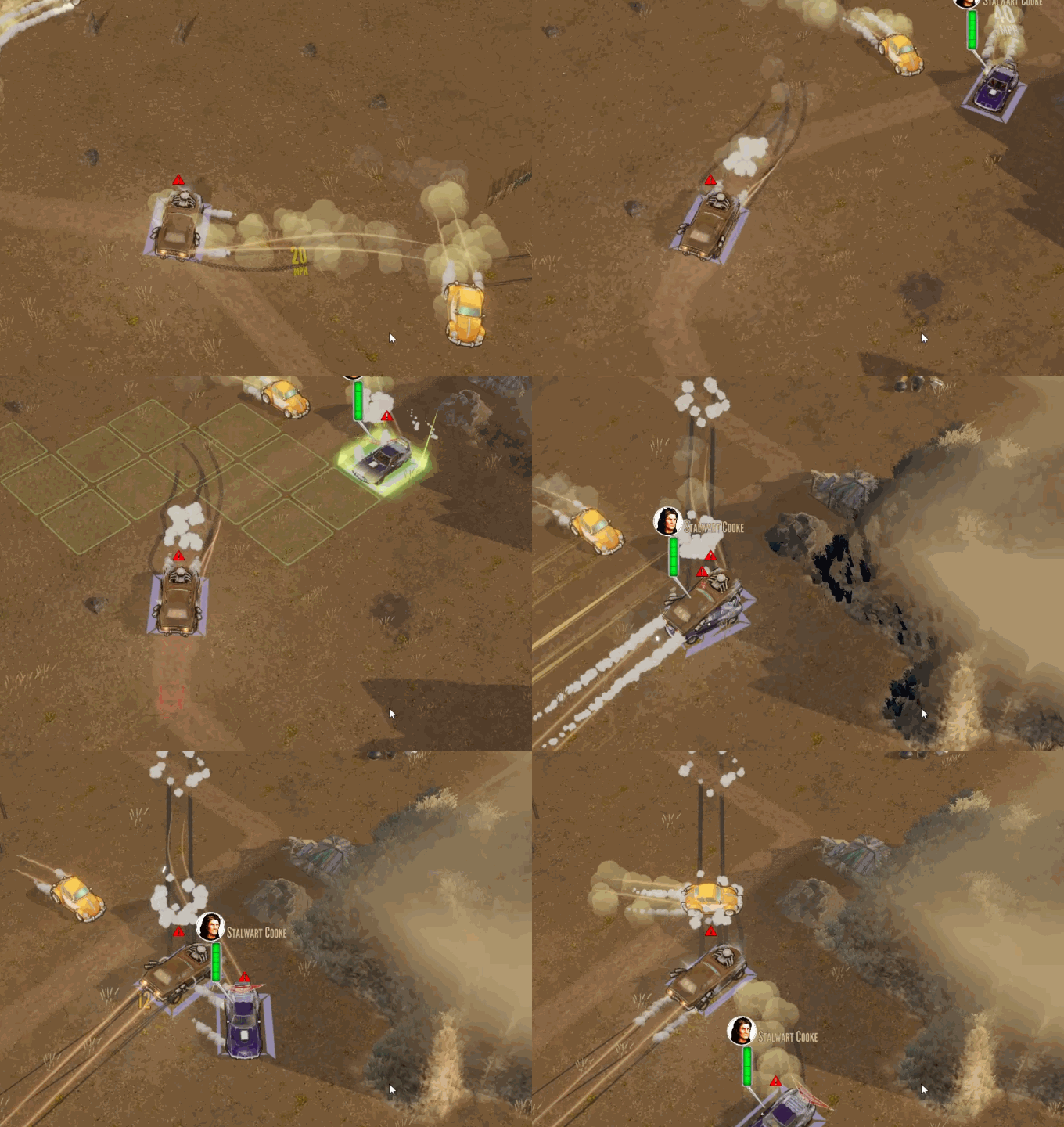
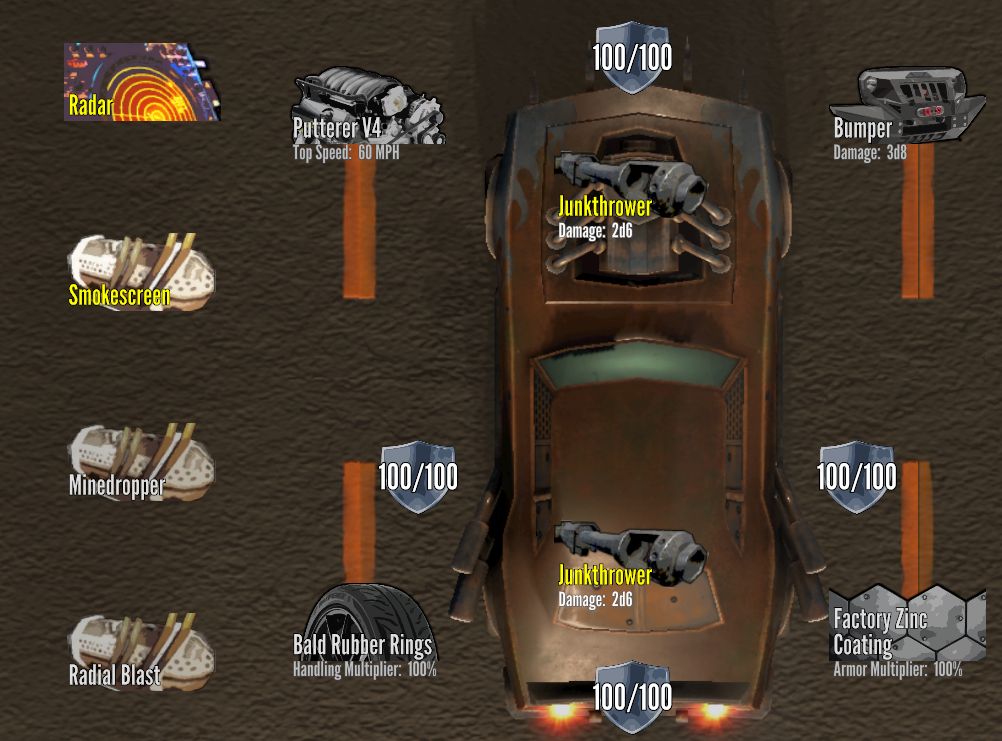
We’ve been working on some new special abilities for the vehicles in Auto Fire, including the ​Ram Piston​​​.  ​Different vehicle chassis types can have some crazy maneuvering abilities, although they’ll consume resources such as gas, so make sure to use them wisely!
The foundation of the special moves system was pitched in by developer comrade Jim, created during this stream where we talked through some of the system updates needed.
The followup was transferring it to on-demand equipment, which didn’t have the ability to be aimed yet. The plan is to get some more moves in like bootleggers, side swipes, and some weirder stuff. Stay tuned!
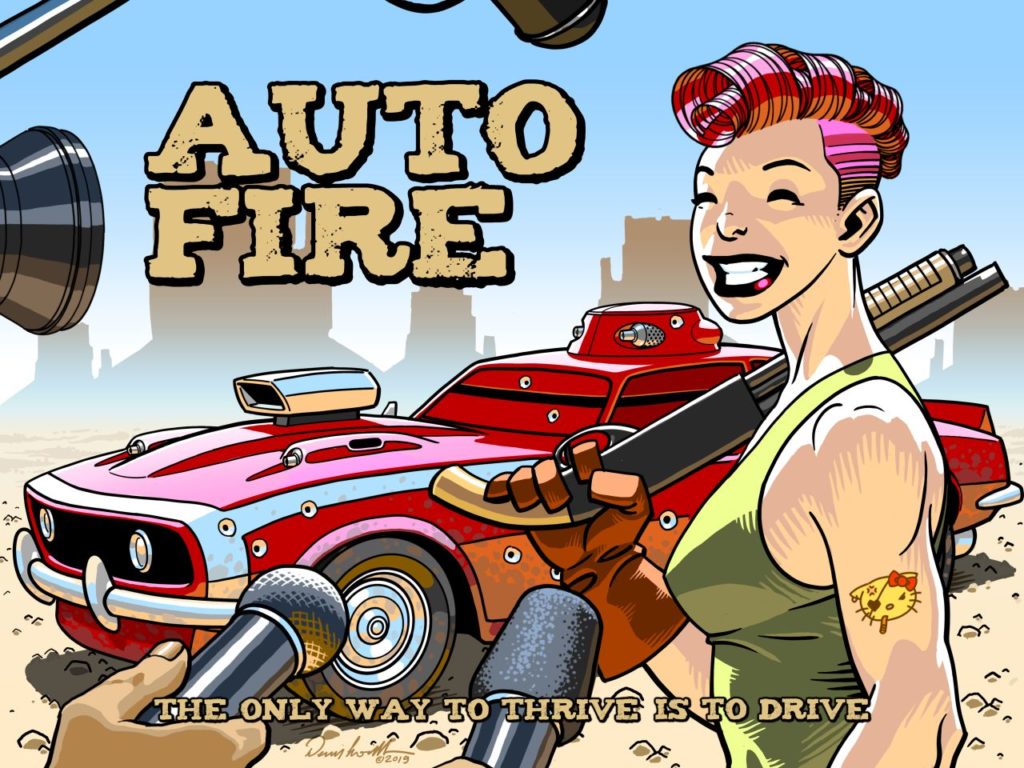
​I just wanted to take a moment to crow about Auto Fire’s new title image, which was commissioned from legendary car combat illustrator Denis Loubet​! Â
​This is super-exciting and my inner 1984 kid is absolutely nerding the hell out right now. He’s created art for a lot of my favorite things from that decade from Car Wars and Autoduel to Ultima and Champions. He did almost all the art for the original Car Wars​ pocket box, and created so many iconic works from that world. I feel like he was pretty instrumental in establishing what I thought was key to the Car Wars universe: The people and culture around the cars being as important as the cars themselves. It’s something that I think has been lost a bit and would love to be able to bring back.​
In another coincidence he also just so happened to create the cover art for the very first game I worked on​ (which I only participated on for a couple weeks), and I even met him when I interviewed at Origin waaaaaaay back in 1993.
Anyway, it was super-exciting to finally have a chance to work with him! He did a fantastic job.
On PAX Sunday (September 1), there is an special event at the Motif just down the street from the Convention Center… The Seattle Indies Expo 2019. In this magical place you will find a great selection of local developers showing their newest stuff and I’m super-excited to say that Auto Fire was selected to be among the games featured!
The Seattle Indies group is a vibrant community that supports the work of game creators across the Pacific Northwest. It’s a pretty amazing group, and it’s exciting to see such strong support for game development in the Seattle area.
The SIX is separate from PAX and free of charge, so it’s a great chance to slip in and see games that you won’t find anywhere else. I’ll be there demoing from noon to 9PM with the most polished auto combat yet. Some rad games have kicked off here, so if you’re in the area, come on down and check everything out!
So this blog continues to be a main platform for documenting the things that I’ve been working on, but I wanted more immediate access to enthusiasts for the car combat genre. A new Discord has been launched as the answer to this.
Not just for Auto Fire, I wanted to participate with fans of Car Wars, Gaslands, Dark Future, Mad Max, and any other type of media where a motor vehicle shoots at another motor vehicle. Click below to join up!
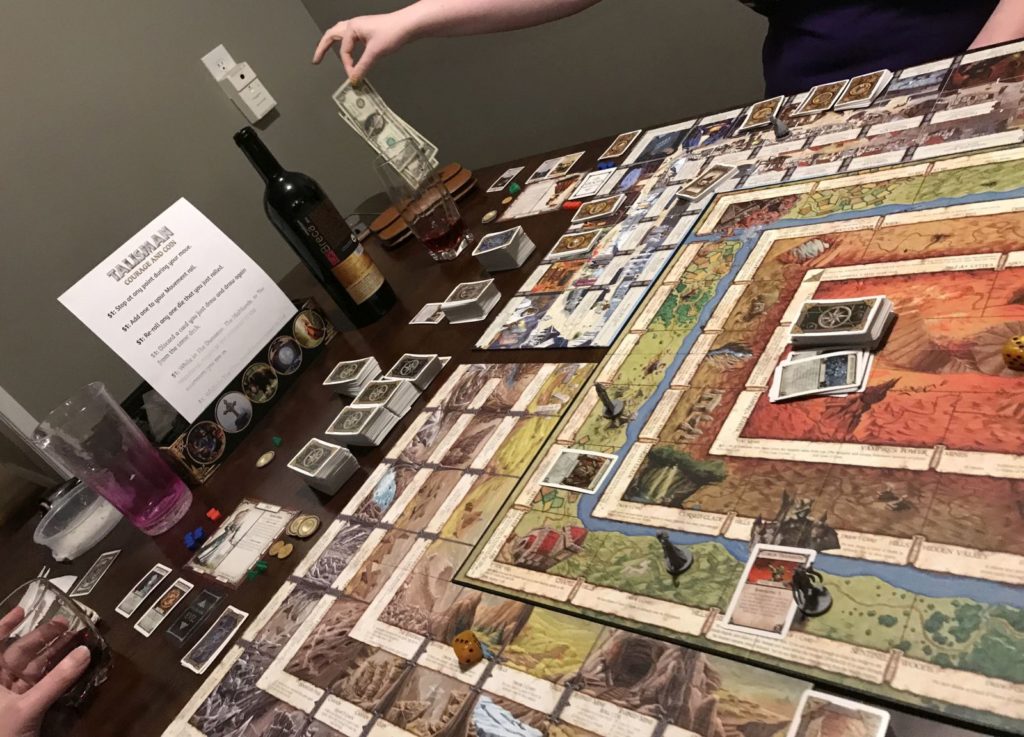
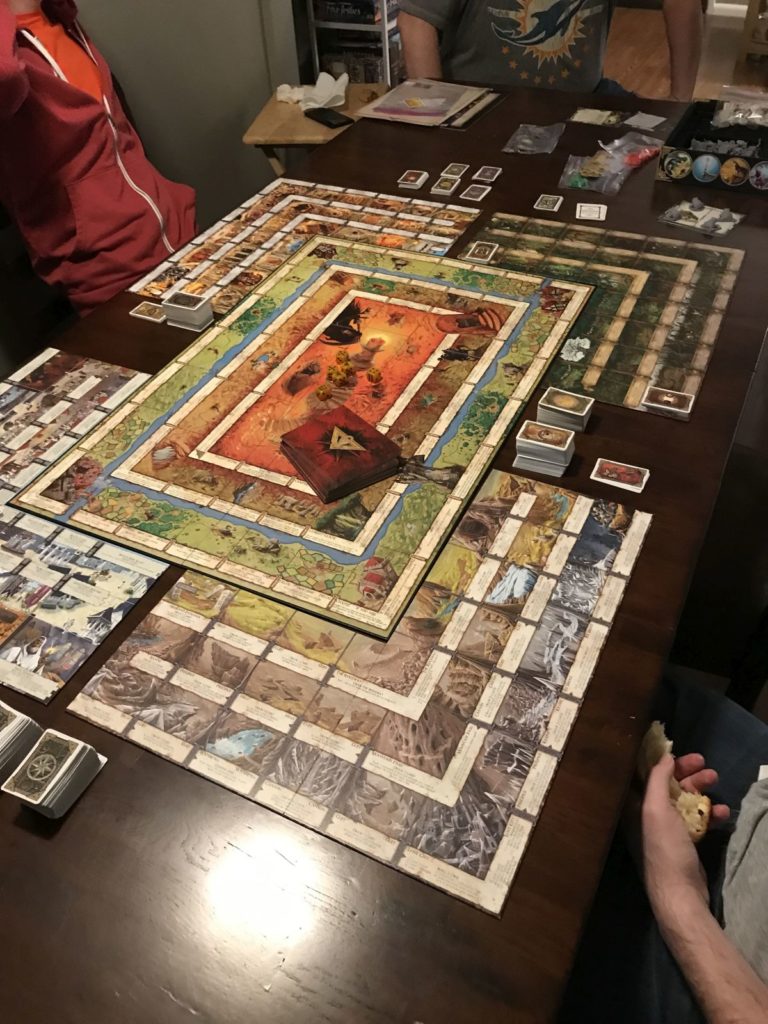
The holidays have come around again and for us that means another all-out session of Talisman. To us, this board game is played just once a year because it’s always ridiculous… When you pile on expansions packed with every fantasy trope, it becomes a madcap race around the edge of the board with heroes, werewolves, reapers, frogs, faeries, and god knows what else. Anything can happen in this game, and any roll of a six-sider could send you rocketing into the lead or plummeting headfirst into failtown.
More Pay 2 Win madness was had.
Last year our buddy Jim, who owns a sizeable column of Talisman boxes, devised a new style of play that was both terrible and somehow made the whole thing work: Pay to Win. These homebrew rules allowed us to stake our own cash to correct some of the random chaos that crops up in any Talisman game. It was a memorable night to be certain.
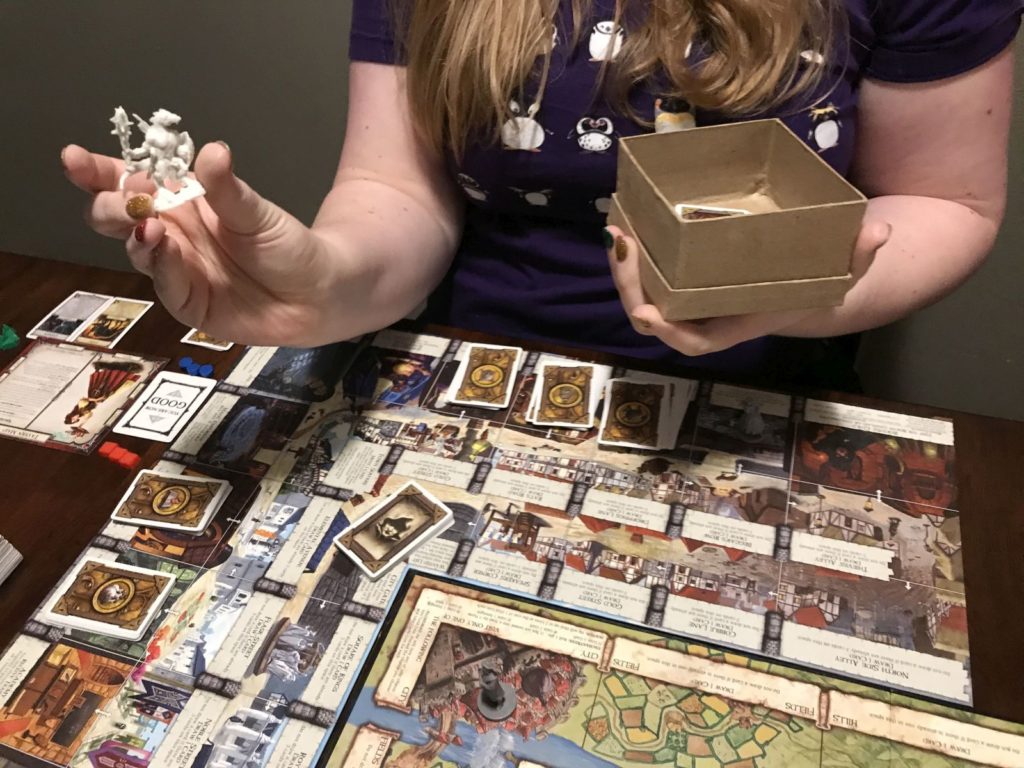
Always one to outdo himself, Jim upped the ante this year with an all-new set of Pay to Win models. However, this meant he had to step back from the table of players since he knew all the game’s secrets… Our host, our DM on this zany adventure!
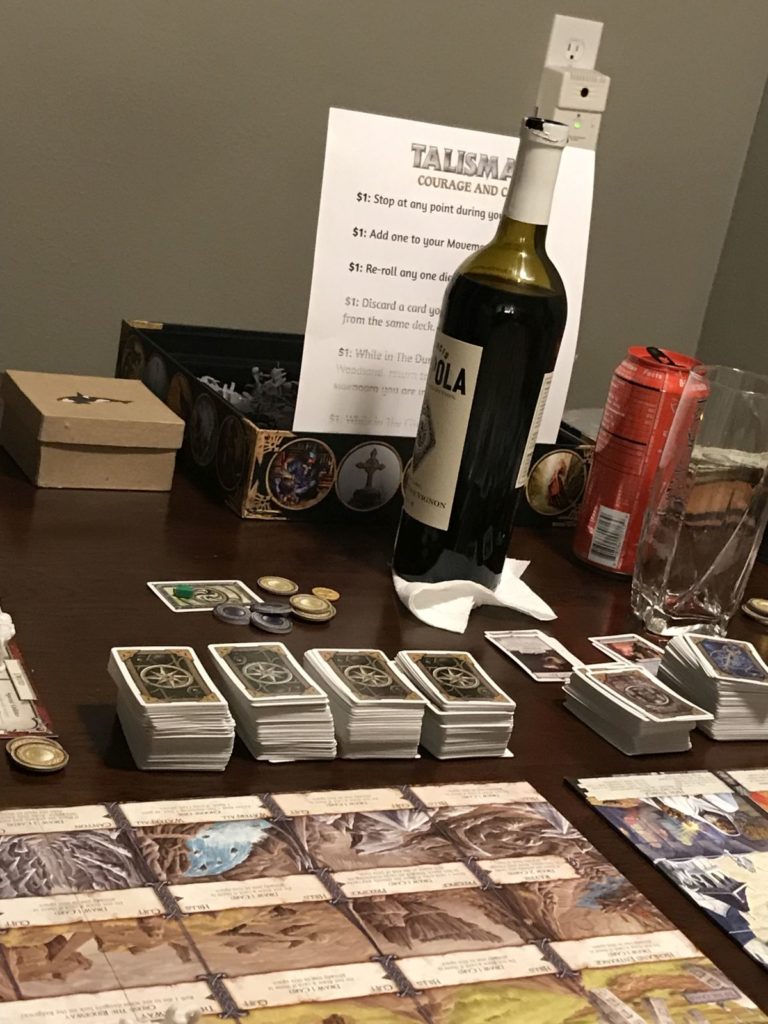
Talisman: Courage and Coin
The printer ink was running out, and soon you’ll see why.
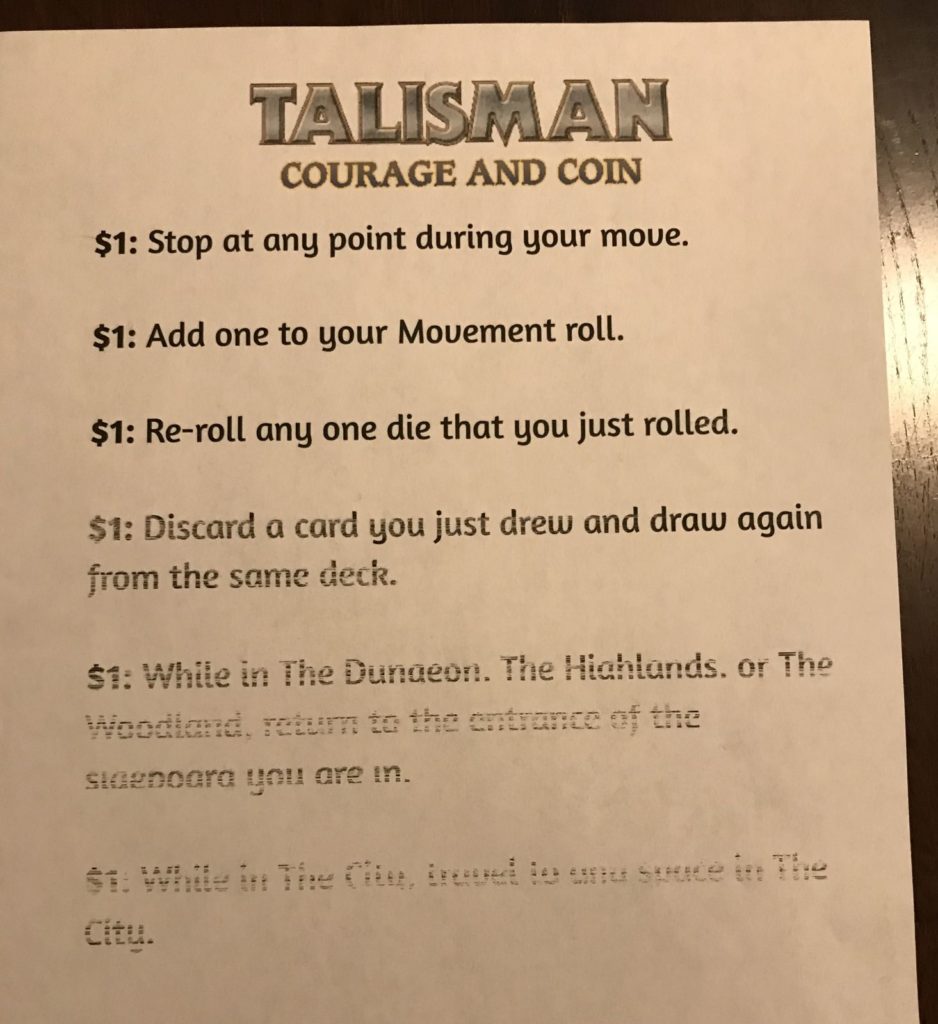
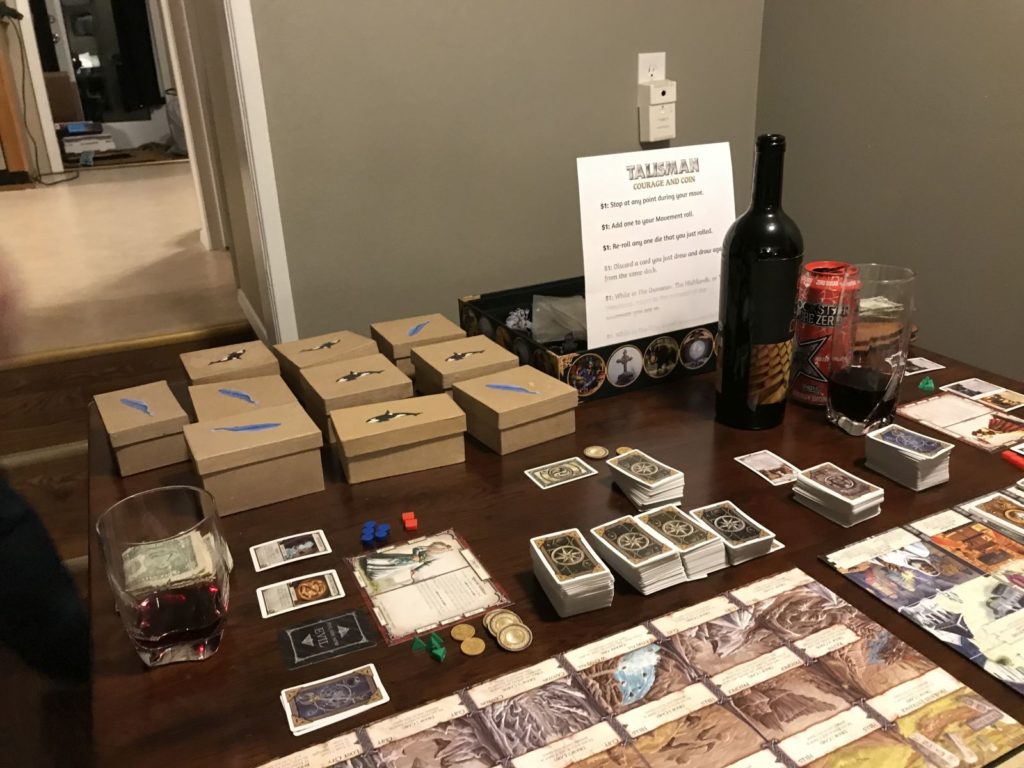
We started with a sheet of monetary rules that was familiar, but with a few changes:
$1: Stop at any point during your move.
$1: Add one to your Movement roll.
$1: Re-roll any one die that you just rolled.
$1: Discard a card you just drew and draw again from the same deck.
$1: While in The Dungeon, The Highlands, or the Woodland, return to the entrance of the sideboard you are in.
$1: While in The City, travel to any space in The City.
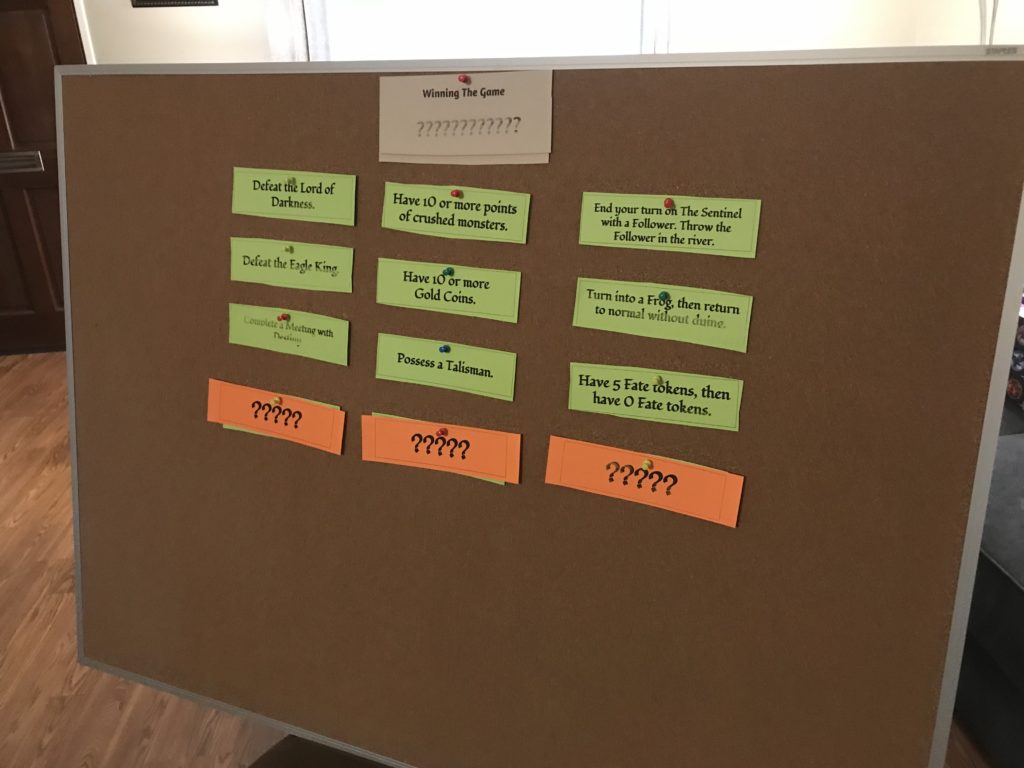
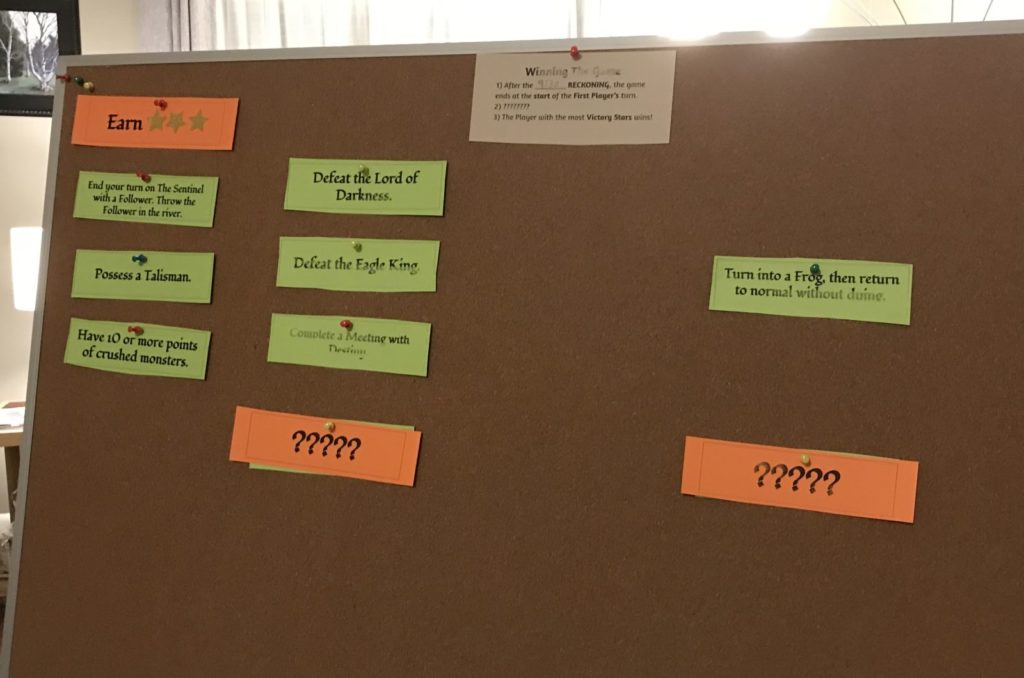
This was just the beginning though… we were then introduced to a series of achievements that would factor into the (as yet unknown) win condition. This was a nice twist to the rules since Talisman’s endgame can break down, with one player strong enough to steamroll anything, but unable pull off a win… until 2AM rolls around and you call it and go home. Since we weren’t aiming for the Crown of Command, we didn’t need the inner circle of the gameboard, where really crazy (and sometimes tedious) stuff can happen.
Some achievements were known, but others were secret until revealed.
The initial Achievements were:
Defeat the Lord of Darkness (complete The Dungeon)
Defeat the Eagle King (complete The Highlands)
Complete a Meeting with Destiny (complete The Woodland)
Have 10 or more points of crushed monsters (turn them in instead of using them to raise skills)
Have 10 or more gold coins
Possess a Talisman
End your turn on The Sentinel with a follower. Throw the follower in the river.
Turn into a Frog, then return to normal without dying.
Have 5 Fate tokens, then have 0 Fate tokens.
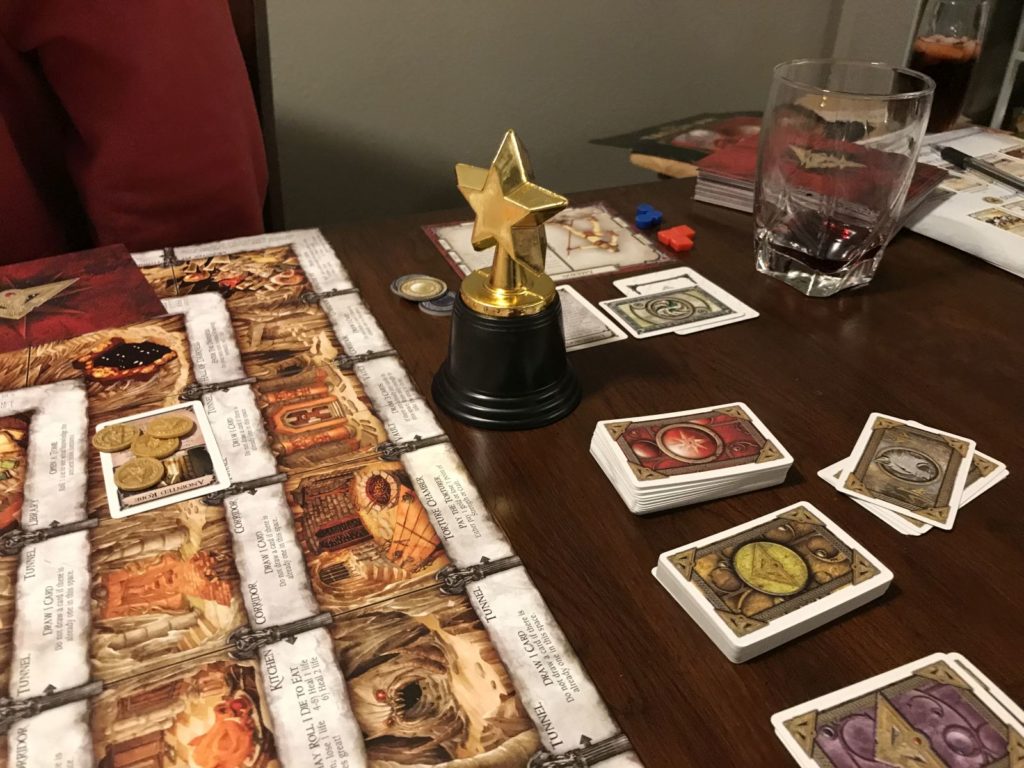
The Werewolf and Death were out prowling the board, controlled by Jim when his turn came around. We dutifully went about our early-game business, not quite knowing what was coming… A few bucks were thrown into the pool, but it all took another step forward when one player managed to die… and unlocked a secret achievement (“Be the first player to die”), earning a trophy! It turns out these trophies were worth 7 Victory Stars.
Yes, it was an actual plastic trophy like the ones kids get when everyone is a winner.
BAM! That was the moment the winning conditions were unveiled. The first person to complete each achievement earned a trophy worth 7 Stars, and some were repeatable, so they could be accomplished by others for 3 Stars. The Time of Reckoning, when all Victory Stars would be tallied, was set to 9:30PM, five hours after the game began.
Death then began to pursue whichever player had the highest number of trophies, and the Werewolf pursued whomever had the lowest number.
I was the first to Complete a Meeting with Destiny and have 10 gold coins, and each of us earned stars from completing sideboards, finding a Talisman and turning in 10 points of crushed monsters. But Talisman: Courage and Coin had more in store for us… things were going to level up.
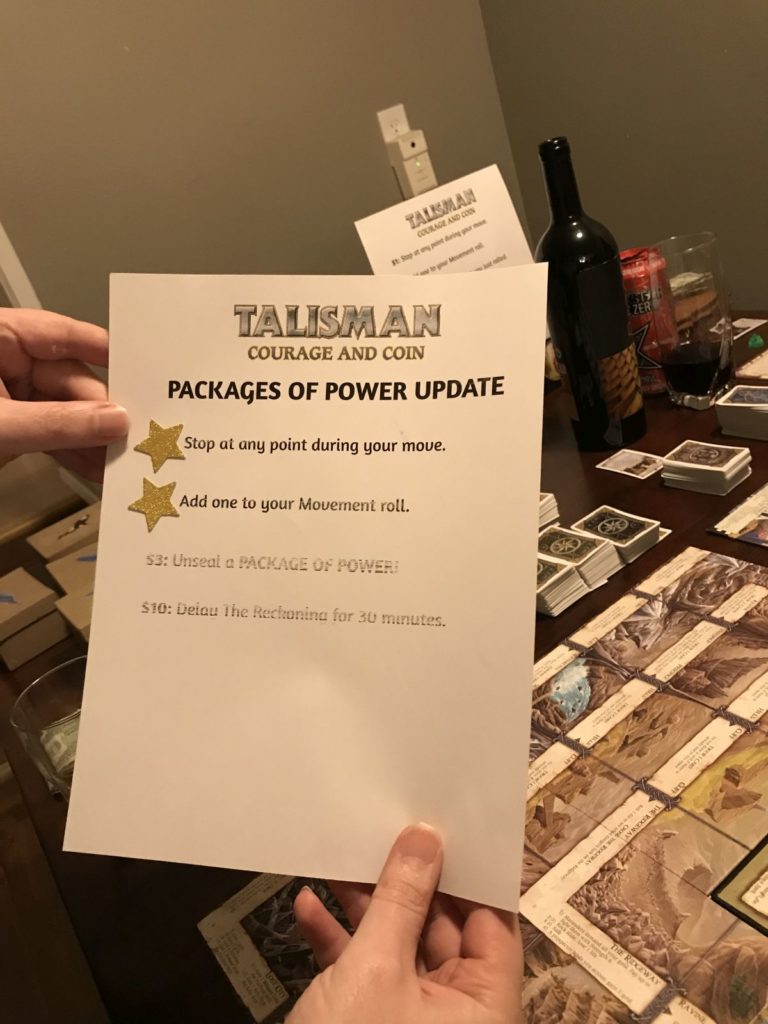
Packages of Power Update
It’s on.
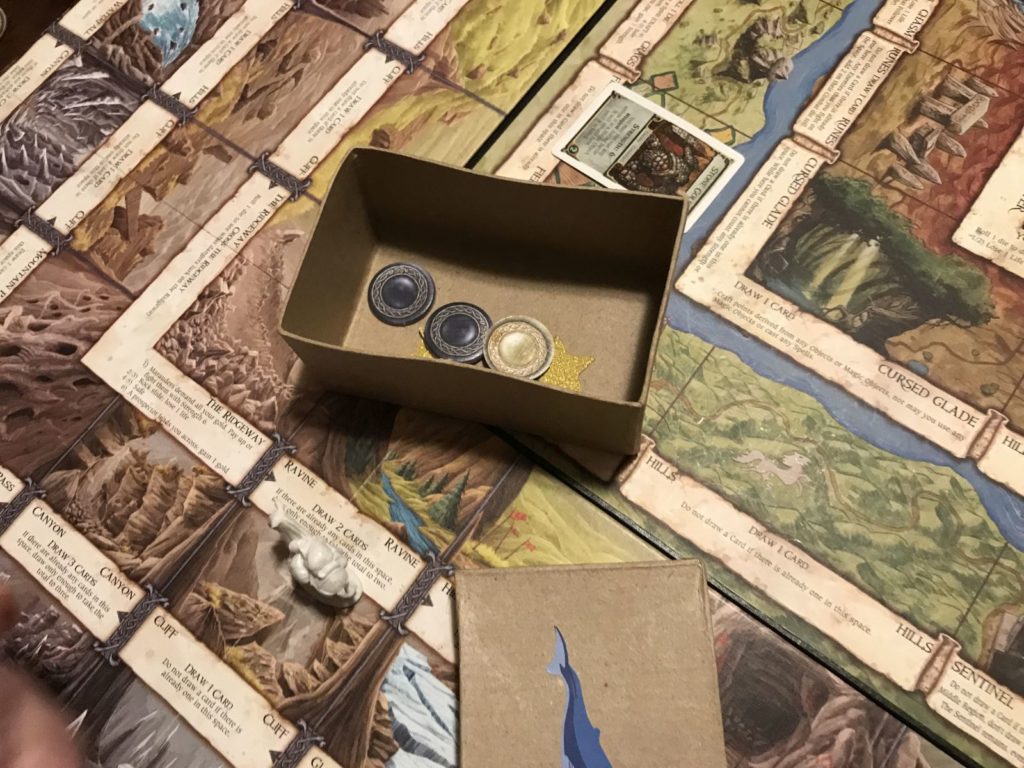
Each box was lovingly embossed with a whale, since we’re all whales in Pay 2 Win.
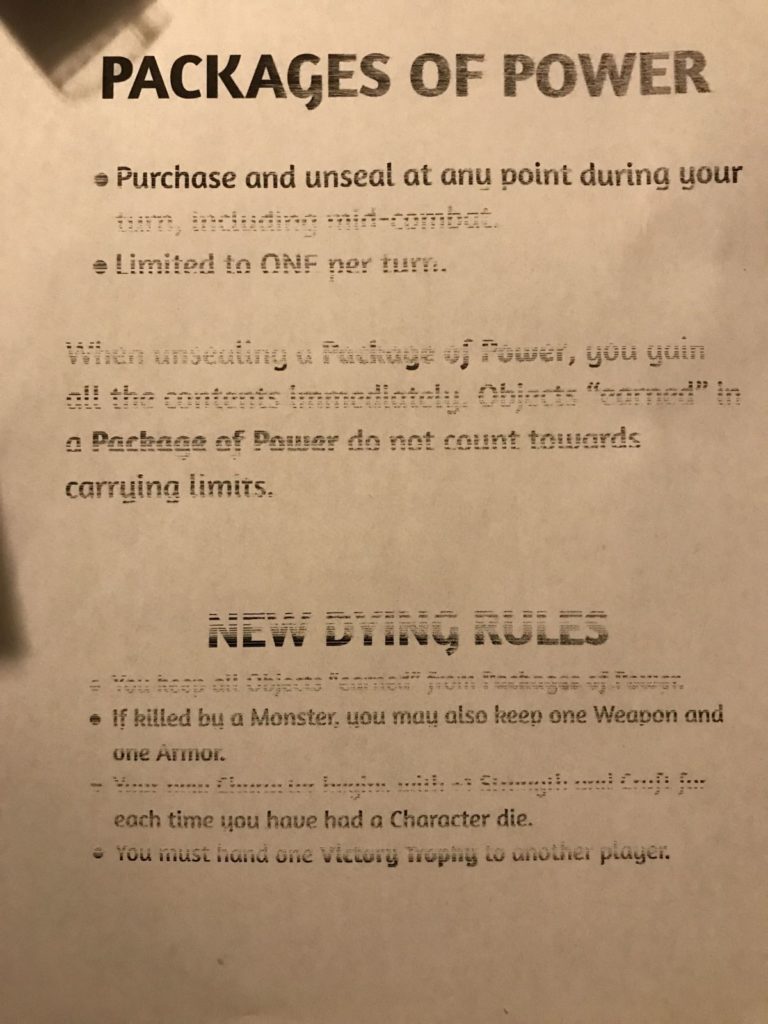
Now we were able to spend stars for certain actions as well, but more importantly we could unlock Packages of Power. Here were the rules:
Purchase and unseal at any point during your turn, including mid-combat.
You are limited to ONE per turn.
When unsealing a Package of Power, you gain all the contents immediately.
Objects “earned” in a Package of Power do not count towards carrying limits.
NEW DYING RULES
You keep all Objects “earned” from Packages of Power.
If killed by a Monster, you may also keep one Weapon and one Armor.
Your new Character begins with +1 Strength and Craft for each time you have had a Character die.
You must hand one Victory Trophy to another player.
NEW MICROTRANSACTIONS
1 Star: Stop at any point during your move.
1 Star: Add one to your Movement roll.
$3: Unseal a PACKAGE OF POWER!
$10: Delay The Reckoning for 30 minutes.
Out came the 10 Packages of Power, our very own physical loot boxes to waste our money on. Each whale-decorated box held untold treasures. Who would be the first to buy in?
Fate tokens! Gold coins!
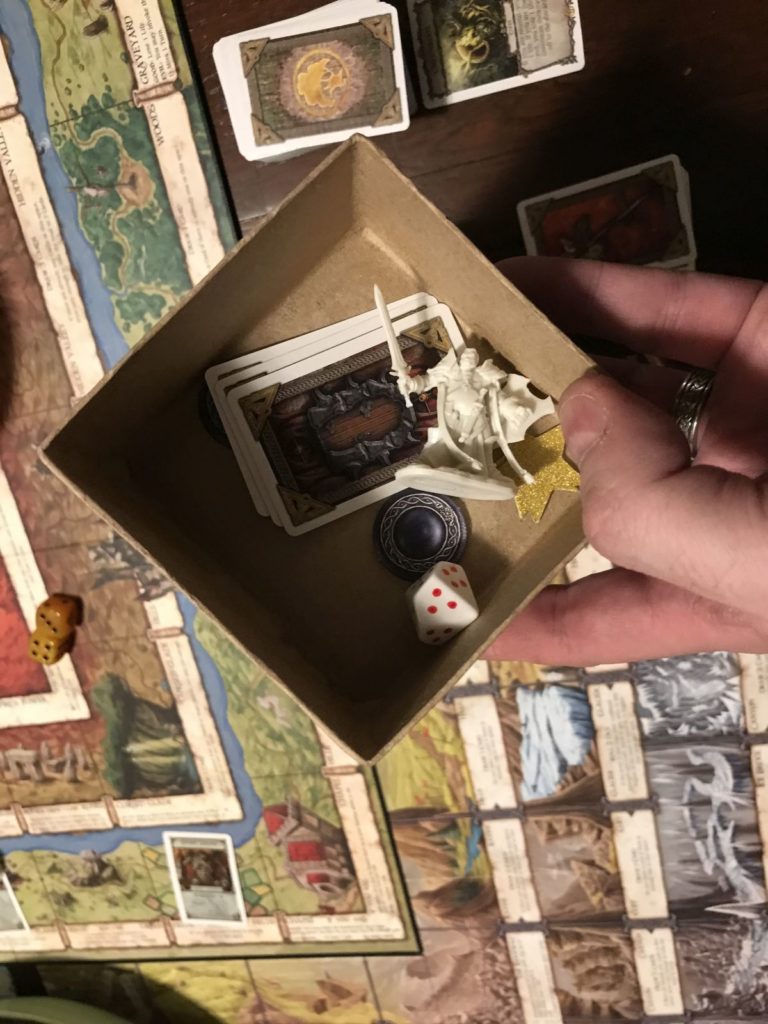
The minis inside were cosmetic skins we could swap out.
If you were lucky you gained some great items.
We all dove in really quickly. These lovingly-crafted boxes contained things like fate tokens, gold coins, and even alternate minis, “skins” you could swap out your regular mini for if you didn’t like the fig you were playing. If you got an item from a box, it didn’t count against your item limits either… So naturally I bought 3 boxes. (That’s how they get’cha.)
I was piling up the items, stars and trophies, and I could even play as a wolf or warrior.
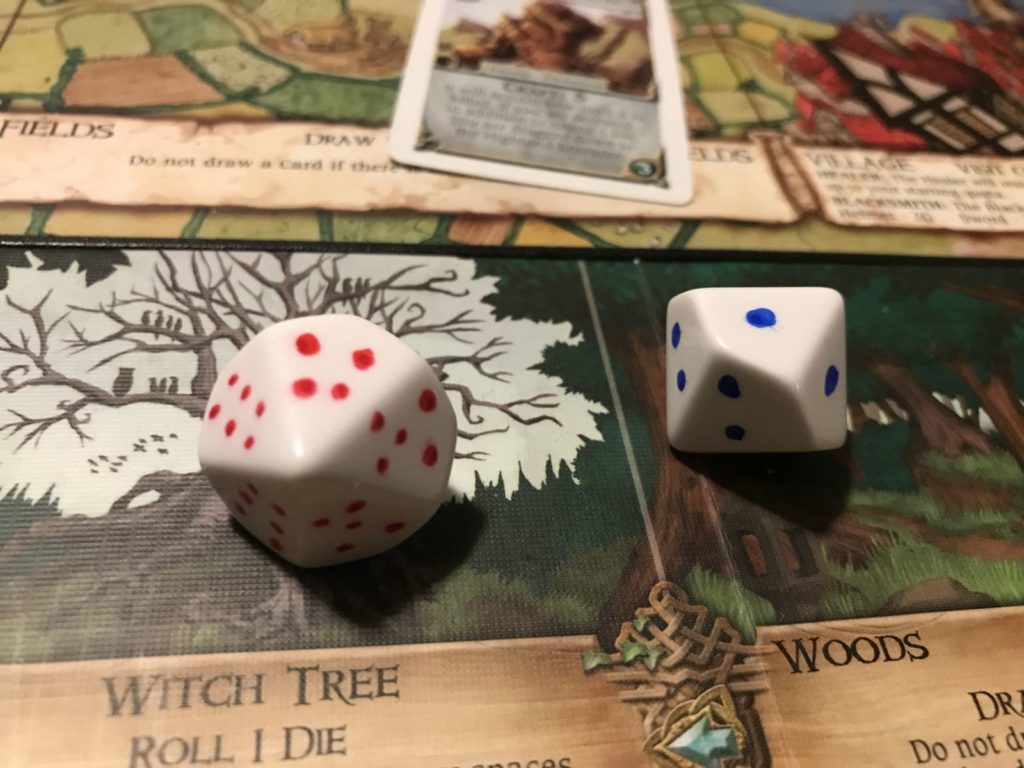
The best items I got were some special dice, that I could swap out for any 6-sider roll (whether I was rolling for my own results or taking the role of my neighbor’s enemy!) One was a D10 with nothing but 1’s and 2’s. The other D10 had a single 1 and 2, but two results each for 3, 4, 5, and 6. Oh man.
Fair? No. Awesome? Absolutely.
Some of us bought more boxes, some bought less, but each of us ended up absolutely packed with crazy gear and powerful perks… We marched around the board and pushed our advantages to the fullest. Then two hours before The Reckoning rolled around and we were introduced to even more Talisman DLC:
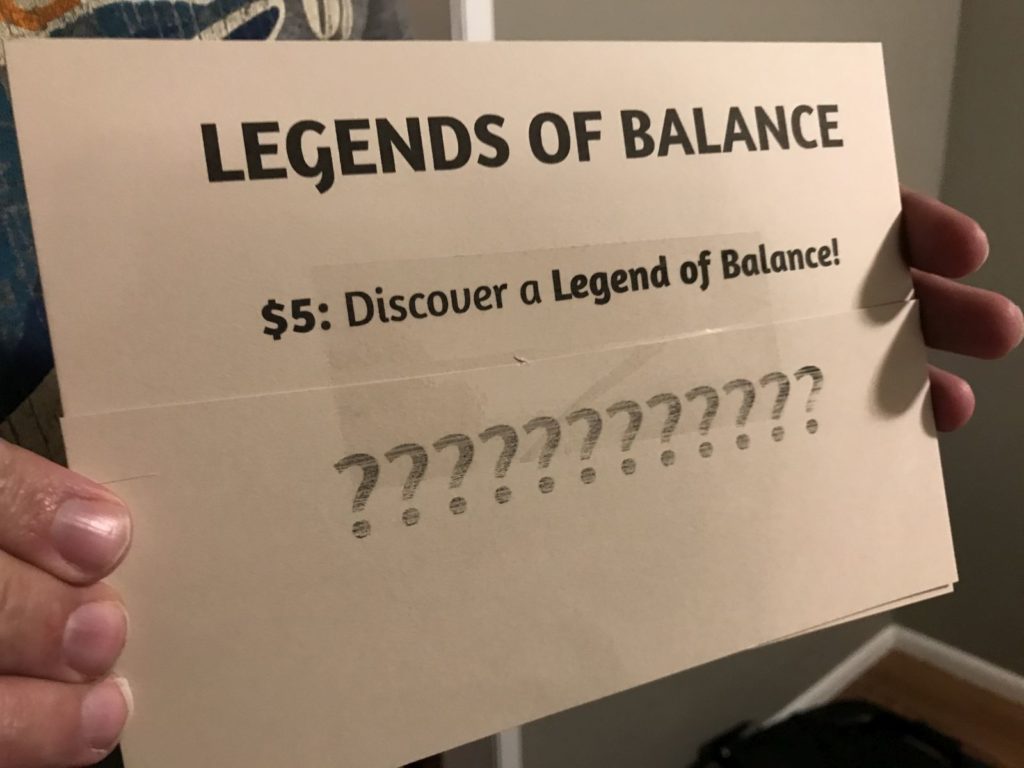
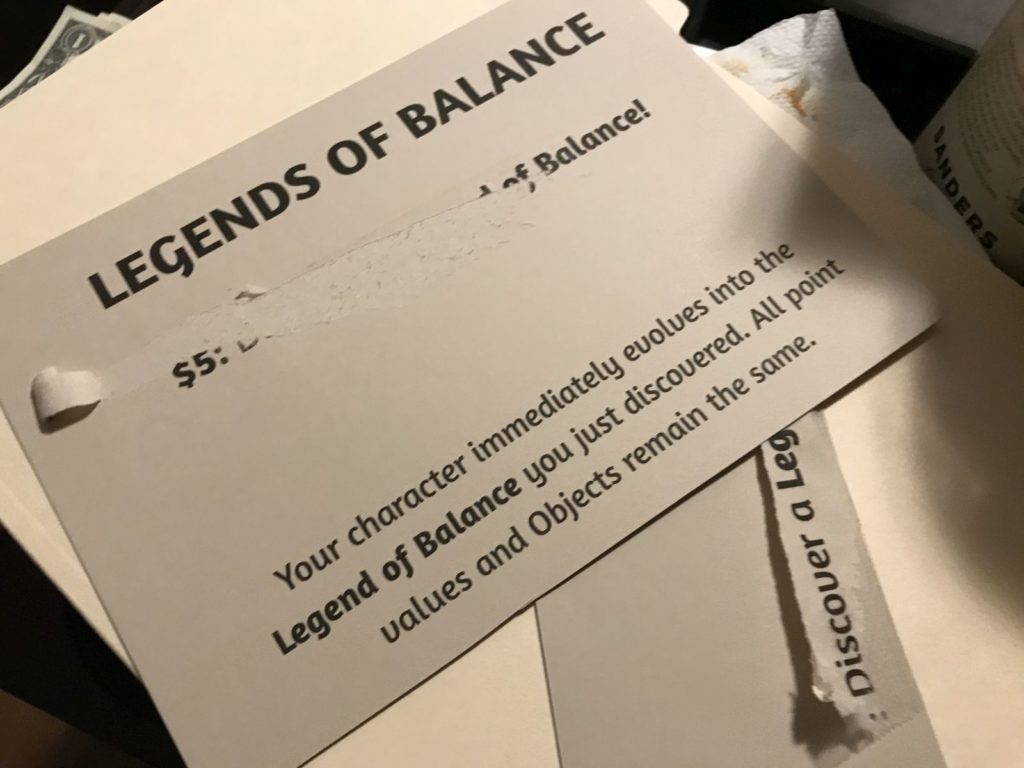
Talisman: Legends of Balance
That moment brought out four more ridiculous boxes, each embossed with the most luxurious, shiniest whales that the craft store could provide. The cost for accessing the contents of these amazing items? 5 dollars. I don’t think I’ve paid 5 dollars for a microtransaction in my life. Dammit Jim!
Each new release had its own logo.
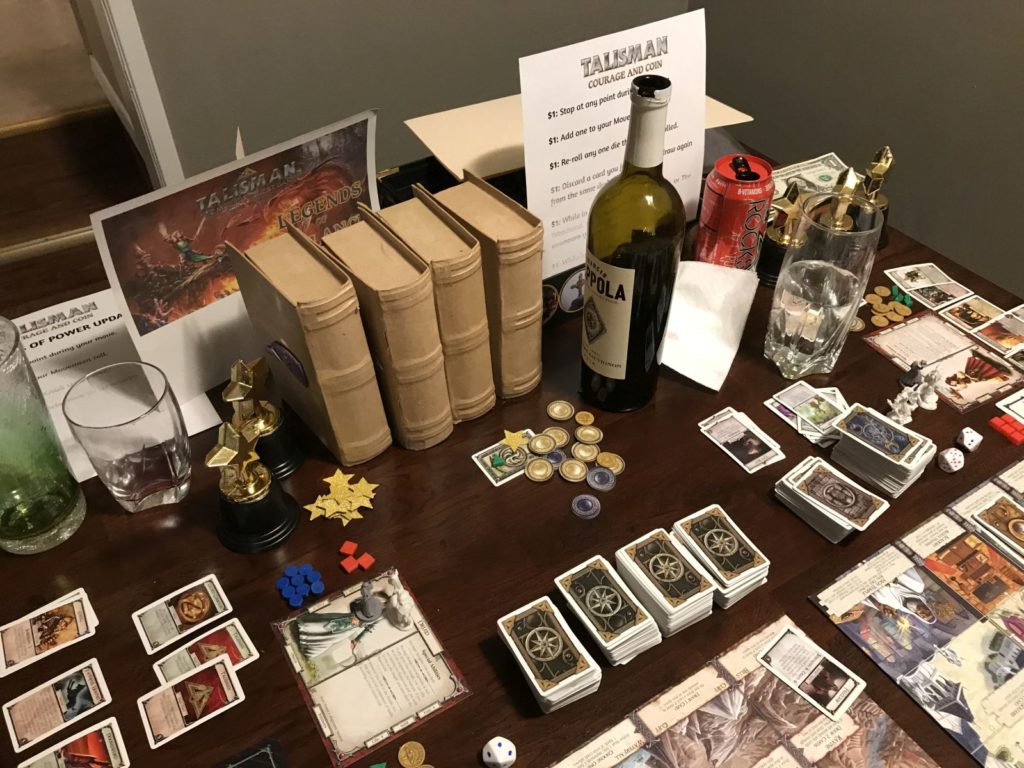
The mysterious books were taunting us.
What will happen?
There were four of us playing, and four boxes. Naturally we each dove in headfirst and bought our way into this madness… and pure, unadulterated madness was indeed within each cardboard tome. Holy Jesus… (In my case that was quite literal).
Each player that put up the cash for a box got a completely new character, each with its own miniature and utterly broken rules. We kept our stats and items, but these Legends of Balance were the very opposite of balanced… The race to victory was now on, with these four characters on the board:
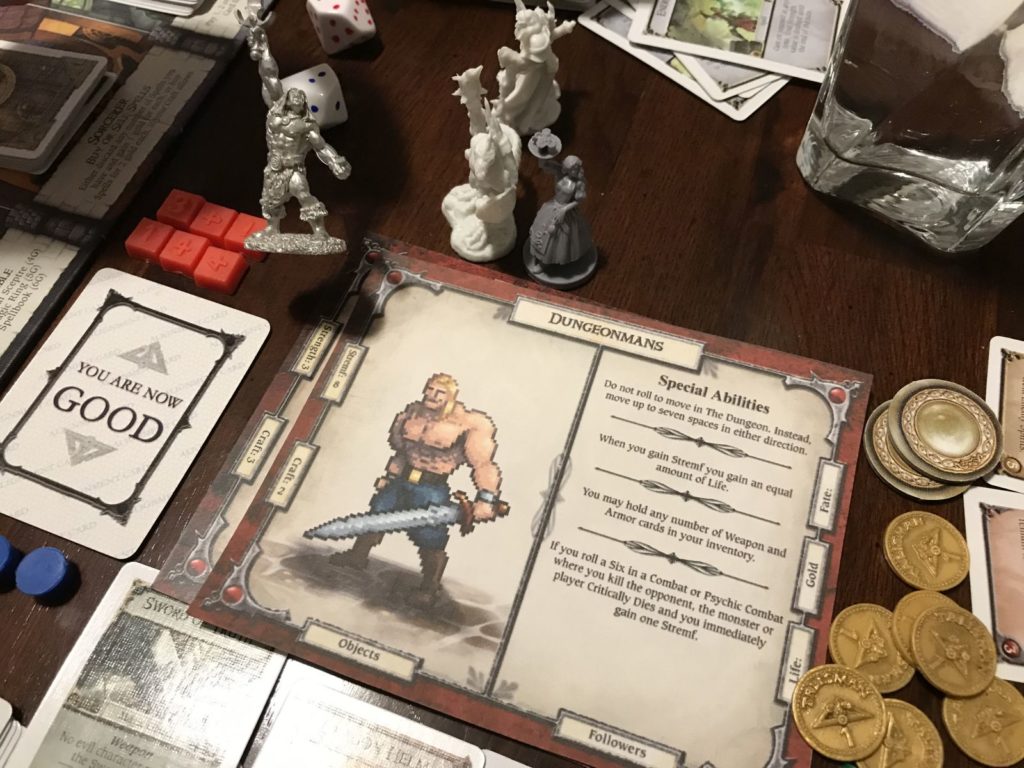
Dungeonmans
Dungeonmans is the protagonist of Jim’s magnum opus (that you should totally buy right now). He certainly ruled the Dungeon and gear was his bag. I think you can guess what Stremf is.
Do not roll to move in The Dungeon. Instead, move up to seven spaces in either direction.
When you gain Stremf you gain an equal amount of Life.
You may hold any number of Weapon and Armor cards in your inventory.
If you roll a Six in a Combat or Psychic Combat where you kill the opponent, the monster or player Critically Dies and you immediately gain one Stremf.
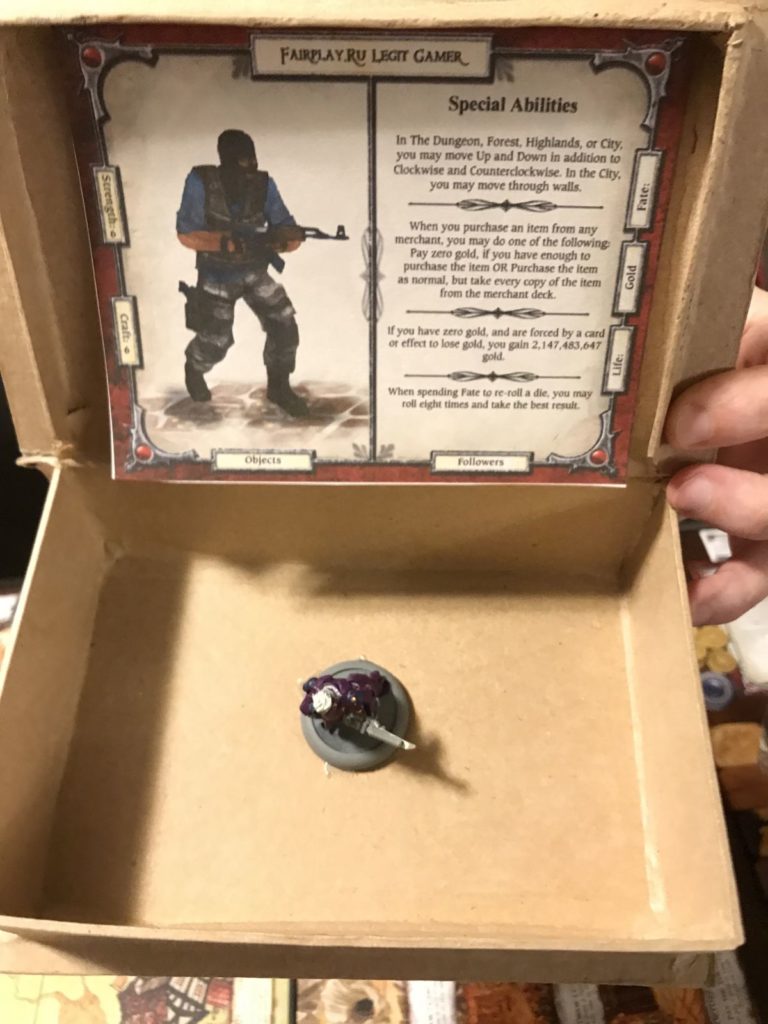
Fairplay.ru Legit Gamer
Created in honor of a hacked Diablo character we encountered online one day. Complete with counterterrorist miniature. This dude was nuts.
In The Dungeon, Forest, Highlands or City, you may move Up and Down in addition to Clockwise and Counterclockwise. In the City, you may move through walls.
When you purchase an item from any merchant, you may do one of the following: Pay zero gold, if you have enough to purchase the item OR purchase the item as normal, but take every copy of the item from the merchant deck.
If you have zero gold, and are forced by a card or effect to lose gold, you gain 2,147,483,647 gold.
When spending Fate to re-roll a die, you may roll eight times and take the best result.
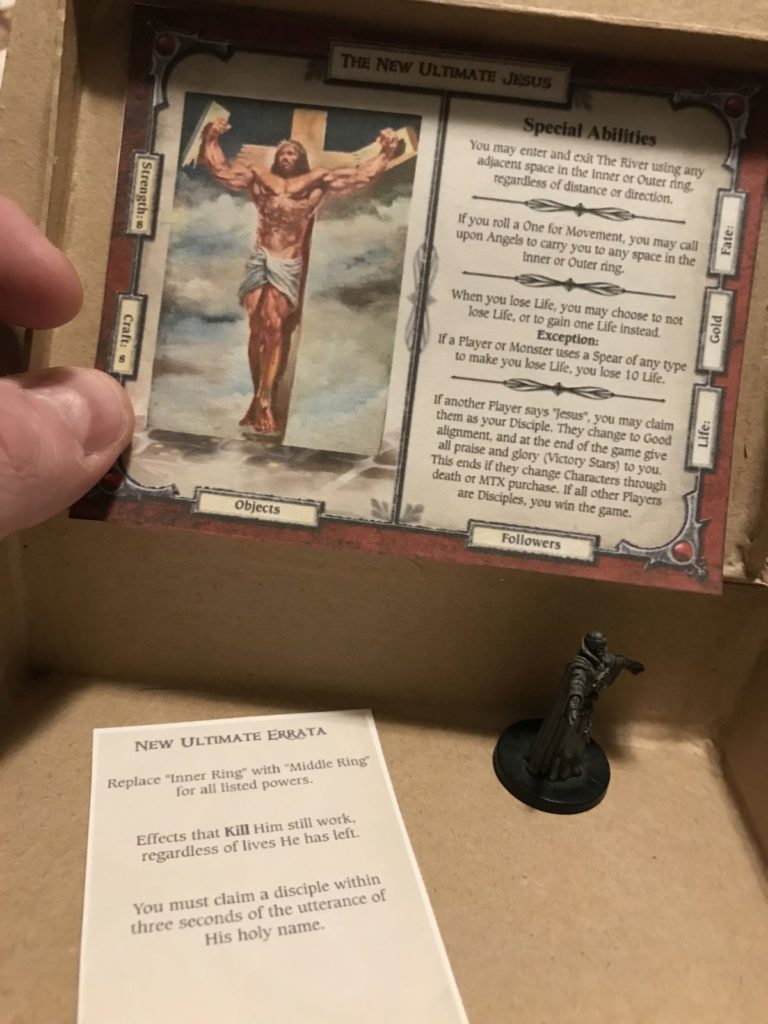
The New Ultimate Jesus
This was my character. I almost, almost, alllllmost caught someone with rule 4, but I was just a little too slow to catch him. Everyone was just a bit more careful after that. Then Legit Gamer started chasing me around with his spear… I managed to fend off a few assaults until I was able to exceed 10 Life.
You may enter and exit The River using any adjacent space in the Middle and Outer ring, regardless of distance or direction.
Note: The river can be entered from any square adjacent to it in one step, then exited at any other square adjacent to the river.
If you roll a One for Movement, you may call upon Angels to carry you to any space in the Middle or Outer ring.
When you lose Life, you may choose to not lose Life, or to gain one Life instead.
Exception: If a Player or Monster uses a Spear of any type to make you lose Life, you lose 10 Life.
Effects that Kill Him still work, regardless of lives He has left.
If another Player says “Jesus”, you may claim them as your Disciple. They change to Good alignment, and at the end of the game give all praise and glory (Victory Stars) to you. This ends if they change Characters through death or MTX (microtransaction) purchase. If all other Players are Disciples, you win the game.
You must claim a disciple within three seconds of the utterance of His holy name.
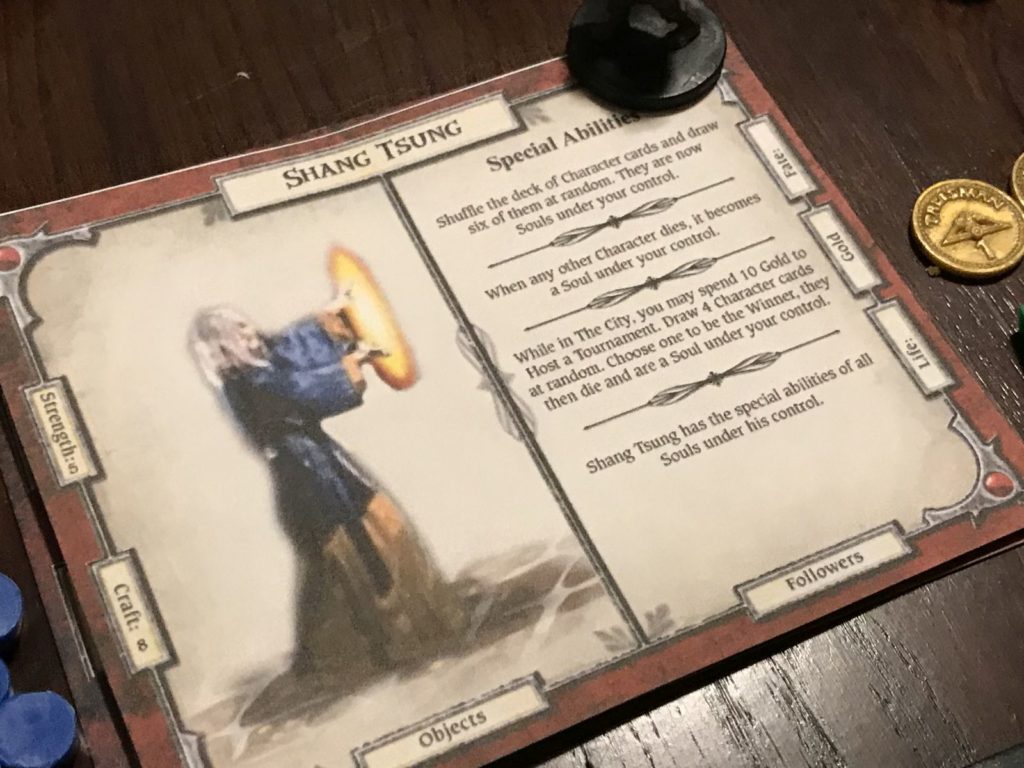
Shang Tsung
Ohhhh man, a tournament in The City… A massive row of character cards lined up along the side of the table, bristling with special abilities, all controlled by one player…? TEST YOUR MIGHT.
Shuffle the deck of Character cards and draw six of them at random. They are now Souls under your control.
When any other Character dies, it becomes a Soul under your control.
While in The City, you may spend 10 Gold to Host a Tournament. Draw 4 Character cards at random. Choose one to be the Winner, they then die and are a Soul under your control.
Shang Tsung has the special abilities of all Souls under his control.
The Time of Reckoning
The clock ticked away and we finally hit the Reckoning. Some of us spent wayyy too many turns trying to become a frog (how the hell did we finish a game of Talisman without anyone ending up as a frog?) Dungeons were delved… Jesus hit the Highlands. Legit Gamer noclipped through walls all over the place. Victory Stars were heaped everywhere.
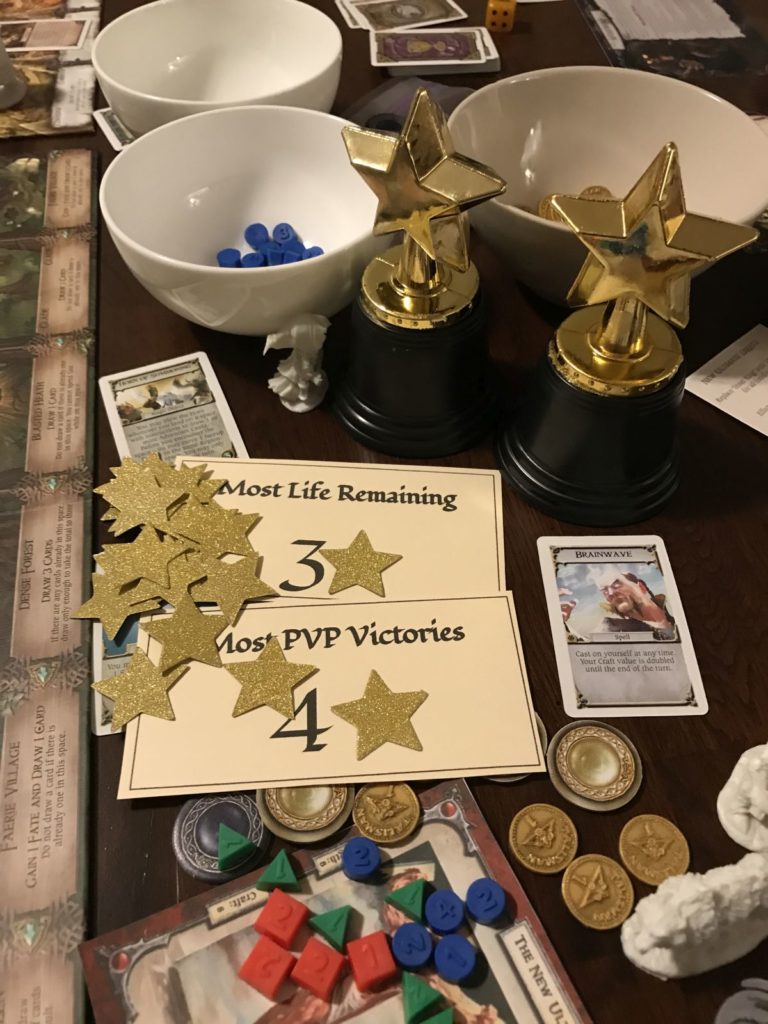
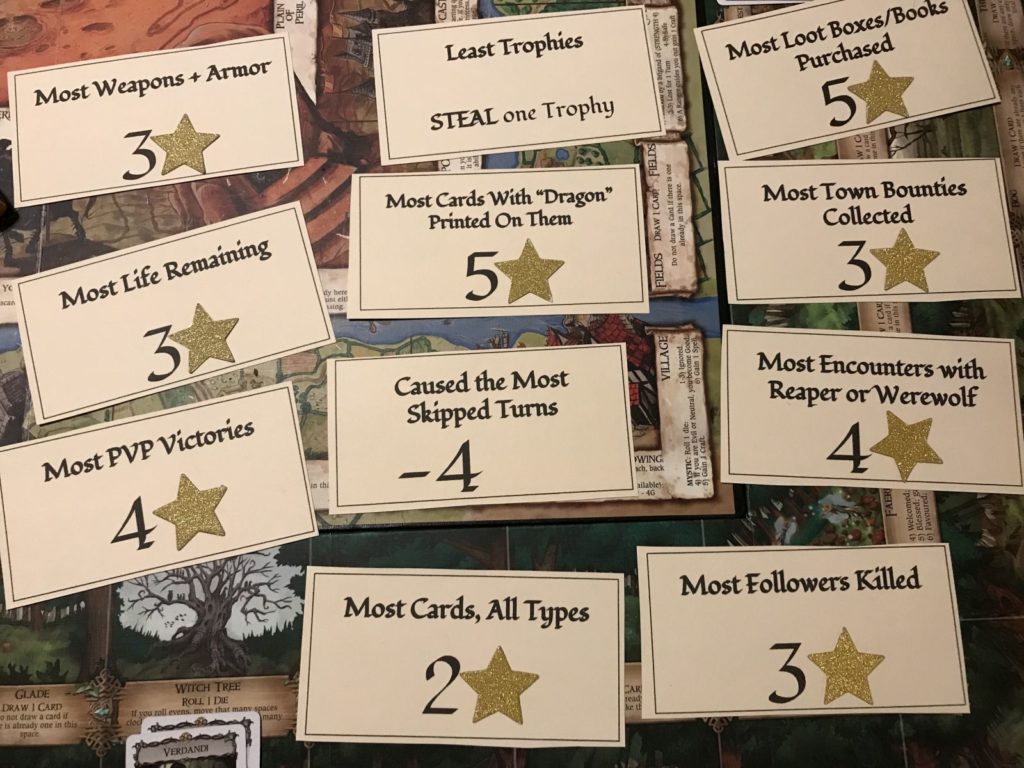
At the end, it was time to add up our shiny, glittery craft store stars, adding in the 7 Stars we earned per trophy. As with any Euro boardgame there were additional ending criteria that modified the total, although these were secret until the final reckoning. (Jim was keeping track of some of them) Any end condition that was a tie meant nobody got the award:
Most Weapons and Armor: 3 Stars
Least Trophies: STEAL one Trophy
Most Loot Boxes/Books Purchased: 5 Stars
Most Life Remaining: 3 Stars
Most Cards with “Dragon” Printed On Them: 5 Stars
Most Town Bounties Collected: 3 Stars
Most PVP Victories: 4 Stars
Caused the Most Skipped Turns: -4 Stars (penalty!)
Most Encounters with Reaper or Werewolf: 4 Stars
Most Cards, All Types: 2 Stars
Most Followers Killed: 3 Stars
The hidden trophies that we hadn’t uncovered were unveiled as:
Roll two 1’s (snake eyes) on Talisman dice. (This was surprising that it didn’t happen).
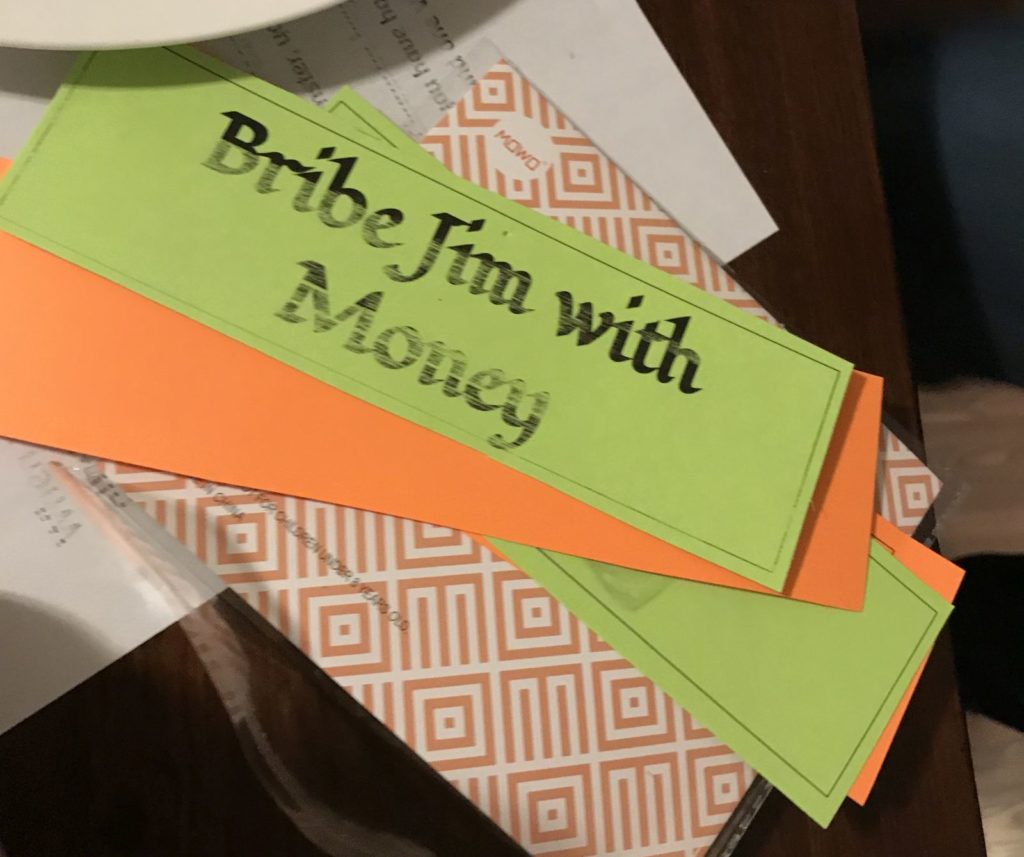
Try to bribe Jim during the game. (He was sure that would have come up).
In the end, the player who unlocked Dungeonmans was victorious, not because she unlocked the strongest avatar, but because she won a lot of trophies and had an amazing array of equipment at the end.
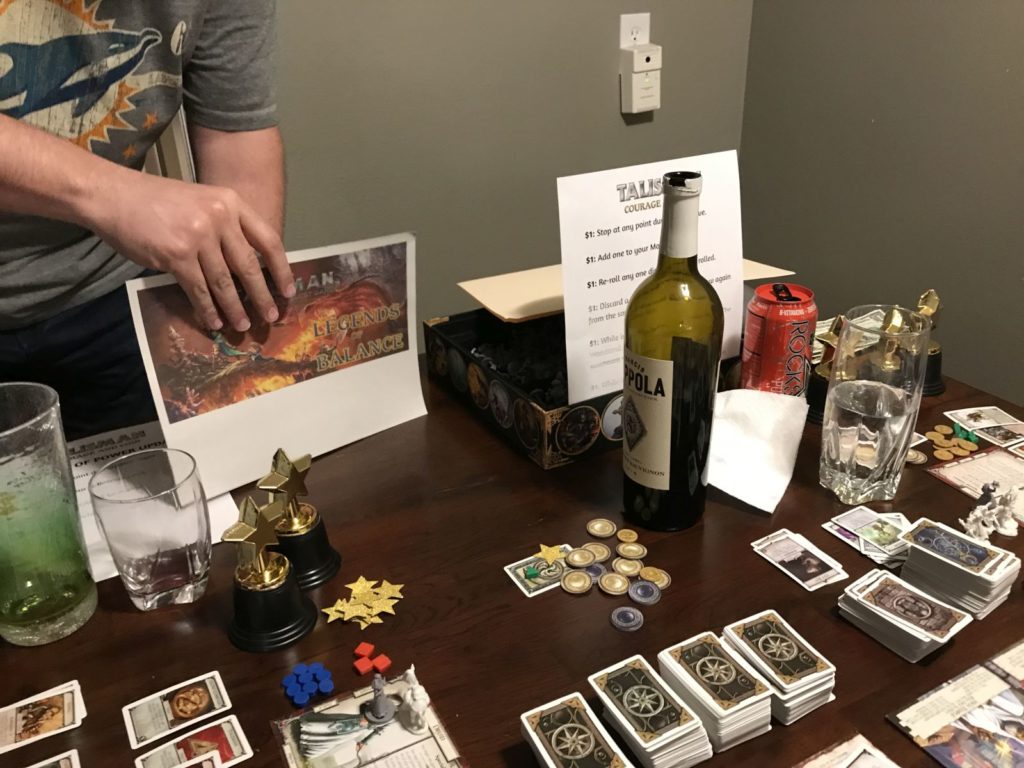
Once again we had so many expansions going that card stacks were everywhere.
Wine wasn’t required, but it helped.
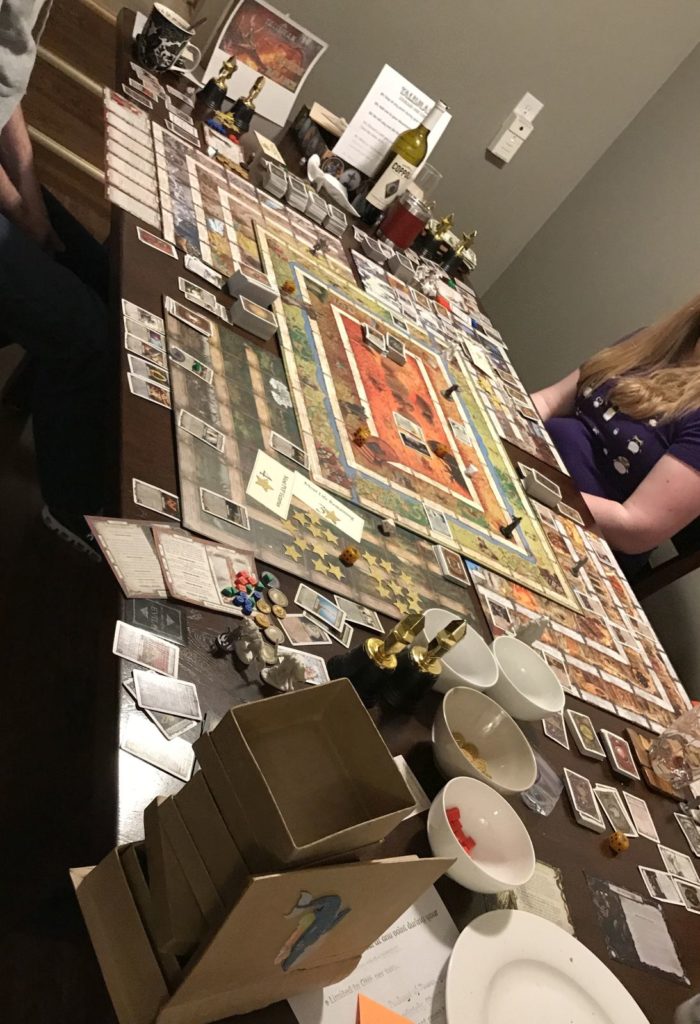
Stacks of opened boxes everywhere.
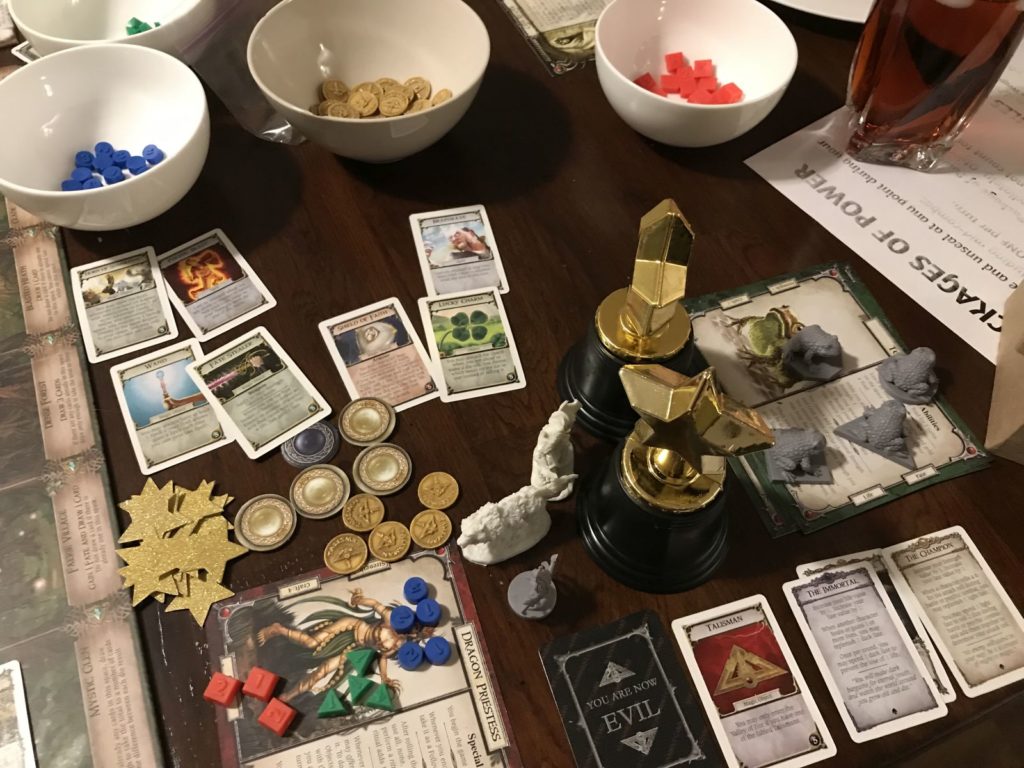
The spoils of our excess.
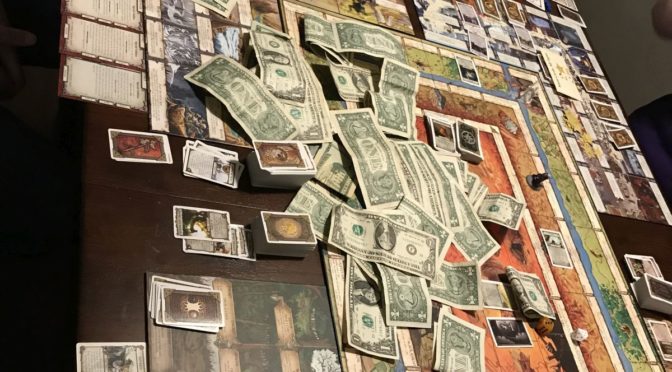
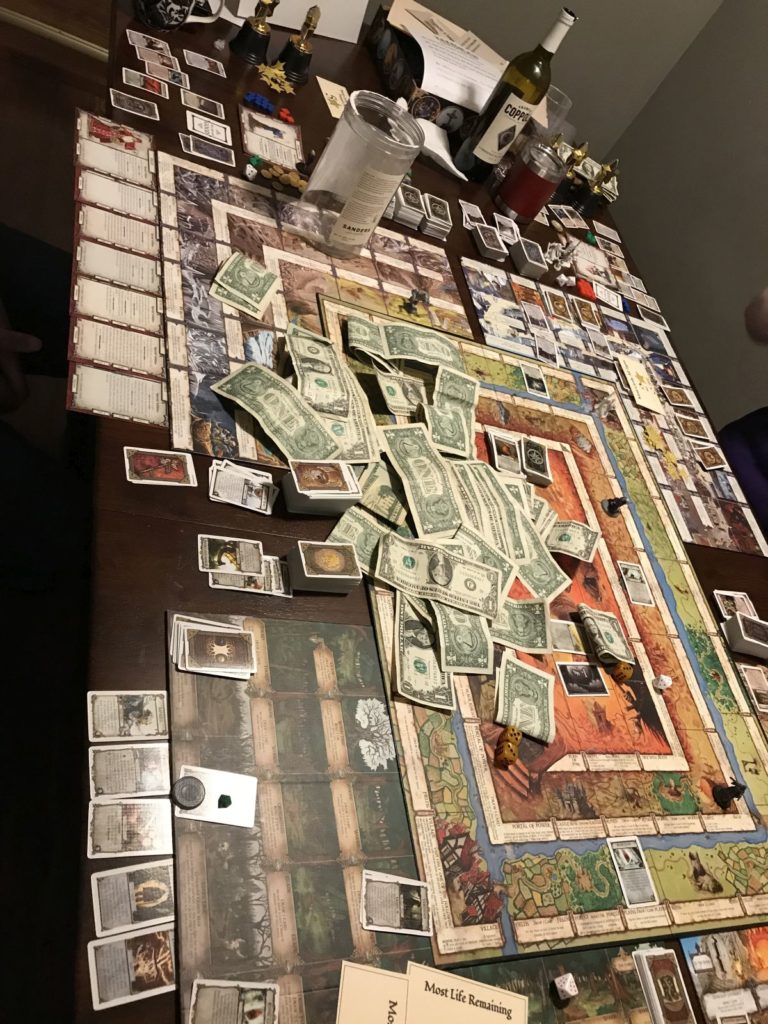
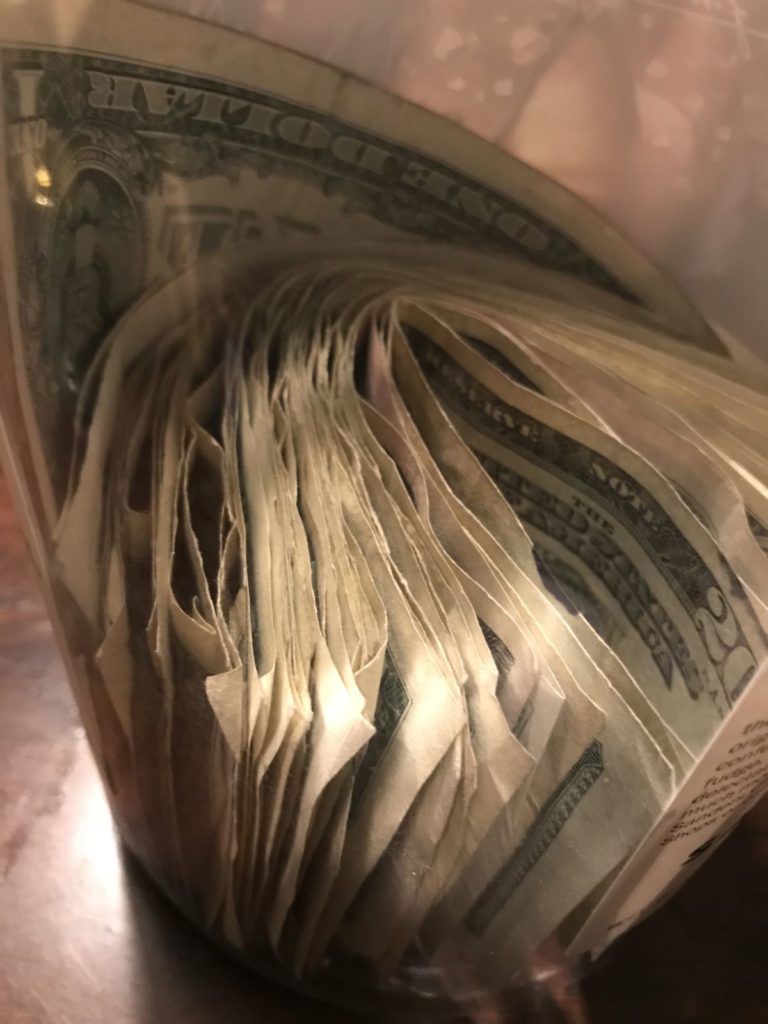
One hundred and one bucks in there.
A great time was had by all, and while last year we had spent 30 dollars between six of us, this year we spent over 70 between four of us. We still haven’t decided what to do with the money (and last year’s take was still in the jar). Did we win or lose? Since we all shared a great evening with comrades it’s impossible to consider this as anything but total victory.
Once again I think we took a game that has its systemic faults but loads of flavor and made it into something better. Adding monetary transactions introduced an additional layer that allowed us to smooth over the weird runs of bad luck that tend to sour people on Talisman games. Adding this DLC stuff allowed Jim to have fun as a host, play a bit of a Dungeon Master to all these goings on, and create a tremendously memorable evening.
Could this model be used for other games whose systems don’t hold up, but have great flavor, items and moments within? I’d like to think so, although Talisman is a bit of a unique animal if only because of its massive amount of published expansions.
My only regret is that so much of this year’s awesomeness isn’t really repeatable… We still have the boxes, the cards and the special dice, but the secret stuff is secret no more. Regardless, whether it’s more from Jim or someone else’s doing, I have no doubt that next year will bring bigger and better things for Talisman, and another spectacular evening will be had.
Some days you take pleasure in the smallest of victories.
More and more of my time is spent messing with data rather than code. A procedurally-generated game like Auto Fire has a lot of data to shuffle around, defining a nearly endless list of things. These titles generally rely on complex rules to assemble what might be one-off creations in other games. These rules are for things as varied as:
Map sectors, layout generation data, name generation data
Map Locations, loot tables, shops
Tiles, obstacles, decals
Enemies, squads, encounters
Cars, chassis types
Tires, engines, armor upgrades
Weapons, equipment, ram plates
Abilities, projectiles
etc etc
Luckily I was able to use a bit of code given me by a good friend as a framework for defining these. Since I hooked the system in, the definitions have spread across 15 directories and 70 files, and that’s with not a lot of content defined as of yet. By comparison, Dungeonmans has nearly 600 data files just for content definitions (nothing to do with actual art or audio content), plus god knows how many other little files squirreled away.
Creating the content itself is daunting, but nearly as tough is managing all this. It can be hard to organize and keep straight. A small victory this morning was when I improved comment support in my definitions, but more importantly I added inheritance. This allows me to define a base definition and then overlay changes with another definition.  It cuts down on a lot of extra text and correction as I add new features to the game, and makes creating a whole line of related objects a quadrillion times easier.
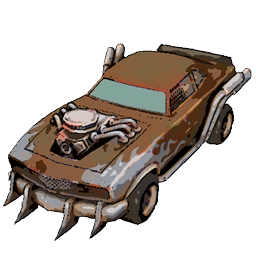
For example, a vehicle’s chassis defines a lot of the weapons and equipment you can mount on it, as well as the model that is used for your vehicle on the battlefield. You will ultimately be able to buy a new vehicle at a car dealer, and pick out the chassis that will serve your needs the best.
The Stallion is a line of muscle cars, each of which is beefier and sports a larger engine than the last. With inheritance I can create a set of upgrades much more easily:
defThing chassis_stallion_L1
{
class adChassisData

prefab Vehicles/Stallion_body_L1

name "Econo Stallion"
manufacturer GrandMotors
logo UI/Logos/logo_tri
chassistype Coupe

level 1
value 2000

defense_base 0
health_base 100
handling_base 100
armor_base "100 100 100 100"
cargo_slots 2

Engine "None default engine_rank_1"
Tires "None default tires_base"
Armor "None default armor_base"
WeaponRam "None default wpn_ram_base"
WeaponFront Standard
WeaponRight Standard
WeaponBack Standard
WeaponLeft Standard
WeaponTurret None
Support1 Standard
Support2 Standard

flavor "The doors rattle a bit if you slam them, but you'll feel like a thousand bucks behind the wheel of any Stallion."
}

defThing chassis_stallion_L2
{
inherit chassis_stallion_L1

prefab Vehicles/Stallion_body_L2
name "Grand Stallion"
level 2
value 5000
cargo_slots 3

Engine "None default engine_rank_2"
Support3 Standard

flavor "Listen to the throaty purr of the Thundercat engine. Revel at the enhanced electronics package, and even stash more cargo! Welcome to the Grand Stallion."
}
It only took like 20 minutes to implement, I can’t believe I put it off so long. I guess my data was so in flux that I haven’t been creating a lot of content, just a lot of systems… Now I gotta go clean up my data.