
Recently I was looking at my old WoAP post and thinking about how the fundamentals of creating a good, solid-feeling weapon are evolving, and which basics are the same as they were 15 years ago. Developers are definitely better at these things, but experiences are still all over the board.
I gathered more footage from games released in the last year in preparation of a WoAP section on this site (which is still locked for now), but I fell behind in capturing the newest of the new. While that certainly won’t deter me, I did realize that I did have one source of state-of-the-art titles with readily-prepared footage… E3 2010! Sure the games are in-progress and the available footage varies in quality, but I thought it would be fun to see what the next year could be like in terms of nice, beefy implements of destruction.
As usual, I examined a number of elements to consider whether they contribute to a sense of power. Check out the original article if you wonder, for example, why a real-world weapon still needs to follow these rules:
- Gun Visuals: The visual effect of the weapon’s muzzle flash and bullet trail, and the animation of the weapon itself firing. It’s the first thing people think of when they consider how the gun looks and feels.
- Sound Effects: How’s the audio, from the firing to the impact sounds? This can be one of the hardest to get right, because the sound has to bear repetition thousands of times, and it has to compliment the rest of the arsenal.
- Effect on Environment: Here we look at the visual impact of the bullet on a wall or floor, as well as environmental shifts such as lighting. We need these because the results of stray bullets give the player a sense of affecting their environment and with a potent weapon.
- Effect on Opponent: This refers to the visual impact on an enemy, and how the enemy reacts to being shot, which is critical to give the player feedback that he is successfully damaging the foe.
- Combat Effectiveness: I’m completely subjective here, which can be unfair when taken out of context, but it’s worth talking about. If I see a weapon limply pile bullets into an enemy with little sense of accomplishment, that weapon doesn’t get high marks. Maybe it’s designed to be a pathetic weapon, I don’t know.
Each weapon is grouped with its general type: They aren’t all identical models, weights or even technology, but each group of weapons fills a general role for players. I found as much unadulterated footage as I could… nothing from trailers or anything less than the game being played. This is obviously not final weaponry, and I had to make adjustments for the situations where the audio or visual quality wasn’t the best. Suffice it to say, they previewed their games to us and basically I’m previewing the weapons right back. Wah.
I didn’t get footage from everyone I wanted (technical issues denied me Brink and Killzone 3), but there was plenty of material (in unbiased alphabetical order of course):
- The Agency, Sony Online Entertainment
- Blacklight: Tango Down, Zombie
- Bodycount, Codemasters
- Breach, Atomic Games
- Bulletstorm, People Can Fly
- Call of Duty: Black Ops, Activision
- Crysis 2, Crytek
- Halo: Reach, Bungie
- Medal of Honor, Electronic Arts
- Rage, id Software
- Vanquish, SEGA
(Too many one-word titles that start with “B” this year…)
And away we go. Watch the footage and check out the results:
Pistols
Almost 10 years ago Halo and Counterstrike created the first pistols that we actually wanted to use, and more recently Call of Duty cemented the concept of pistols as a quick-draw backup weapon. This trend continues, although video is hard to find because these weapons aren’t “sexy” enough to appear in E3 demos.
Call of Duty: Black Ops
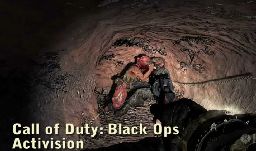 This pistol is a backup weapon in the Call of Duty world. As such, this revolver is serviceable, but not flashy enough to encourage you to use it when you aren’t forced to (like this claustrophobic tunnel). It’s hard to say much from two bullets, but the muzzle flash was nearly invisible and it didn’t light up the surroundings as much as I’d might expect in a dark tunnel. The audio was also very basic, a clip we’ve heard many times in the last 10 years… I hope by ship they can get some reverb to make it as deafening as I might expect gunshots to be in a space like that.
The effect on the enemy is hard to gauge since this was really a set-piece. There was a reasonable bit of impact blood and a reasonable hit reaction, which hopefully will be true in all combat situations.
Medal of Honor
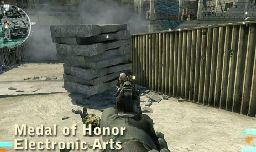 This footage is from DICE’s multiplayer mode, so it leans closer to Bad Company 2 in overall feel. Compared to COD:BO’s period-authentic revolver, it has the advantage… semi-automatic so that the player can unload quickly and go for a headshot, so its effectiveness appears pretty high. The bulk of the muzzle flash is a classic single frame but it does the job, mainly because it is coupled with a satisfyingly “crunchy” sound effect… not unlike Indy’s awesome pistol in Raiders of the Lost Ark.
Stray bullets create a subtle puff of smoke with environment impact, but there was little impact on the character himself visible beyond the view-obscuring muzzle flash sprite. This is often okay with pistols, as long as they have their role.
The Agency
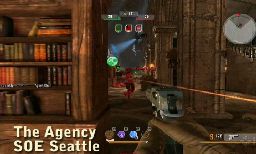 The Agency pistol is pretty good, although it’s hard to judge it completely fairly because it appears that the game view appears a bit stretched, making the pistol stubby and awkward-looking in the player’s hands. (I double-checked the footage to verify that this was the way it showed.)
The muzzle flash is very red, just a couple of sprites… it’s got an okay punch to it, but red doesn’t get it looking “hot”, and the sprite never reaches full opacity, giving it a “flat” feel. Perhaps it is an art style choice… this game is more colorful than most. The weapon seemed somewhat effective, but during recoil, the weapon obscured the target denying me the ability to see what happened. On the other side, the sound effect has a nice report and trail-off.
Rage
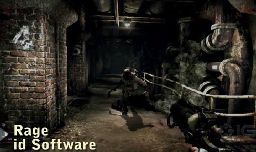 Rage‘s pistol has an okay muzzle flash, although its edges are fuzzy that looks a little “old school”. In this environment the world lights up well in response. From the audio present in this footage, sounds “crashy” and needs punch, but it’s hard to judge because it was not recorded direct-feed.
The biggest disappointment I felt was the weak sense of stopping power with this weapon. The interview toted the enemies’ ability to react to shots realistically, but I think it could still benefit from a more prominent effect on impact. In addition, the pistol just didn’t seem to be taking down that enemy effectively. Bungie was the first to more or less prove that longer-lived enemies appear more intelligent, but I hope they can use their hit-reaction tech to give you a better sense of doing something to your foe by ship-time.
Shotguns
To me, shotguns are the most satisfying weapons to use. They have a strong, easy-to-grasp tactical role (lotsa damage when close), but they also can deliver great pyrotechnics in the process. I only found a couple at E3.
Crysis 2
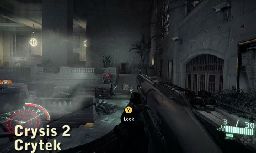 It’s difficult to get a true sense of the Crysis 2 shotgun in the midst of all the chaos in this demo, but I do like the strong, directional array of “hit spangs” rising off the surface from impact. That really speaks “multiple pellets” to me. The muzzle flash is nice and hot with a one-frame “punch” to it with just a wisp of smoke after. The audio was pretty boomy, but it was hard to single out in the footage.
I can’t figure out what’s going on with the shotgun against the enemies here. Perhaps that is because of the situation, but the effect of weaponry should stand out in the chaos of combat (that’s the point). I hope the weapon does more to the enemies than it appeared to there.
Medal of Honor
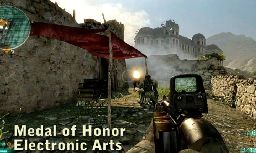 This shotgun is a big guy, serious business… its size might set it apart from models in other games, but I’ll say that it looked menacing in the player’s hands, and had a satisfying muzzle flash and “booming” sound to it.
It also looked like it did a number on the enemy, sprouting multiple bloody impacts, and they didn’t get lost behind the muzzle. I would have liked to see more of what happened when a surface was struck, however, it seemed fairly subtle.
Machineguns
Now we’re down to business. Just about every game has one of these, and I define them loosely: “automatic medium-damage weapons”. They may be assault rifles or heavy submachineguns… subtle variations on a theme, so hardware-heads shouldn’t get their panties in a bunch about terminology.
Halo: Reach
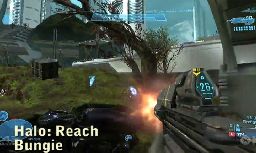 This one felt a little silly to preview since the beta has been available for a while, but nonetheless I wanted to compare it with other upcoming titles. I was not a fan of the original Halo assault rifle because of its anemic audio and flash, but with this new version I’m feeling it more. The “teletype” sound effect now has more rumble to it, and the muzzle flash has less of a cartoony feel to its “star shape”, and looks reasonably hot.
The weapon is still of the “hold down the trigger until the enemy soaks up enough bullets” variety, so in multiplayer it helps to have XP popping up to know that you did something. Luckily with their newest animations, the enemy reacts more satisfyingly to the impact, even though there really isn’t much of an effect. The world impacts are unfortunately subtle for this weapon, basically invisible from a distance… It’s hard to be objective because historically this rifle deliberately lacked punch as a common weapon, but as one of the first things in the player’s hands it’s pretty important to feel good. Luckily, it now seems to have evolved to no longer feeling like a second fiddle.
Medal of Honor
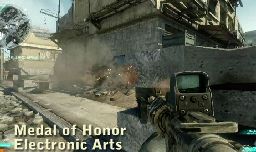 A typical sighted assault rifle, this weapon has a great “train chug” sound to it, and it does some nice damage, throwing dusty impacts all over the environment and struck enemies. It definitely looks like an effective weapon.
The muzzle flash is nearly invisible however (doubtless matching the real-world weapon?)… the in-view weapon’s subtle shake is the main visual cue that something is happening with it at all. More importantly, the animation result on the enemy is still poor. It can be hard to play proper hit animations while an enemy also is moving, but here it felt like they kept running until they died with a minor twitch. This is a common challenge when shooting at multiplayer opponents, since they continue to run at full speed while taking damage.
Breach
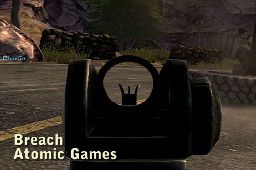 What a difference from the previous MOH footage… without the background din of combat, Breach seems silent by comparison. As for the weapon itself, it has a “tiktiktik” sound that makes me think of a biplane’s machine gun. You still hear it sometimes in WWII games, but it sounds archaic because of its low rate of fire. I believe this is supposed to be a modern assault rifle, so there are definitely options that could be used to punch it up.
There’s lots to do here, in muzzle flash, enemy and world impact… I’m even not sure how effective the weapon was against the enemy given the feedback. Also, I appreciate the trade-off offered when zooming the weapon obscures a lot of the view, but thanks to the Call of Duty series, so many people play this way that it seems ridiculously punishing. This game could just get a bit more lively in ambience.
Blacklight: Tango Down
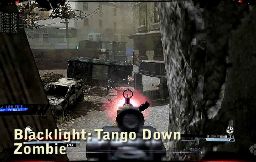 Another lesser-known title, Blacklight has a bit more tightness to its machinegun. It’s still a light weapon, with a fairly teletype-sounding audio report, but the very high rate of fire (with a nice envelope as a burst is fired off) definitely makes me feel better about it. The environment lights up well enough when firing, but the muzzle flash (from the footage) seemed very static and soft. The tracers flying out to the target could have looked good but these are thin and hard-edged… making them look like a rendering artifact beneath the sights. The big impacts (see below) helped a bit, but the weapon could use even a little bit more of a sense of danger.
The game seems to have a fictional dressing that allows for some sci-fi-looking elements sprinkled into the realistic environs… They used it well with the strong blue hit impacts when an enemy is struck, but they are also very big and distracting… you can only tell that you hit “something”. I could an impact that big for a sniper rifle, but for a bullet-spewing weapon like that, I’d dial it down.
The Agency
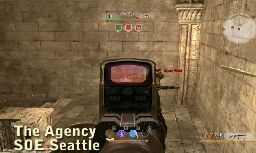 Once again, the weapon appeared a bit stubby because of the odd aspect ratio, but in general it hit the Call of Duty mark pretty well. Audio-wise, they went for a strong gunshot for each individual bullet along with a lower fire rate. It makes the weapon seem heavy and mechanical (good), but over the course of a burst it grows pretty monotonous, like the old Doom minigun that just played the pistol sound over and over. I’d love to hear a more defined start and end to the bursts.
The weapon itself could use a bit of shake or something to tell me that its doing something. From first-person I can’t see the muzzle flash and it appears like the player is just holding down the weapon on its target. It does do the job functionally, as an effective weapon. Also, the environment impacts are nice and sparky… a bit random but I did get a sense of the player tracking their target with successive shots.
Rage
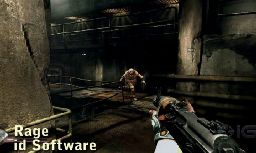 The muzzle flash in Rage’s assault rifle looks okay, but the old practice of fading out “star” flash sprites reduces the feeling of a “fiery” effect, and I see it here as I did in the pistol. Unfortunately, the audio from this footage is poor making the assault rifle sound “crashy”, but I’m sure it’s got the “pop” in person.
The weapon does light up the environment, but in this environment it can only be seen at a very close range, so I didn’t see it much. The weapon recoiled well with nice shells being thrown up visibly… However, I still wanted to see more feedback to where I was shooting. The video quality makes some of these effects darker than they really are, but given that this is a dark-looking place it could be a general issue. I wanted to see the results of my gunshots on the walls, and the floor. Finally, I also didn’t see a real threat to the mutant again… it’s like the pistol. No stopping power visible. Crank up the reactions with that reaction tech… make sure the impacts are visible.
Bulletstorm
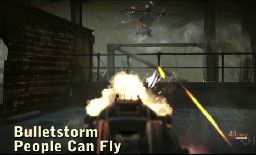 These guys are obviously about showing off as much as their game is, and I feel it here. The rifle here felt dangerous, with a bright, fiery, and non-repetitive muzzle flash. The gunfire audio is has a crunchy mechanical sound to it, and that worked great (unsurprisingly similar to Gears of War‘s).
The weapon’s seems very functional and effective in taking out enemies.  It was interesting to see the cartoony projectiles, almost like a scrolling shooter’s round bullets. On issue was that there was so much going on at my muzzle and with the bullets traveling outwards (this is an unapologetically noisy game) that I wasn’t always clear on what was being hit. I also didn’t see much in the way of impacts at a distance, although there was other footage against a close-up boss that was more tangible. The game’s about chaos, and I imagine it’s a lot of work to make sure the player knows what is being done to whom, and where.
Bodycount
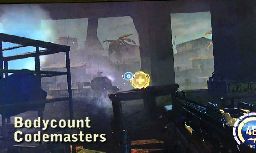 This footage isn’t great (to be fair, the video is wayyyy oversaturated), but I wanted to include it because of the blinding amount of feedback from the rifle. The weapon has a huge star-shaped muzzle flash, which probably looks good in screenshots, but doesn’t have a lot of variance to make it vary over a sustained burst. It also manages to cover up a ton of what is going on at the impact site.
The game shows a Crackdown level of feedback, with orbs flying out whenever an enemy dies… The world impacts are also flamboyant at times, with some crazy cascading sparks. Unfortunately the chaos meant that once again I wasn’t entirely sure what was going on when I hit an enemy. I like “cartoony” as much as I do realism, so I’d have to reserve judgment until I get to see it without blurry footage.
Vanquish
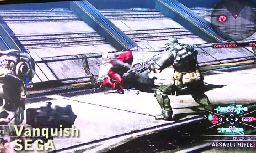 Vanquish is clearly not a traditional FPS, but I wanted to include it anyway for contrast. This machinegun has an extremely high rate of fire, with a somewhat “lighter” sound effect than blends into the background din. This is the sort of machinegun that Japanese sci-fi games have exhibited for the last 10 years or more. Whereas western games put the machinegun in a place of honor as a powerful workhorse, Japan casts them as easy-to-target weapons that chip away health slowly.
The muzzle flash and impacts flamboyantly throw around sparks, but this is still a backup weapon, like the MG on a tank or jet fighter. They leave room for the more “cinematic weapon”, which may be a large explosive or melee attack.  I love these sorts of games to death, but it’s interesting to see how very different the influences are.
Scoped Rifles
I don’t generally include sniper rifles, but this time I figured I would. The category includes bolt-action or single-shot automatic scoped rifles, so I didn’t want to get the hardware nuts mad.
Halo: Reach
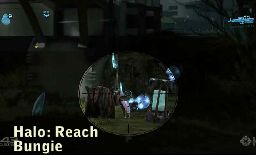 This particular weapon is Halo‘s marksman or battle rifle, rather than their sniper rifle, but aside from stats they seem similar. I’m surprised at how little feedback you get when firing while zoomed… there is a tiny recoil in the view, but aide from that, the sound and the reaction of the enemy is about the only result. The sound, however, is sharp with a great decay and the hit reactions are great.
The muzzle flash isn’t too important, but I would love to see something in the world. A faint tracer, or a more clearly visible impact effect. While there are caveats to this (too much pyrotechnics will render snipers too visible), it could use a bit of punch.
Blacklight: Tango Down
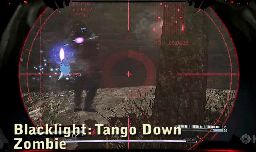 Blacklight‘s modern-seeming game goes far further in the “spacey” effects sometimes than the far-future Halo… Their sniper rifle fires what appears to be a solid laser, with a large blue impact on the enemy. This is fine for their vibe, but given that capability (freedom from “realism”!), I’m surprised to not see something more “impactful” going on. The blue flash is a round cloud of sparks, and enemies more or less fall down in response to being killed. The “laser” projectile could benefit from variance over its lifetime like a “railgun”, and the impacts are crying out for some sort of directional component, ricocheting away from the surface, or piercing the enemy somehow.
The audio is fine, but has less of a punch than Halo’s seems to. A gunshot from a sniper rifle is never, ever work being subtle about.
The Agency
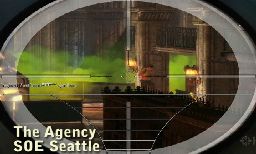 The sniper rifle in The Agency has gunshot audio that is slightly muffled for some reason… it has a punch, but the decay is perhaps a bit less satisfying than Halo’s “throatier” sound. The weapon itself does not move when fired, which is a disappointment, since there is no muzzle flash to see. Since the zoomed view appears sensitive to control, it is even more important to deflect or disrupt the player’s aiming since the overall vibe is that the weapon is “light” and can get jarred more easily.
I found their distinct tracer interesting, but unfortunately the effect is so solid that some rendering artifacts (resulting from rendering it as a flat polygon) appear when shooting. I like the idea of a tracer, especially for the “James Bond modern fantasy” world like this one, but work needs to be done to break up the line and make it seem less like a laser beam. In addition, I didn’t feel like I saw the result of my gunshot on the surface or person being targeted, because the tracer obscured it entirely.
Caveat!
This is E3, and anyone who has prepared something for E3 knows that someone picking it apart can be infuriating. Worse yet, the quality of E3 footage varies, so my comments may be influenced by lighting, background noise, or bad focus.
Not all the weapons or features or effects I’ve examined here may be final, but on the upside, just about everything I mention is remediable with a small amount of audio, art or balance work. You can disagree with me too, that’s what comments are for. The same goes if you are working on one of these.
It’s fun to look at these items regardless… I think I got bit by the bug again. In the coming weeks I’ll take another stab at getting that Weapons of Awesome Power section at the top going, and we’ll see where things go.
[JP-Facebook-Like]
 Last week I got a nagging feeling that I needed to catch up on some of the latest games I’d played and enjoyed Grand Theft Auto IV, as well as some other open-world and RPG titles, but occasionally there is a “huge” title that I just plain miss. This fall was a busy time… while I’d played Bioshock and some (but not enough) of Assassin’s Creed and Mass Effect, I’d completely breezed by Halo 3. As a long-time shooter fan/developer I figured I owed it to myself to put in a few hours and catch up with what’s held up as state-of-the-art.