Vertigames

The Power of Game Design

Jul
02

Weapons of Awesome Power – E3 2010 edition

Posted by Patrick under Article, Game Design, Game Industry

Recently I was looking at my old WoAP post and thinking about how the fundamentals of creating a good, solid-feeling weapon are evolving, and which basics are the same as they were 15 years ago.  Developers are definitely better at these things, but experiences are still all over the board.

I gathered more footage from games released in the last year in preparation of a WoAP section on this site (which is still locked for now), but I fell behind in capturing the newest of the new.  While that certainly won’t deter me, I did realize that I did have one source of state-of-the-art titles with readily-prepared footage…  E3 2010!  Sure the games are in-progress and the available footage varies in quality, but I thought it would be fun to see what the next year could be like in terms of nice, beefy implements of destruction.

As usual, I examined a number of elements to consider whether they contribute to a sense of power.  Check out the original article if you wonder, for example, why a real-world weapon still needs to follow these rules:

  • Gun Visuals: The visual effect of the weapon’s muzzle flash and bullet trail, and the animation of the weapon itself firing. It’s the first thing people think of when they consider how the gun looks and feels.
  • Sound Effects: How’s the audio, from the firing to the impact sounds?  This can be one of the hardest to get right, because the sound has to bear repetition thousands of times, and it has to compliment the rest of the arsenal.
  • Effect on Environment: Here we look at the visual impact of the bullet on a wall or floor, as well as environmental shifts such as lighting. We need these because the results of stray bullets give the player a sense of affecting their environment and with a potent weapon.
  • Effect on Opponent: This refers to the visual impact on an enemy, and how the enemy reacts to being shot, which is critical to give the player feedback that he is successfully damaging the foe.
  • Combat Effectiveness: I’m completely subjective here, which can be unfair when taken out of context, but it’s worth talking about. If I see a weapon limply pile bullets into an enemy with little sense of accomplishment, that weapon doesn’t get high marks.  Maybe it’s designed to be a pathetic weapon, I don’t know.

Each weapon is grouped with its general type:  They aren’t all identical models, weights or even technology, but each group of weapons fills a general role for players.  I found as much unadulterated footage as I could…  nothing from trailers or anything less than the game being played.  This is obviously not final weaponry, and I had to make adjustments for the situations where the audio or visual quality wasn’t the best.  Suffice it to say, they previewed their games to us and basically I’m previewing the weapons right back.  Wah.

I didn’t get footage from everyone I wanted (technical issues denied me Brink and Killzone 3), but there was plenty of material (in unbiased alphabetical order of course):

  • The Agency, Sony Online Entertainment
  • Blacklight: Tango Down, Zombie
  • Bodycount, Codemasters
  • Breach, Atomic Games
  • Bulletstorm, People Can Fly
  • Call of Duty: Black Ops, Activision
  • Crysis 2, Crytek
  • Halo: Reach, Bungie
  • Medal of Honor, Electronic Arts
  • Rage, id Software
  • Vanquish, SEGA

(Too many one-word titles that start with “B” this year…)

Read the rest of this entry »

VN:F [1.9.20_1166]
Rating: 0 (from 0 votes)
Apr
25

Side Projects

Posted by Patrick under Game Design, Game Development

I’ve had to take a break on the article-writing to immerse myself in my work.  Theory is fun, speccing can be rewarding, and hooking up is good, but sometimes I’ve found myself missing real hands-on gameplay programming.

A friend of mine has been creating a Rogue-alike as a side-project labor of love for the past few years, and recently it went from sporadic updates to a full-on development flurry.  This of course made me very jealous, as tile-based engines allow for amazing freedom in creation…  There are few limits and implentation is a breeze.  It’s all about the gameplay.

The game is Dungeonmans, and he releases updates openly as an in-progress effort…  It obviously revels in its old-school presentation…  although the graphics are getting better by the day.   He’s created an overworld and NPC quest system as well as invested a great sense of humor within, so in some ways it outpaces similar indie dungeon-crawlers already.  It even can gather play stats that get collected at the home base for analysis and high scores.

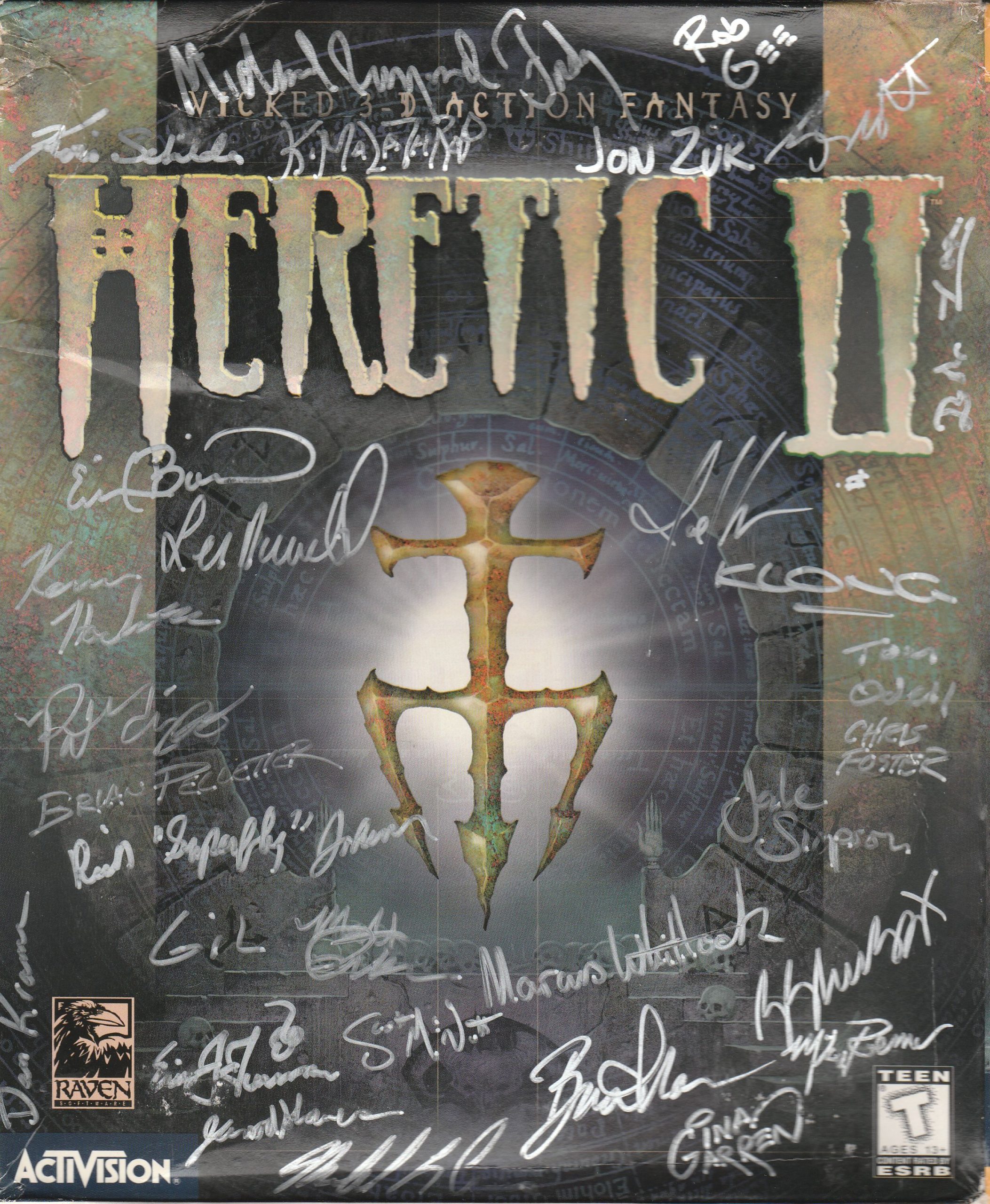
Recently he made the codebase available to a few of us, and we’ve all been diving in and having a blast.  I’ve been working on a trap system recently, and I gotta say it’s the most fun I’ve had with development since Heretic II.  It’s been a while since I’ve worked on something past midnight without even noticing.

It’s not Diablo III, but fun doesn’t have to be developed in 3D by hundreds of people…   Check it out.

VN:F [1.9.20_1166]
Rating: 0 (from 0 votes)
Apr
15

The Challenge… errr, Challenge – DTO Part 2

Posted by Patrick under Game Design, Other Games

Last time I talked about co-op games and the need to tweak the difficulty in the name of a better experience.  I mentioned that inflating the total number of hit points can work, but it can lead to the trap of The Numbers Game, where your existing health and damage are scaled together, resulting in a constant game challenge that only shifts when you fall outside of what the game deems “fair”.  This can work for RPG’s, but is troublesome when used on shooters.

Bag o' Hit Points

Bag o' Hit Points

This argument isn’t particularly constructive for the FPS designer, the poor soul who is scrambing for anything to keep things balanced and exciting in the wild wooly west of random online pick-up groups. We can’t really blame them for falling back on pure numbers when necessary (full disclosure: X-Men Legends was an unabashed example of the Numbers Game…). Solving this problem through other means is a tough one, but it is worthwhile to pursue avenues other than the venerable Bag of Hit Points.

Challenge Stage

When looking for ways to increase difficulty, game developers often wish the answer was as simple as adding more enemies to each encounter… “No problem! Double the players equals twice the enemies! BAM!” Sadly, very few game technologies give developers the luxury of unlimited enemies onscreen… It’s a yoke that just about all of us constantly struggle with. Back in the sprite days of Doom and Heretic it wasn’t a big deal; those games had extra enemy spawns that were triggered at higher levels or during coop. In these days of high-fidelity characters, however, most technology still keeps the population somewhere in the single digits.

There are tricks to give a feeling of greater foe count… Placing additional enemy encounters in the “dead spots” between the “standard” encounters works, if you never overlap the encounters to keep the maximum enemy count low. It can be tricky to pull off but it can give the player a sense of a relentless onslaught, requiring him to manage ammo and health more carefully even though he never sees more than a few at a time. Unfortunately, by leveraging this method you can ravage any sense of pacing, leveling out those tension peaks and valleys into a steady drone, and changing the game in perhaps unintended ways.

Another population trick is to deliver more enemies to the battlefield through respawning. This allows enemies to repopulate places that were previously cleared out, denying players a safe retreat and keeping the pressure on. This approach can be reviled by players because it denies them a sense of “completion” within a level (it was a contentious feature in Soldier of Fortune, for example), but it can be used to great effect. My first experience with respawning as a gamer was Doom’s Nightmare mode, where all enemies regenerated after 1 minute or so. (Damn that was hard!) More recently it was embraced in Left 4 Dead, where zombies can pour out of just about any opening, inaccessible fences area, rooftop, etc. Careful use of this mechanic can help a game level feel as though it is packed with hundreds of foes, even if your tech can’t handle it (although L4D did a damn good job with the population too)…

Up to 11

In contrast with developers, a majority of gamers wish that higher difficulty was just a matter of making the enemies smarter… perhaps implying the existence of a Jules Verne-era dial with “IQ” scrawled on the side that can be cranked past 10. Unfortunately game AI is never so easy that you’ve got unused slack somewhere that you’re not using. Generally it’s not decision-making that challenges the AI programmer or designer, but rather environment response and navigation. Sure, humans can walk across an obstacle-ridden field without even thinking about it, but an AI that does this naturally requires tremendous work whether the difficulty level is baby-like or insane.

Even if the leap from floor-traversing mouth-breather to devious mastermind were easy, I’ve repeated many times that “smarter enemies” don’t always pave the way to “more fun” anyway. Aside from major boss-level fights, the opponents in many games don’t last long enough for you to really experience their brilliance… showing off would require for the player to see them, which means they’re probably already busy killing them. Sure, you could make the enemies tougher so that you might see their amazing kung-fu, but then you’re back to turning them into HP bags.

pixelshot

Some games emulate enemy “smarts” by simply increasing their shooting accuracy or giving them uncanny perception. Let me be clear, this is not fun. Most games with gun-toting enemies need them to be inaccurate at long ranges. If an enemy pops into a play space a long distance from the player, chances are the player is not aware of their presence immediately… a bit of warning is needed before he gets a bullet in the head. If an enemy’s accuracy is simply dialed up arbitrarily, the player suddenly starts taking significantly more damage from enemies a few pixels in size… you’ve turned the game into a walk through a room full of snipers. Statistically the enemies are just doing more damage to the player each second anyway… so that’s what you want, just crank the bullet damage and be done.

There are some better models out there for bullet inaccuracy that can help remedy the fun, but they are still aren’t used enough (that would be fun to talk about in another post).

Phases of Death

While technically it is a variation on adding health to opponents, but one way of amping difficulty is giving them additional damage states, each of which has to be “killed”. Examples of this are the humans that become “tentacle heads” when headshot in Resident Evil 4, or the aliens in Blacksite: Area 51, that can sever their torso after being “killed”, crawling after the player. These imply non-realistic opponents or a heavy art burden, but it can also be done by having the foe walk with a limp in phase 2, or switching weapons each phase.

This may sound familiar because it is the way that just about every classic boss encounter works… and for good reason. Bosses are “tough” and hence can soak up a lot more damage… without small player victories and new behaviors coming into play, defeating them would be a tiresome exercise in shoveling damage until it goes down (and many action games still use this model).

Cleverly-designed damage stages also have the advantage of not always being used. A 3-stage robot can skip stage 2 and 3 in easy difficulty, last for a second stage in later levels, and die only after all three in harder difficulties. Depending on how an enemy is designed, it might even be possible to regenerate them to a previous state if not killed in time for even more challenge.

A distant relative of the staged model is a mechanic where an enemy must be in a certain state to be killed. For example, a foe may have a “stunned” state which provides you with an opening to slice off their head. By this I don’t mean “Japanese boss-style” where every 15 seconds the monster opens up his eye-dome and can be hurt, but rather a system that gives the player the tools to introduce a vulnerable state. Another example is a robot who must be immobilized with an electric shock, before you step in to disable his control chip. Or a soft-bodied creature that must be frozen first and then shattered (similar to how the freeze-wrench combo works in Bioshock). Games like modern military shooters are more limited in this respect, but if you have the luxury to play with your enemy ecology (that is, their function and response to various stimuli), a large number of additional options open up to you. As above, you can scale difficulty by sprinkling in these new mechanics more aggressively later on (say, early robots don’t have an “overdrive chip”, but all of them do at higher difficulty).

Smarty(er)-Pants

Other tricks aside, there’s still a value in delivering a smarter enemy… or at least one the gamer will recognize as “smarter”. One example of that is to add some coordinated behaviors between multiple foes. A simple trigger that makes several enemies charge at once or synchronize multiple grenade tosses can add difficulty in a hurry. Throw in an audio cue to draw attention to it and suddenly the gamer has a newfound respect for your AI mojo, baby. More complicated relationships like an enemy that lays down covering fire while the other charges can be good also, but the more complex they get, the more likely they are to fail or get lost in the shuffle. Sure, it makes things harder, but look for ways that are going to make the player feel the added pressure.

Left 4 Dead in particular leveraged this synchronization through their “AI Director”. While not technically an issue of “smarts” (the zombies are, well, zombies) when the director decided that the experience needed a massive assault for added danger, the player knew that the game was turning on the heat. The perception of challenge is perhaps as important as the actual difficulty increase.

fallenshamanfallenAdding enemies with interrelated behaviors is also a method to give a feeling that they are “conspiring against you”. A prime enemy that adds challenge to any group is the buffing opponent. The Shaman in Diablo II and the Arch-Vile in Doom II could resurrect fallen opponents, making the whole group for more deadly and interesting to fight. Other, more mild examples of this type of enemy are enemies that have an aura that heals or increases the strength of their nearby friends.

A player must completely change his tactics and adjust when fighting a group that has a buffing foes added. Even one can add considerable challenge, and multiples can be devastating. Beyond just spawning extra ones, their behaviors can be tweaked for difficulty by increasing the buffing effect, casting time, or the radius of their ability.

Looking closer, any type of environmental object that enemies can utilize can add challenge and an extra feeling of intelligence, no matter how simple. Enemy buffs could be provided by emplacements rather than spawned foes. The health stations in BioShock kept you from leaving your nearly-dead foe alone, because he might return fully charged. Emplaced totems such as those in World of Warcraft are similar.

Final Thoughts

Reflecting on what I’ve written above, I see that there is no “magic bullet” for scaling difficulty (although I hoped that writing about it might shake one loose). The techniques that must be used will certainly vary from game to game… My main suggestion is to look beyond the traditional D&D numerical “crutch” when faced with systems that need to scale. I understand why we do it: it’s not just our inner fanboy screaming to get out… numbers are a necessary part of our job and getting results. However, I love designs where the player doesn’t have to be steeped in numbers in order to succeed.

You might also come out of this thinking that I turn my nose up at RPG’s. On the contrary, it’s one of my favorite genres, and Diablo II is still my favorite game of all time.

Finally, I certainly mean no disrespect for what Resistance 2 has accomplished in its multiplayer mode. Along with Call of Duty 4, I think it has laid a foundation for great semi-persistent online experiences for shooters. What others might build upon these concepts in the future makes my mind reel.

VN:F [1.9.20_1166]
Rating: +1 (from 1 vote)
Feb
24

Drawing Things Out – Part 1

Posted by Patrick under Game Design, Other Games

I’ve been playing Resistance 2 lately, taking in its new cooperative mode on the recommendation of a couple of friends.  Co-op in shooters has a long but spotty tradition, so it was neat to see Insomniac deliver a non-competitive experience with a different feel. This one gives the player one of three classes that can be leveled up independently by matching up to play short missions. Each class has a different loadout and responsibility when played: grunt, medic, supply. In addition, there is a resource that can be gathered during matches in order to purchase upgraded abilities and weapon packages.

It was a fairly addicting experience, as I pushed to each successive level like I might grind an MMO.  The matches themselves were entertaining on their own, with tangible sense of achievement every few rounds.  Unfortunately, I eventually ran out of gas, not because the game itself wasn’t fun enough…  but rather because each creature had 5-10 times the health of their single-player counterparts.  The campaign was a well-balanced shooter with crisp control aim and a great sense of power, but coop had me holding my machinegun on what should have been “popcorn” enemies for several seconds, watching XP pile up as I waited for each bag of hit points to fall down.  Quite simply, it didn’t feel at all like the shooter than I played when not online.

I cannot fault the concept of jacking up the time to kill each enemy…  it’s a time-honored tradition from many classic games.  In Resistance 2, it was clear that they needed to extend the experience and increase the effort required to bring each one down.  It’s probably a useful excercise to discuss why this might be.

The Numbers Game

One reason for enemies to soak up bullets in coop is to match the level of difficulty to the number of players.  If 10 players entered a level that was intended for just one, they would slaughter everything with their added firepower.  Some games ship this way, whether due to limited resources or to reward the effort that used to be involved to connect multiple PC’s for a coop session in the first place.   These days most do their best to notch up the challenge when new players join a session, and sometimes this is done by increasing the enemy toughness.   Diablo did this in the most overt fashion, by reporting to the player that “the enemy forces have grown stronger” when each additional player joins the game.  Behind the scenes it was increasing the experience level equivalent of all the enemies in the world.

Another reason for enemies feeling more invulnerable are in games with a progression track…  ones that reward the player for each hour of play with upgrades in ability and potency (like Resistance 2 does).  Unfortunately it’s easy to forget that in order to build a game where the player feels more powerful over time, you must hold back some of the most potent player abilities at the start of the game.  The player certainly feels a sense of achievement as he gains all the new kick-ass stuff over the course of the game, but sometimes that means he also feels anemic at the very beginning, where he has the least capability.  The damage potential for his weapons are less, his health is less.  His weapons aren’t as flamboyant.  Even the most basic enemies might take far longer to kill than they will later on.  This is a dangerous practice that must be handled with care…  these are the crucial early hours where a player should be falling in love with the product rather than feeling emasculated.

The Numbers GameSomehow this is an acceptable practice in RPG’s…  Those games are almost entirely about progression and acquisition, so it is expected that the player will evolve tremendously over hundreds of play hours (or thousands in an MMO).  But because of these incredible progression arcs, most RPG’s play what I call The Numbers Game.  You’ve doubtless seen it…  when players start off their game doing tiny amounts of damage to wimpy rats, but eventually grow to deal thousands of points while fighting giant dragons.  In these situations there is a continual arms race between the damage you deal and the health of your enemies.

For example:  I’m playing an MMO and start with a character who can deal an average of 20 points of damage to an enemy who has about 100 health. About 5 hits will take him down.   After some play time, I level my character to level 20, and can now deal 100 points of damage. Good for me! …except now most of the enemies have around 500 health. I guess it’s still 5 hits to kill one.  Finally, after months of investment I reach the coveted level 50, and I’m clobbering opponents with 1000 points per hit. Of course, you guessed it, my enemies have 5000 HP (or more).

This shouldn’t be a big surprise, because as you gain power, it would be anticlimactic to see a lessening difficulty…  we all want to grow up to finally beat that huge, scary thing that we fled from many hours of play ago.  Keep in mind what this means, however:  In a combat-centric game, a player’s primary metric of power is the number of hits per kill. (This abstracts to “the ratio of time investment per reward”… but that’s fodder for a later post).   But when I play the Numbers Game, do I really feel better about taking down a Level 50 Hoary Drake with my Level 50 character than I did taking down the Level 1 Scrawny Rat with my Noob?  The answer in RPG’s is often “yes”, but in shooters you can get in a lot more trouble.

The difference is in the essences of the genres…  RPG’s deal with skill advancement primarily on the character itself, as he “levels up” and increases his capability through higher numerical stats.   The player himself has less pressure to hone his actual playing skill, aside from juggling the new options presented to him when new abilities are unlocked.   He makes choices about how he wishes to advance, working with figures like “strength”, “speed” and “willpower”, even though they often just present different ways of hurting an enemy.  These various axes of advancement give the player something to aim for, a vast possibility space that he can explore and achieve in.

Since advancement is so tied to how the player’s capabilities are represented, the player keeps a much greater awareness of the numbers and how they affect him.  He understands and accepts that an enemy that is 5 levels above him is extremely dangerous, because the numbers say so.  This is totally fine, because most RPG’s are not about combat…  they’re about advancement, acquisition, and a bit of exploration.   (If you really believe that you played Diablo for the click-and-kill combat, I think I have some real estate you might be interested in…)

Shooters by comparison leave skill advancement largely to the player’s mind and body.  Your manual aiming ability is your primary “accuracy stat”, and timing, dodging and area management are all critical traits that don’t live in the game itself.   In most shooters the player’s character is just as effective with a pistol at the beginning of the game as he is at the end…  even though the game progressively demands more of the player himself with larger groups of foes and challenging level layouts.

Shooters also are tuned for action experience, living and dying by their weapon balance and ammunition management…  Killing one enemy is usually 1-3 shots, and an FPS starts to instinctively know which weapon is best for each situation.   This is the biggest reason that shooters are so seriously wounded by the Numbers Game. By increasing enemy health arbitrarily, the choice of weapon eventually becomes less important. Enemies that used to be demolished by a shotgun blast take several hits, causing players to switch from surprise or flanking maneuvers to attrition tactics. Pistols go from being the standby for taking out weak enemies with minimal ammo investment to becoming basically useless. Different skills and sometimes abhorrent tactics are adopted in order to succeed because the game becomes increasingly “unfair”.  Players might even start to think in terms of DPS (Damage per Second), a major metric in MMO’s and a strong symptom of the Numbers Game.

More Than Just Digits

So this argument does nothing to help out the intrepid FPS designer, who still needs to solve these difficulty issues…  He’s willing to do anything to make the game as fun for 10 players as it is for one, and to make gamers feel increasingly awesome for each hour he plays.  I don’t blame folks for falling back on the numbers when they need to; Diablo II is still my favorite game of all time, and when working X-Men Legends I personally applied the Numbers Game to near-excess (more on that another day).  

Solving this problem through other means is really hard, but going the Bags o’ HP route should be a last resort.  I’ll see if I can scrape up some alternatives in the next post.

VN:F [1.9.20_1166]
Rating: +1 (from 1 vote)
Dec
25

Comfortable Cliches

Posted by Patrick under Game Design, Other Games

Hope ChestI’ve been holed up for nearly a week in the wake of Seattle Snowpocalypse 2008.  Unexpectedly, with all the other things I could be doing, my best friend was one that sat on my shelf for nearly two months…  Fable II.  Over the past few days I’ve put a whole lot of hours into my mostly-good-with-occasional-bouts-of-greed-or-deviance character.  My wife Sandi’s done the same with hers.  Strangely we haven’t tried coop because we’re usually off doing small things that would drive the other crazy…  Her with her ownership of pubs and fruit stands, and me taking on every single bounty hunter mission and finding every last gargoyle.

In all Fable II is a fun fantasy romp.  Being one who enjoyed the first Fable more than most, I wasn’t particularly surprised.  “Big concepts” like property ownership and marriage aside, there’s something comfortable to me about slipping into the newest fantasy RPG.

That even includes some very “cliched” concepts.  You grow to expect them, even get mad when they don’t materialize…  In action movies it’s the cars that explode after any collision, the bullets that knock people ten feet backwards, or the trusted mentor who’s been behind the plot the whole time.  Fantasy games’ve got plenty of ‘em, and I don’t mind one bit:

  1. Secret WaterfallStealing from people’s houses.  RPG’s have had a long tradition of ordinary citizens of keeping awesome loot stored in their bedrooms, frequently even in prominent chests.  While Oblivion made a point of scolding you for stealing just about anything, I feel cheated if I know my in-game neighbor has some incredible bauble sitting on his bedstand.  While I usually don’t choose “thief” as an occupation, I can get obsessed with the idea of taking it without getting caught…  Luckily Fable II only considers taking items from dressers or bookshelves to be actual theft.  Anybody that puts their belongings in a huge, gilded chest apparently deserves to forfeit them to the next hero that comes by.  As it should be!
  2. Dead-end jackpots. If I’m winding my way through a dungeon and find a side passage, I just have to go down it to see what’s there.  And once I reach the end, I look around to find my prize.  I’ve been playing/making games long enough to know that real-estate is at a premium.  Someone made this nook for a reason…  now where’s my loot?  Games that don’t reward my obsessive exploring properly can leave me feeling betrayed.  God, I’d probably get a brain hemorrhage if I ever tried to play Pathologic.   (“You will not find a loaf of bread at the back of the cave. You’ll find a stone wall at the back of the cave, because it’s a fucking cave.”)
  3. Ghost Pirate!Treasure hidden behind waterfalls.  If years of gaming (and the occasional movie) have taught me anything, it’s that when there’s a waterfall, there’s gotta be a secret cave behind it.  For a while there it was the rule rather than the exception.  Even though I’ve done it a thousand times, I still feel a bit clever when I step behind the rushing water to find a nook that houses a chest full of glittering gold.  When I brave the falls and find only a rock cliff wall, it’s a fair disappointment.  There’s a bit of comfort in the fantasy that all waterfalls in the world might conceal a secret or two…

Special Bonus Cliche:  Pirate Ghosts!  Zelda, Mario, Oblivion, Final Fantasy, City of Heroes, Alone in the Dark…  Man, games just love those ghost pirates…  It may just be the fact that they are humanoid-yet-supernatural enemies (which can make them easy to create the assets for) that can attack the player en-masse, but they seem to show up in side-quests in a ton of games, even though they’re rarely the main focus.  And who can blame them?  Wrecked ships to wander around, distinctive garb and speech, and promises of a hidden treasure to be unearthed…  Irresistible, I tell you, for gamers and designers alike!

VN:F [1.9.20_1166]
Rating: -1 (from 1 vote)
Jul
17

Back In It

Posted by Patrick under Academics

Depth Graph

After a week or so in my old stomping grounds of Madison, Wisconsin, I’ve returned from GLS.  It was an intersting show, with lots of folks with interesting stuff to stay.  It was also great to see some old friends, talk some shop and reminisce. 

Certainly my favorite thing at the conference is my former Raven cohort Nathan McKenzie’s presentation of some great, fun-looking games that also have some incredible potential to teach as well.  Nathan is preaching a philosophy (which I fully agree with) that instead of trying to make the existing, must-maligned “learning games” into fun experiences, we should instead consider making fantastic games that apply learning to existing play patterns that demand learning from the audience already (such as memorization of real spanish words rather than game-fiction terms like “Bulbasaur”).  His two demos were really cool to see.

By popular(?) demand, below are the slides for my GLS presentation, “Combating the Curse of More: Focusing Your Game”.  It was a bit different than most of the heady topics discussed at the show, but it seemed to go over well for those that were looking for more of a “dev” point of view.  An overview of the talk seems to have popped up on Gamasutra as well.

This week also marks the start of a new role as Lead Designer at Hidden Path Entertainment in Bellevue (Seattle-area).  Once again, I’m diving into some new, exciting stuff with some incredibly talented and capable people…  I’m utterly excited to see where this path (ha, a pun) will lead.

Click on the Banana to get the file.

I am a banana!

More Talk Powerpoint

VN:F [1.9.20_1166]
Rating: 0 (from 0 votes)
Jun
19

Weapons of Awesome Power (and some less so)

Posted by Patrick under Game Design, Other Games

Marine with Pulse RifleLast week I got a nagging feeling that I needed to catch up on some of the latest games… I’d played and enjoyed Grand Theft Auto IV, as well as some other open-world and RPG titles, but occasionally there is a “huge” title that I just plain miss. This fall was a busy time…  while I’d played Bioshock and some (but not enough) of Assassin’s Creed and Mass Effect, I’d completely breezed by Halo 3. As a long-time shooter fan/developer I figured I owed it to myself to put in a few hours and catch up with what’s held up as state-of-the-art.

As I played through the first few levels, I got reminded of weird thing that always bothered me with the Halo series. The weapon you start with, the Assault Rifle, always starts the game on the wrong foot for me.  It always felt anemic and ineffective against enemies, and the third installment wasn’t a whole lot better.  I have no doubt that some of this might be a design choice, since it would be foolish to give the player a powerful weapon at the start of the game.  Of course you need a lot of room for growth so that the player feels a sense of achievement as he/she finds new weaponry. However, for a weapon so obviously inspired by the Pulse Rifle from Aliens (one of the coolest movie guns ever), it’s always been tremendously disappointing to have my anticipation dashed…  The gun looked and sounded so subdued, and had little apparent effect on my opponents.

C’mon, watch this and tell me that you don’t want that rifle to be this badass sounding.

While I got past it and am now churning through Halo 3, the experience got me thinking about what elements make up a weapon that is satisfying to wield. Sure, making a weapon do more damage is what you’d expect, but there are a large number of intangibles that can add to the player’s shooter experience without disrupting the balance of the game.

Most of my roots are from Raven Software, where shooters are (mostly) a way of life. If there’s one thing that members of the studio preached constantly, most particularly my boss Brian Raffel, was that “the player must feel powerful”. It seems obvious, but a lot of times games don’t do enough to make the player feel like the gun in his/her hand is an unstoppable tool of destruction. This is about gratification and player expectation… Movies have trained audiences to expect that guns shoot massive plumes of flame and sparks and are accompanied by tremendous booming sound. In comparison, the sharp, loud crack or pop of a real gun can be a disappointment (although obviously they are intimidating nonetheless in person). Usually just modeling the audio and visual reality of a weapon isn’t quite enough.

Most games that have contemporary-style guns have a few standbys in their arsenal … the pistol, the machinegun or automatic rifle, and the shotgun. As an exercise, I cracked out a bunch of different first-person shooters and captured their weapons on video for the purposes of comparison. These games were:

  • Halo 3 (Xbox 360, 2007)
  • Resistance: Fall of Man (Playstation 3, 2006)
  • Half Life 2 (PC, 2004)
  • Quake 4 (PC, 2005)
  • Doom (PC, 1993)
  • Deus Ex (PC , 2000)
  • Bioshock (Xbox 360, 2007)

The Games

In each, I took shots of the weapon firing at a surface, and follow with shooting at a “common” opponent. The choice of a “common” opponent is arbitrary (and sometimes driven by convenience when I was capturing footage), but suffice it to say that I wanted to choose an enemy that the player was going to face frequently with a given weapon. A few of these weapons also have “upgrades” that make them more effective, but I wanted to provide feedback on how the weapon would be seen upon first picking it up… will the player be glad he did? Will he or she keep using it because it’s just awesome? Read the rest of this entry »

VN:F [1.9.20_1166]
Rating: +1 (from 1 vote)
Jun
17

Conference-bound

Posted by Patrick under Academics, General

It’s been a pretty scattered summer for me so far…  Lots going on but some weird lulls in between.  Most recently I found out that I’m going back to my hometown of Madison, WI to attend the Games+Learning+Society Conference on July 10-11.  It’s not a huge GDC-type affair, but a show in its fourth year put on by people from the University of Wisconsin…  In my last year at Raven my friend and cohort Nathan McKenzie introduced me to incredibly smart UW folks like Constance Steinkuehler, Kurt Squire, and Jim Gee, who as I’d said before, exposed me to a refreshing outlook on games.  It’ll be great to see them again. 

Games+Learning+Society

I’ll be giving a short talk on scope, vision and just good game design practices, which you know I’ve been thinking about a lot lately…  It’s the first talk like this I’ve given and hopefully there will be a lot I can offer the attendees.  There’s an interesting mix of academics and development people, and while my talk isn’t as heady as some, I’ve been told that there is a lot of interest in more traditional game development issues.  In the end, the goal of a lot of these people is not to wrap a bad game around education (as has been done in the past), but to create great games that have educational merit.  I think it’s a fantastic objective that is still underestimated by the game industry.

Anyway, wish me luck!

VN:F [1.9.20_1166]
Rating: 0 (from 0 votes)